
Scanopy is a self-hosted network documentation tool that automatically scans your infrastructure to discover hosts, services, and their connections, then generates clean, interactive visualizations and live topology diagrams with virtually no manual effort or ongoing maintenance required. After a one-time setup, it keeps everything up-to-date through scheduled or distributed scanning, recognizing over 200 common services including containers, databases, and enterprise applications. Built with Rust, Svelte, and TypeScript, it offers a modern alternative to stale manual diagrams like Visio files. In this step by step guide I will show you how to install Scanopy on your Synology NAS using Docker & Portainer.
This guide works perfectly with the latest Scanopy v0.15.6 release.
STEP 1
Please Support My work by Making a Donation.
STEP 2
Install Portainer using my step by step guide. If you already have Portainer installed on your Synology NAS, skip this STEP. Attention: Make sure you have installed the latest Portainer version.
STEP 3
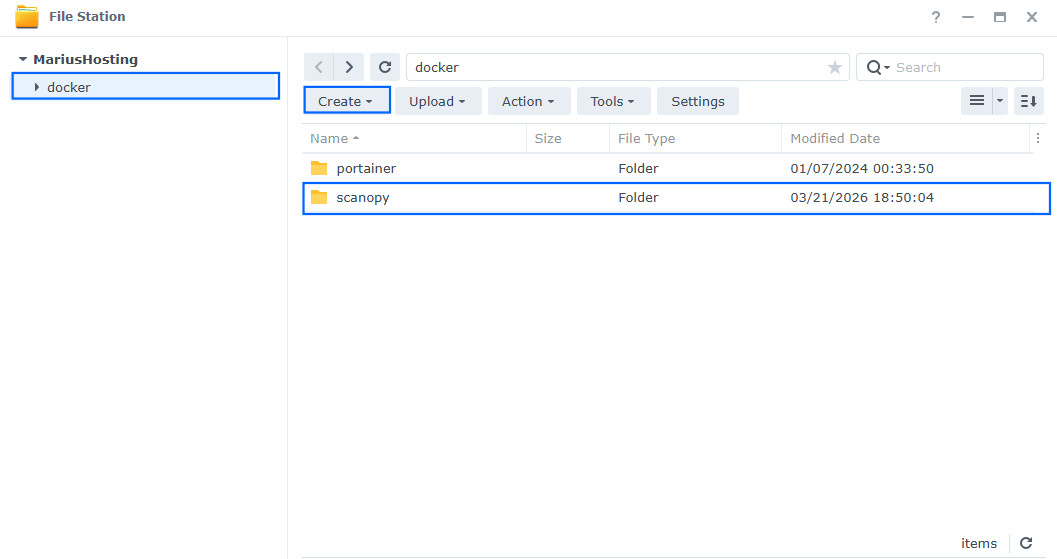
Go to File Station and open the docker folder. Inside the docker folder, create one new folder and name it scanopy. Follow the instructions in the image below.
Note: Be careful to enter only lowercase, not uppercase letters.
STEP 4
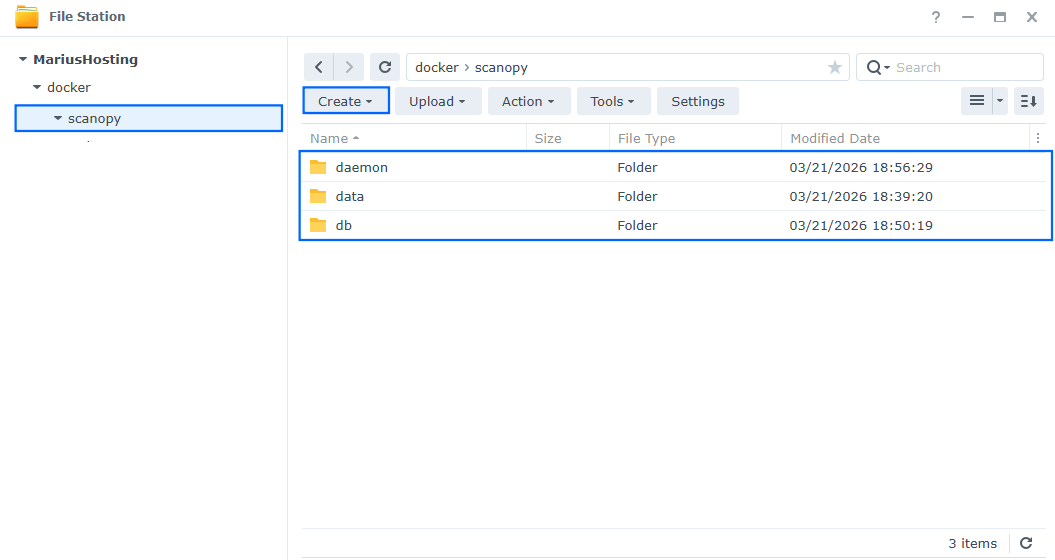
Now create three new folders inside the scanopy folder that you have previously created at STEP 3 and name them daemon, data, db. Follow the instructions in the image below.
Note: Be careful to enter only lowercase, not uppercase letters.
STEP 5
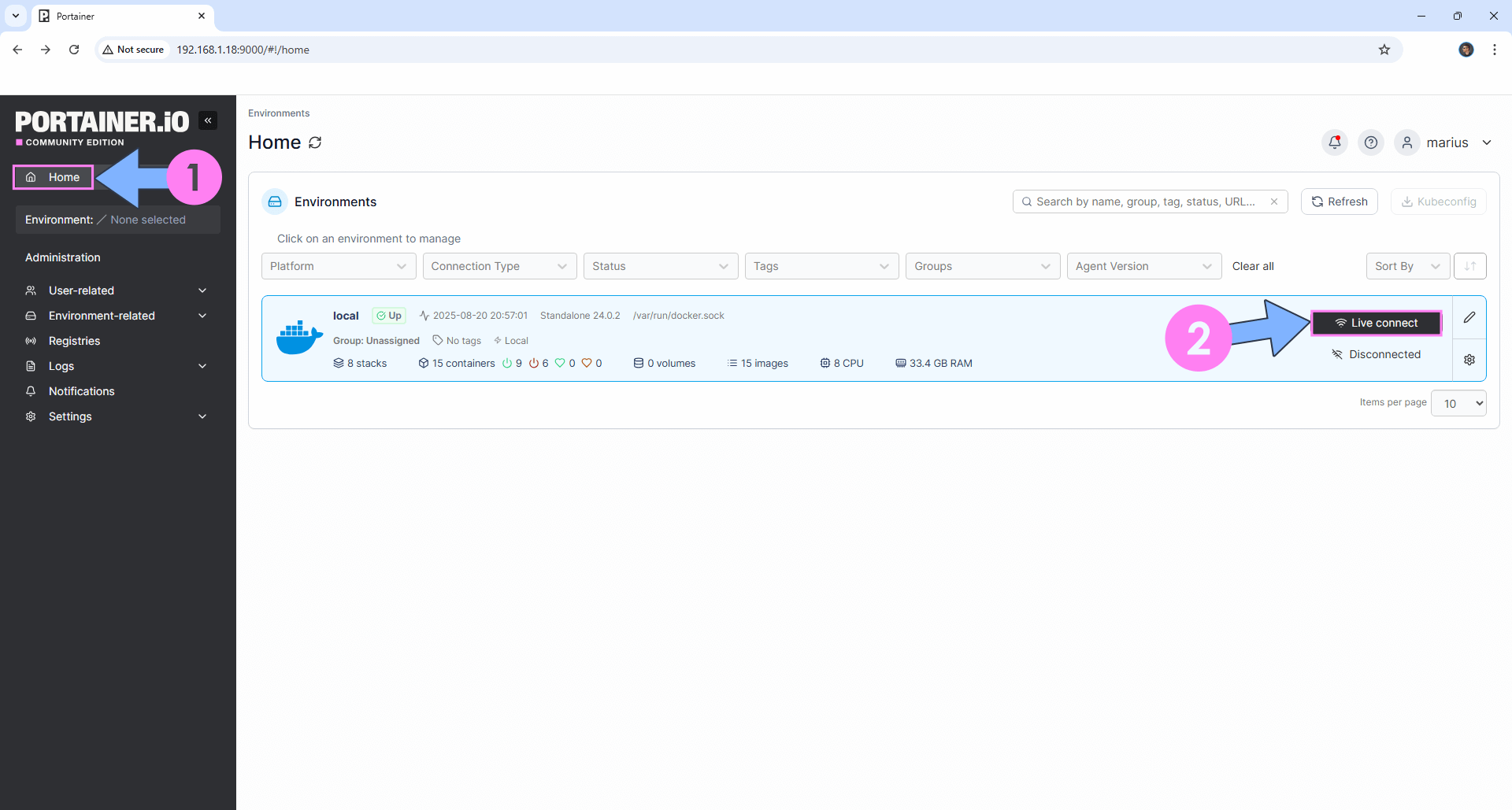
Log into Portainer using your username and password. On the left sidebar in Portainer, click on Home then Live connect. Follow the instructions in the image below.
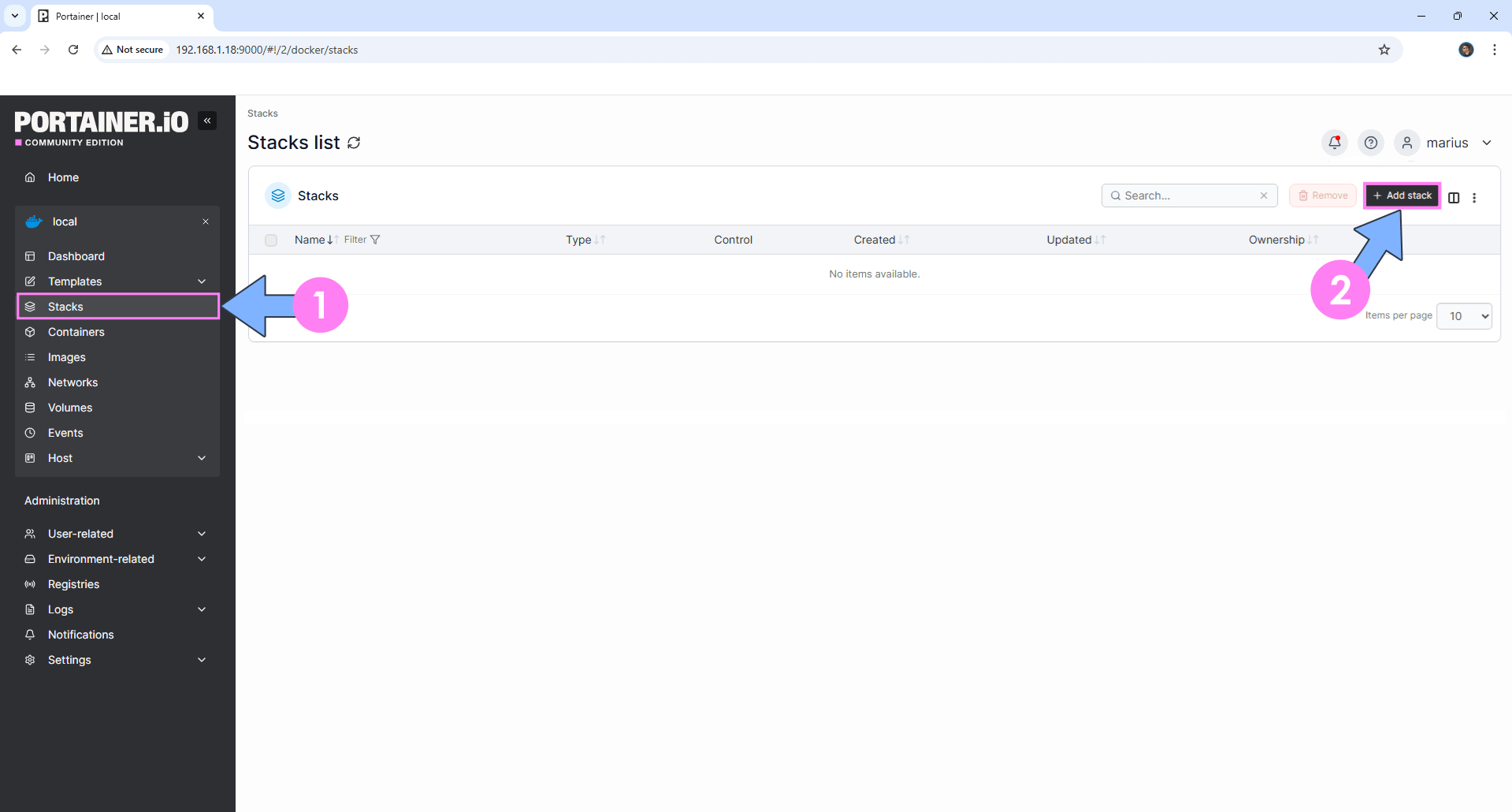
On the left sidebar in Portainer, click on Stacks then + Add stack. Follow the instructions in the image below.
STEP 6
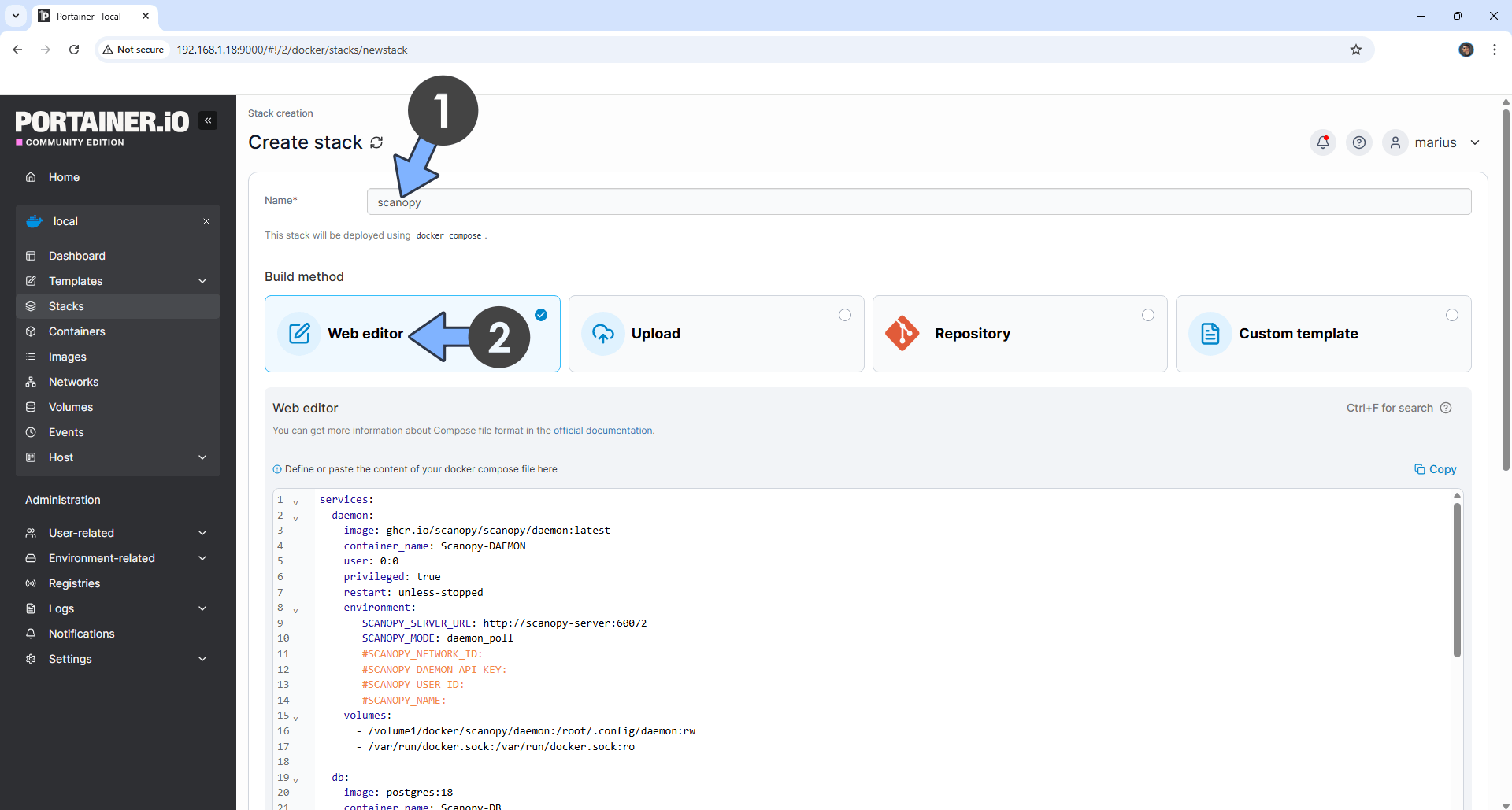
In the Name field type in scanopy. Follow the instructions in the image below.
services:
  daemon:
    image: ghcr.io/scanopy/scanopy/daemon:latest
    container_name: Scanopy-DAEMON
    user: 0:0
    privileged: true
    restart: unless-stopped
    environment:
       SCANOPY_SERVER_URL: http://scanopy-server:60072
       SCANOPY_MODE: daemon_poll
       #SCANOPY_NETWORK_ID:
       #SCANOPY_DAEMON_API_KEY:
       #SCANOPY_USER_ID:
       #SCANOPY_NAME:
    volumes:
      - /volume1/docker/scanopy/daemon:/root/.config/daemon:rw
      - /var/run/docker.sock:/var/run/docker.sock:ro

  db:
    image: postgres:18
    container_name: Scanopy-DB
    hostname: scanopy-db
    environment:
      POSTGRES_DB: scanopy
      POSTGRES_USER: postgres
      POSTGRES_PASSWORD: scanopypass
    volumes:
      - /volume1/docker/scanopy/db:/var/lib/postgresql:Rw
    healthcheck:
      test: ["CMD-SHELL", "pg_isready -U scanopy -d postgres"]
      interval: 10s
      timeout: 5s
      retries: 10
      start_period: 30s
    restart: on-failure:5

  server:
    image: ghcr.io/scanopy/scanopy/server:latest
    container_name: Scanopy-SERVER
    healthcheck:
      test: ["CMD-SHELL", "curl -f http://localhost:60072/api/health || exit 1"]
      interval: 15s
      timeout: 5s
      retries: 5
    ports:
      - 60072:60072
    environment:
      SCANOPY_LOG_LEVEL: info
      SCANOPY_DATABASE_URL: postgresql://postgres:scanopypass@scanopy-db:5432/scanopy
      SCANOPY_WEB_EXTERNAL_PATH: /app/static
      SCANOPY_PUBLIC_URL: http://localhost:60072
      SCANOPY_INTEGRATED_DAEMON_URL: http://scanopy-daemon:60072
    volumes:
      - /volume1/docker/scanopy/data:/data:rw
    depends_on:
      db:
        condition: service_healthy
      daemon:
        condition: service_started
    restart: on-failure:5
STEP 7
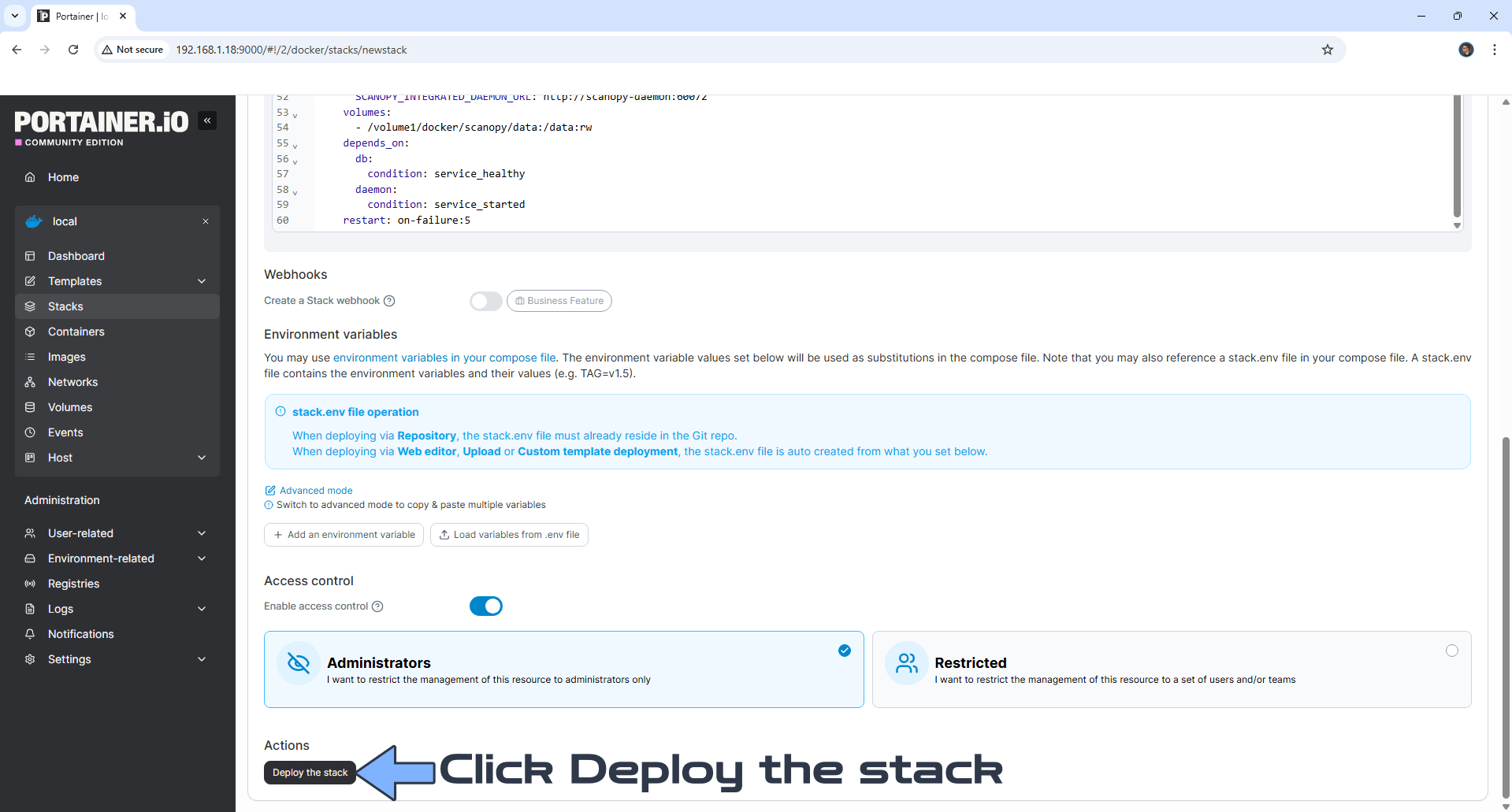
Scroll down on the page until you see a button named Deploy the stack. Click on it. Follow the instructions in the image below. The installation process can take up to a few minutes. It will depend on your Internet speed connection.
STEP 8
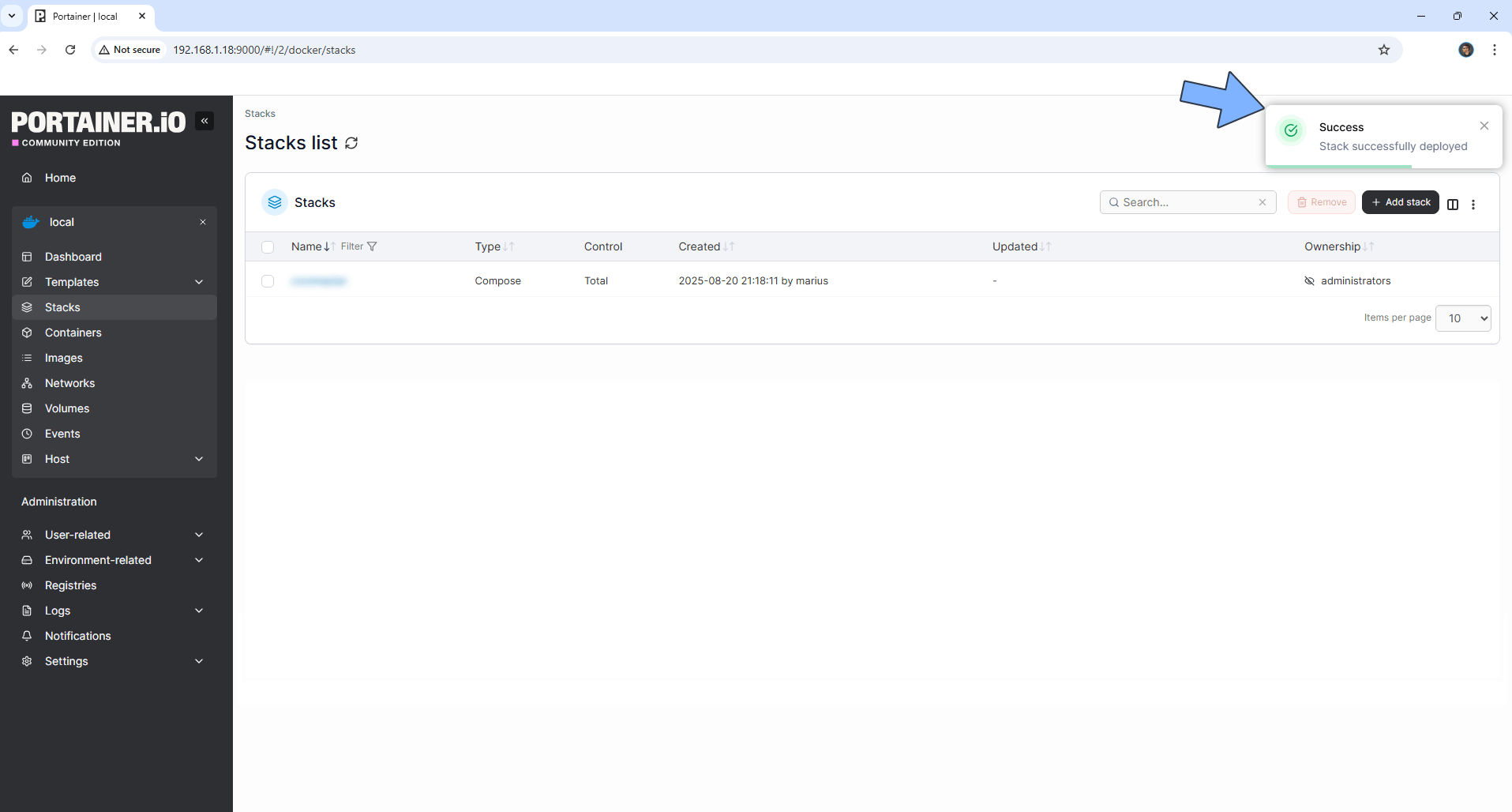
If everything goes right, you will see the following message at the top right of your screen: “Success Stack successfully deployed“.
STEP 9
🟢Please Support My work by Making a Donation. Almost 99,9% of the people that install something using my guides forget to support my work, or just ignore STEP 1. I’ve been very honest about this aspect of my work since the beginning: I don’t run any ADS, I don’t require subscriptions, paid or otherwise, I don’t collect IPs, emails, and I don’t have any referral links from Amazon or other merchants. I also don’t have any POP-UPs or COOKIES. I have repeatedly been told over the years how much I have contributed to the community. It’s something I love doing and have been honest about my passion since the beginning. But I also Need The Community to Support me Back to be able to continue doing this work.
STEP 10
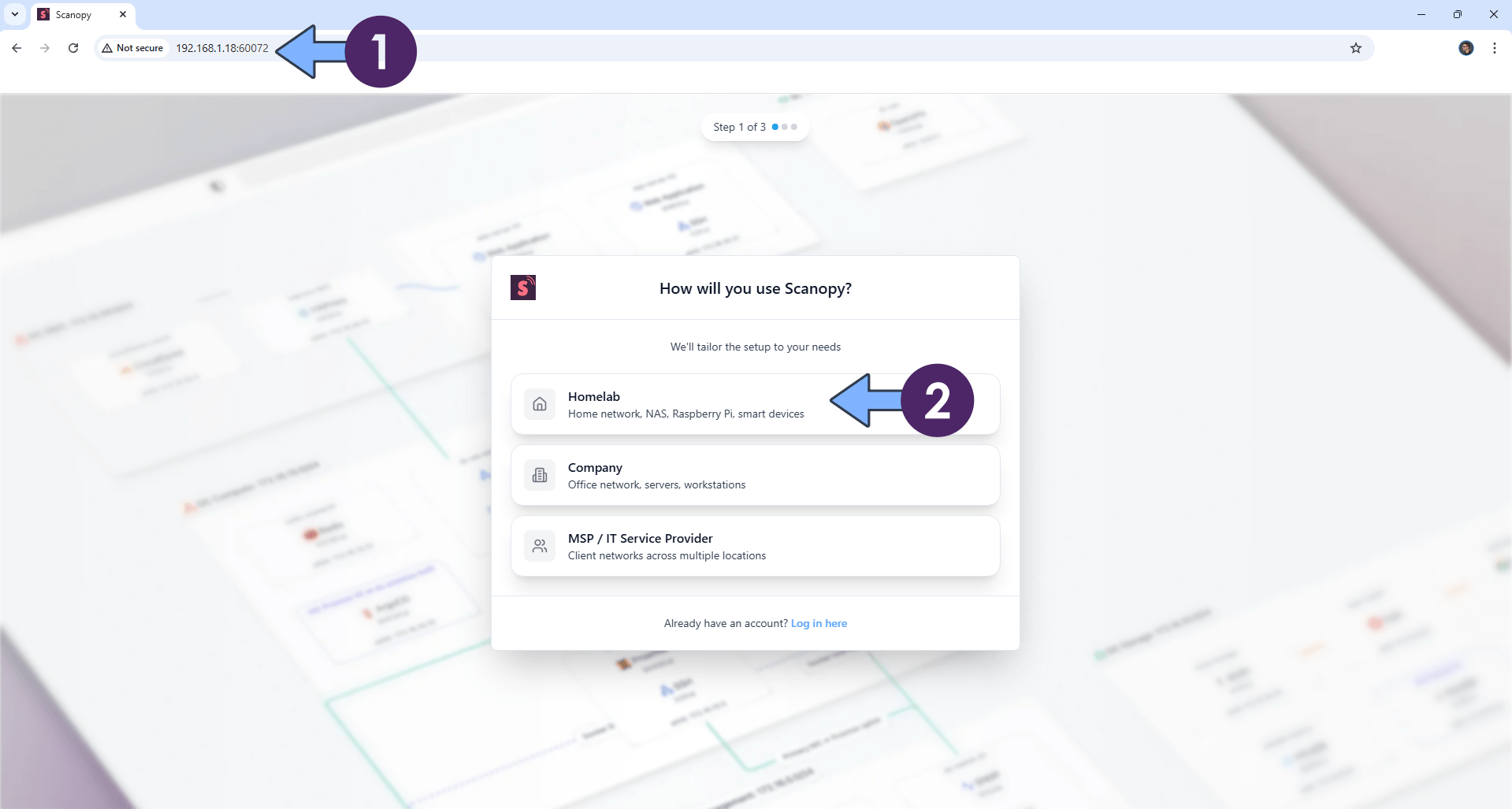
The installation process can take up to a few seconds/minutes. It will depend on your Internet speed connection. Now open your browser and type in http://Synology-ip-address:60072 If everything goes right, you will see the Scanopy setup page. Click Homelab. Follow the instructions in the image below.
STEP 11
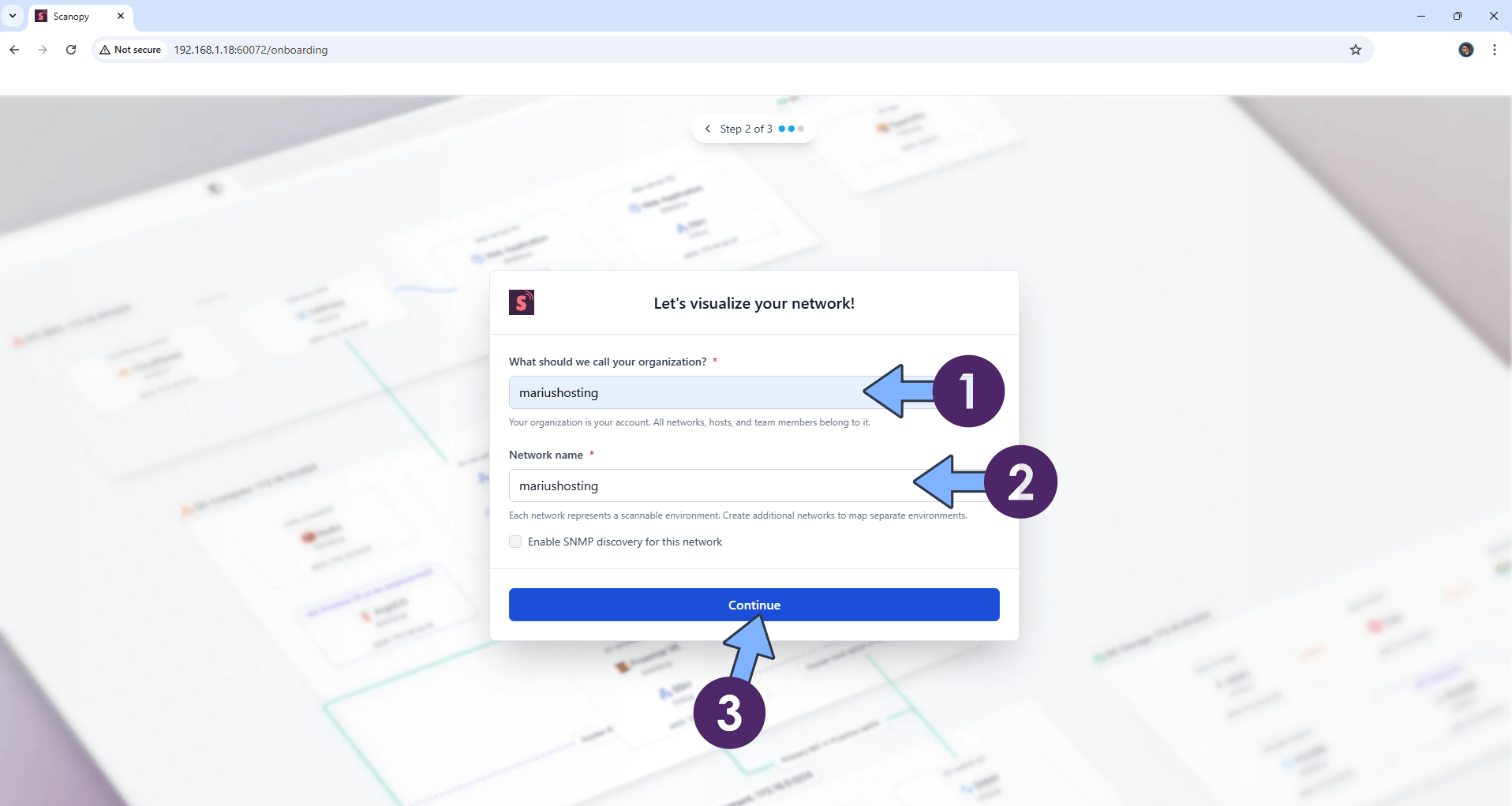
Type in your Organization Name and Network Name. Click Continue. Follow the instructions in the image below.
STEP 12
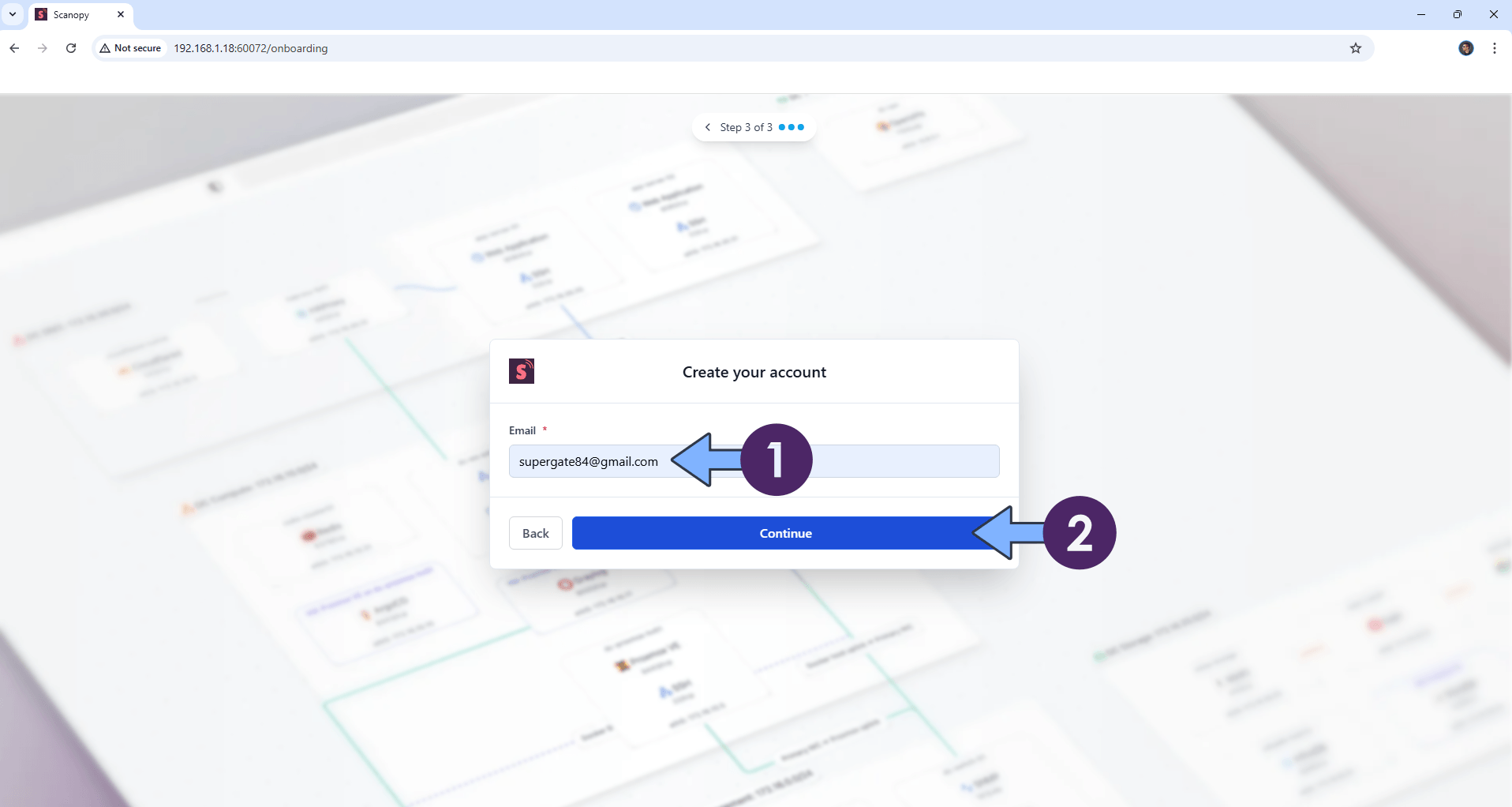
Type in your own Email Address. Click Continue. Follow the instructions in the image below.
STEP 13
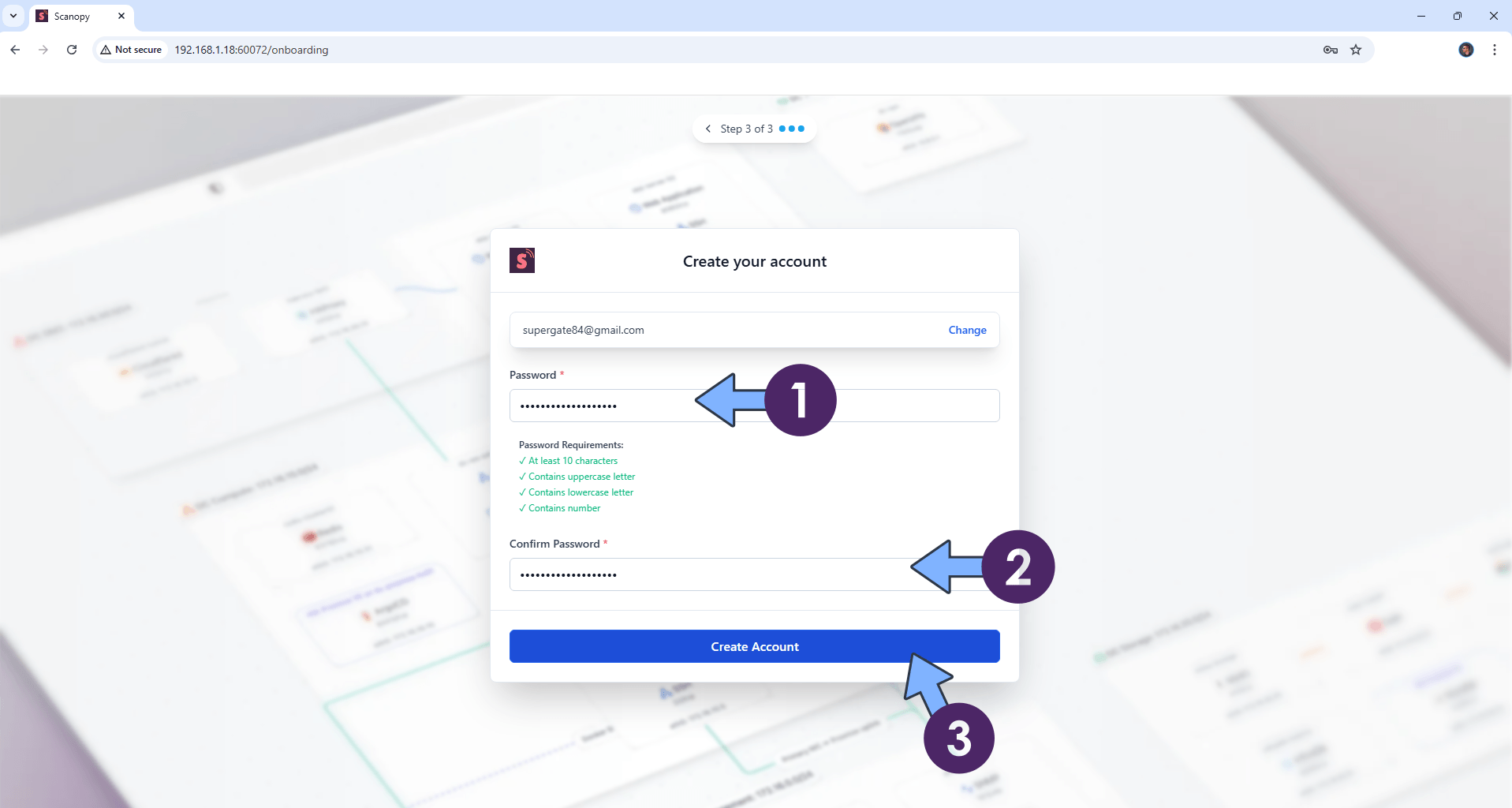
Type in your own Password, then confirm it. Click Create Account. Follow the instructions in the image below.
STEP 14
Click Let’s go! Follow the instructions in the image below.
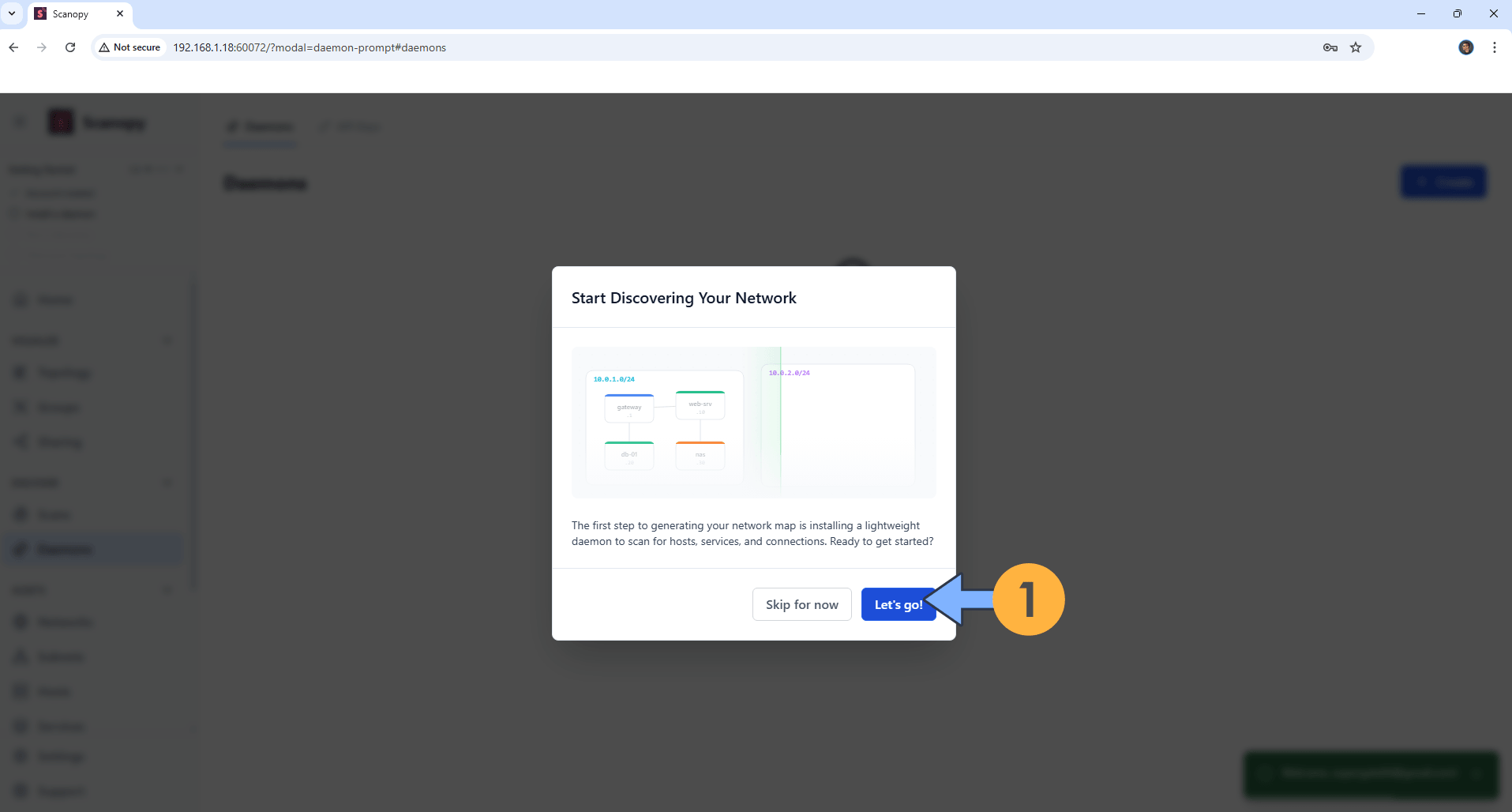
STEP 15
Choose Daemon Poll, then click Next. Follow the instructions in the image below.
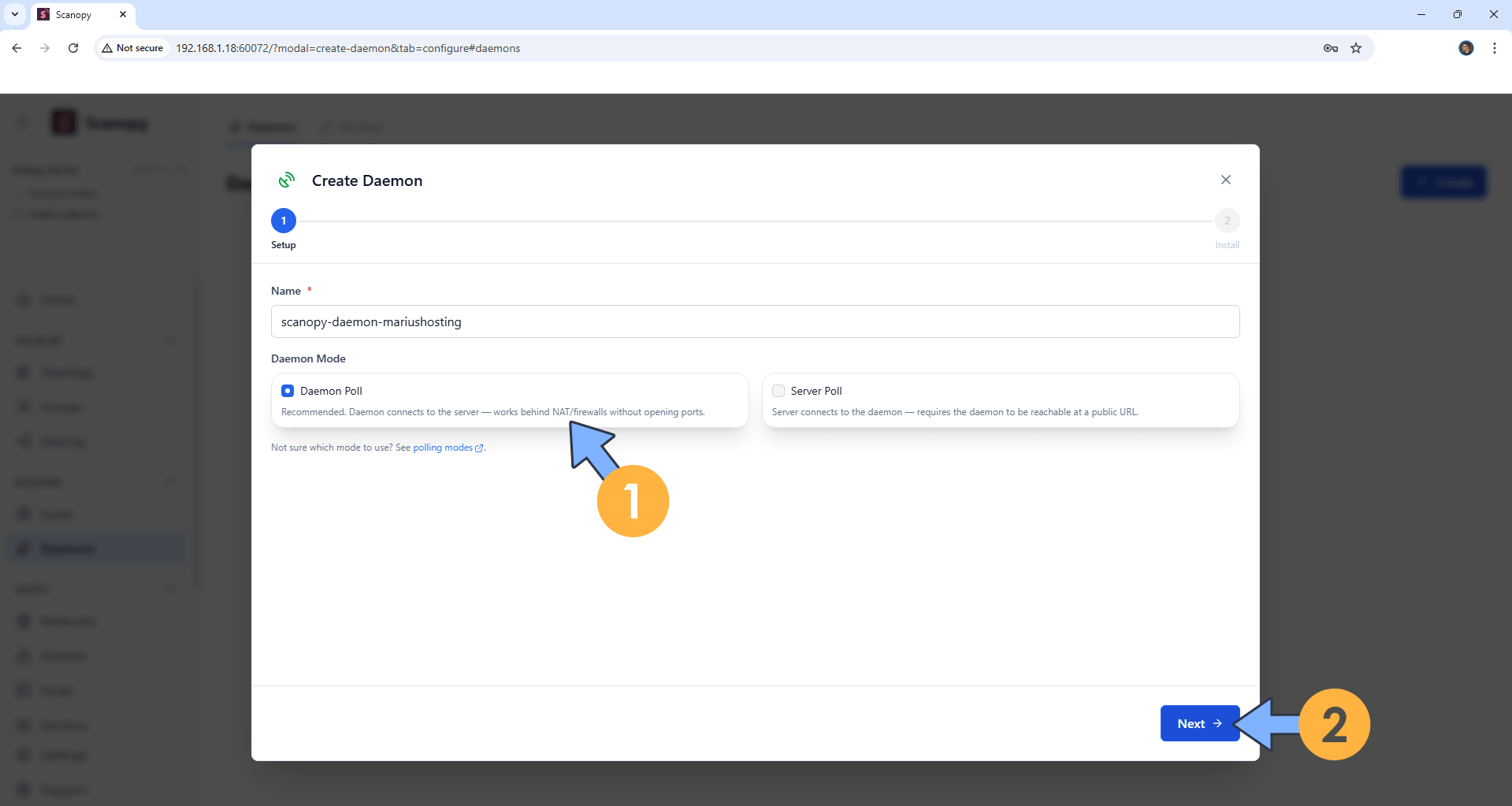
STEP 16
Copy your Auto-Generated Environment variables values. SCANOPY_NETWORK_ID, SCANOPY_DAEMON_API_KEY, SCANOPY_USER_ID, SCANOPY_NAME. Click I’ve started the Docker container. Follow the instructions in the image below.
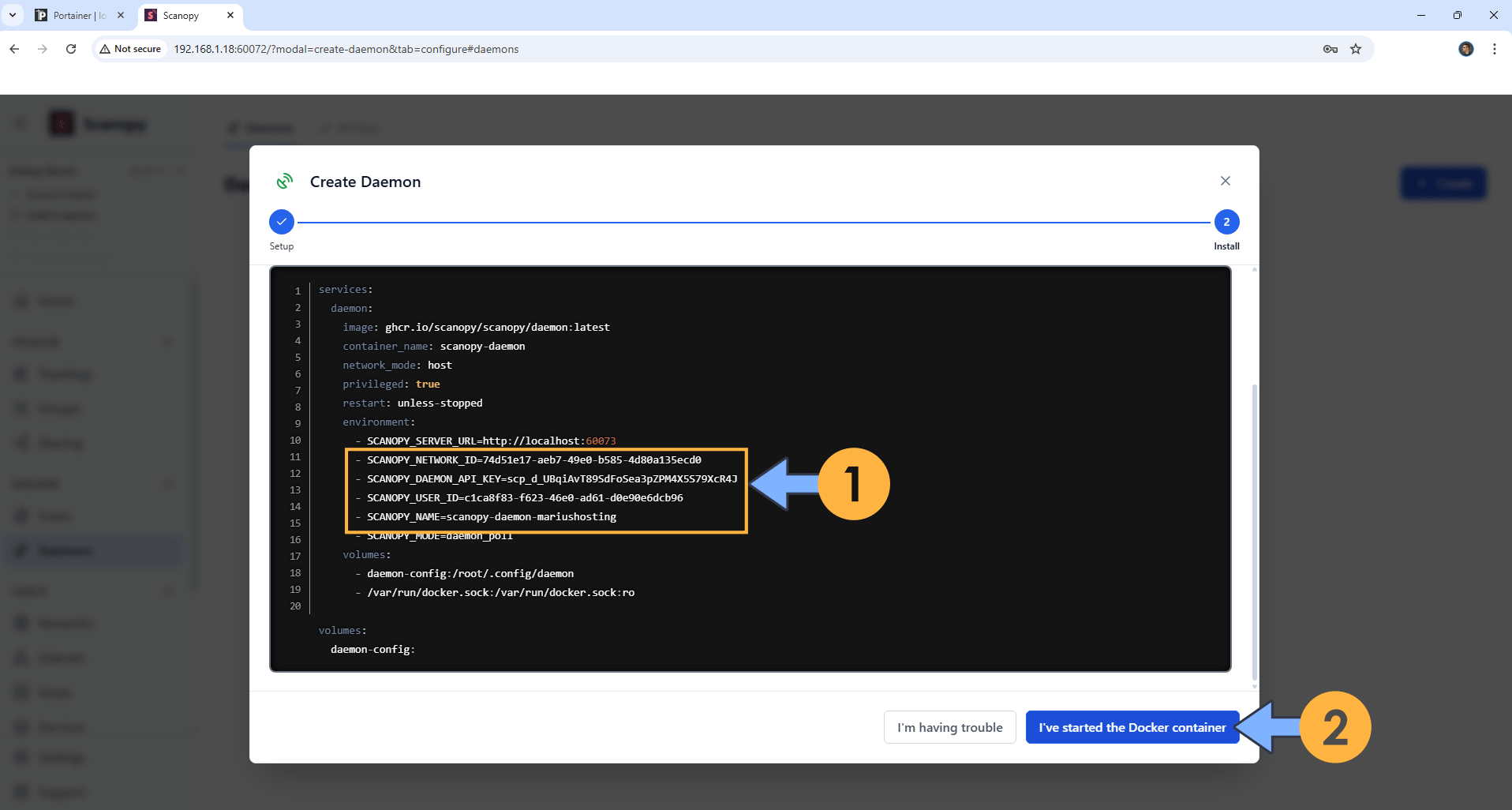
STEP 17
Open Portainer. On the left sidebar, click Stacks then scanopy. Follow the instructions in the image below.
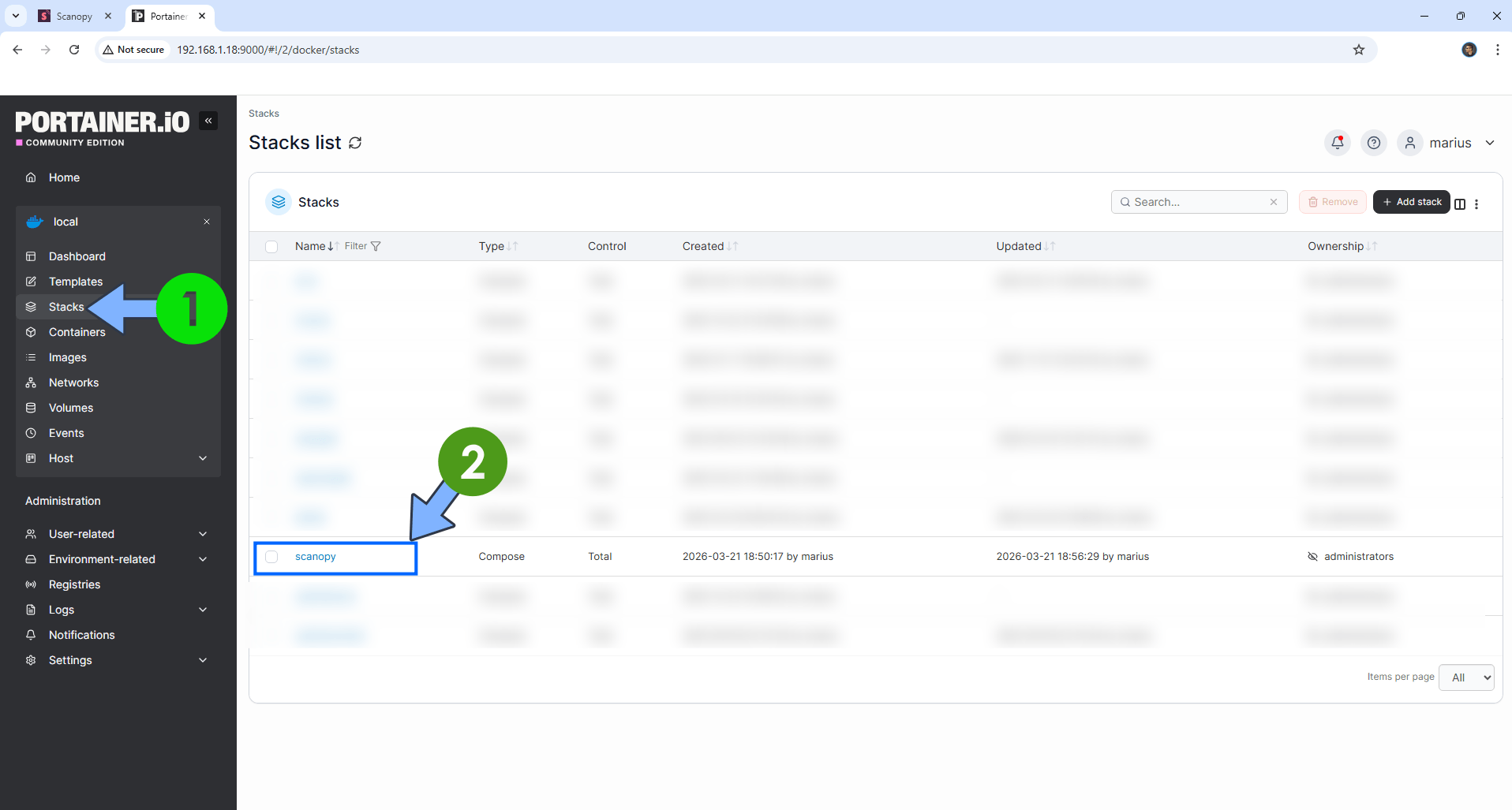
STEP 18
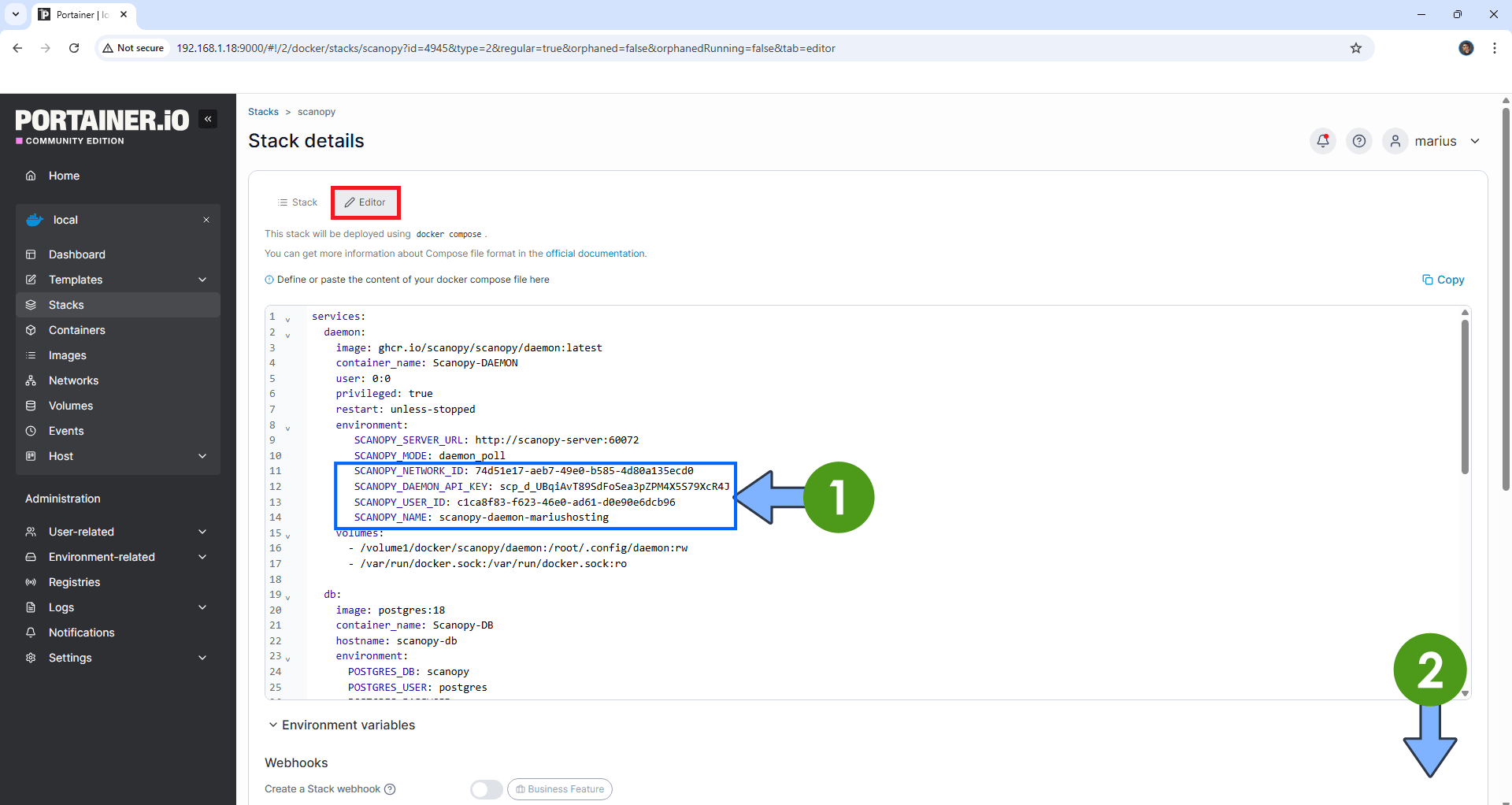
Click the Editor tab. Remove the # hashtag in front of SCANOPY_NETWORK_ID, SCANOPY_DAEMON_API_KEY, SCANOPY_USER_ID, SCANOPY_NAME and add your own values that you have previously generated at STEP 16. Scroll down the page until you find the Update the stack button. Follow the instructions in the image below.
STEP 19
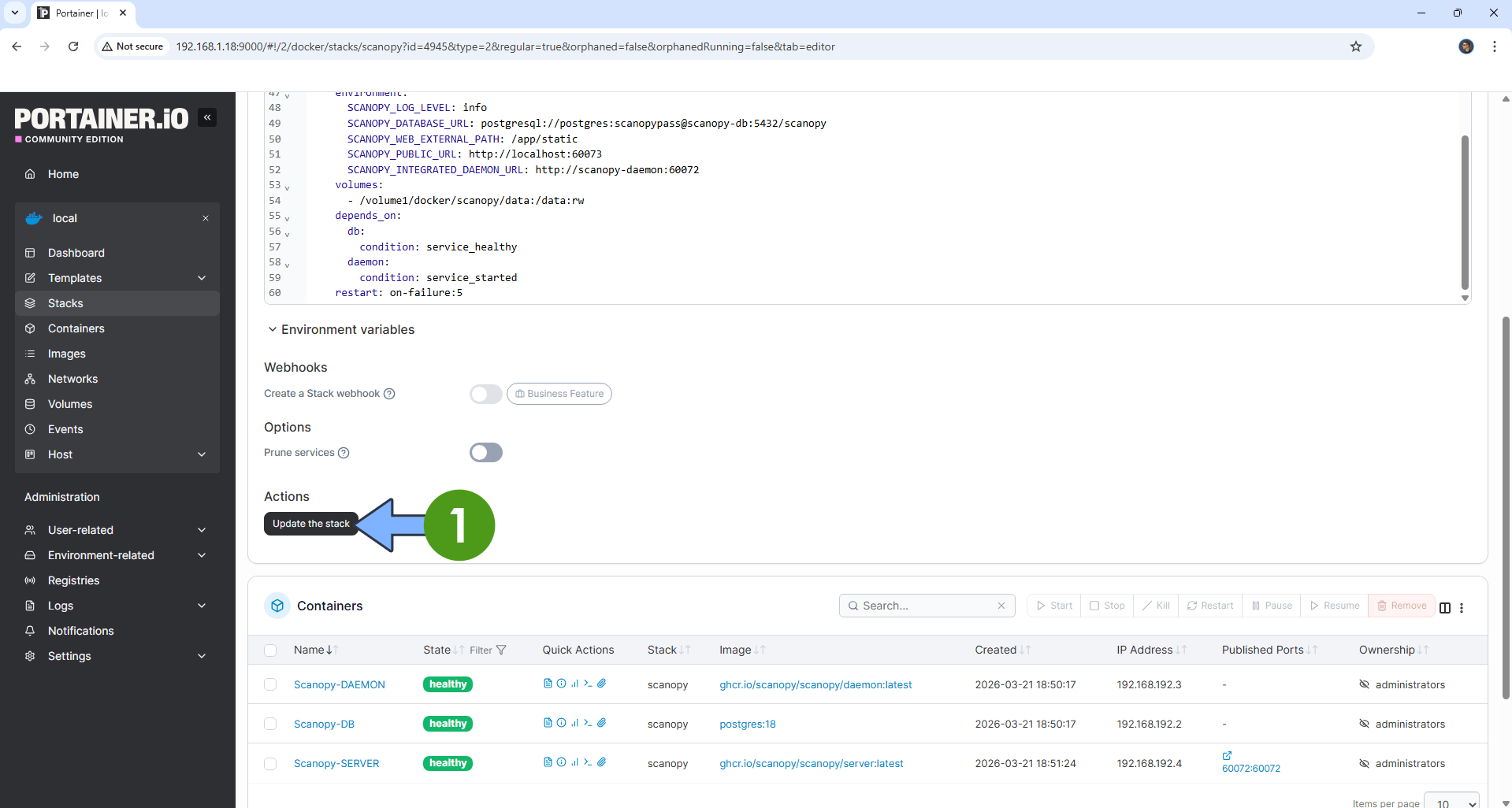
Click Update the stack. Follow the instructions in the image below.
STEP 20
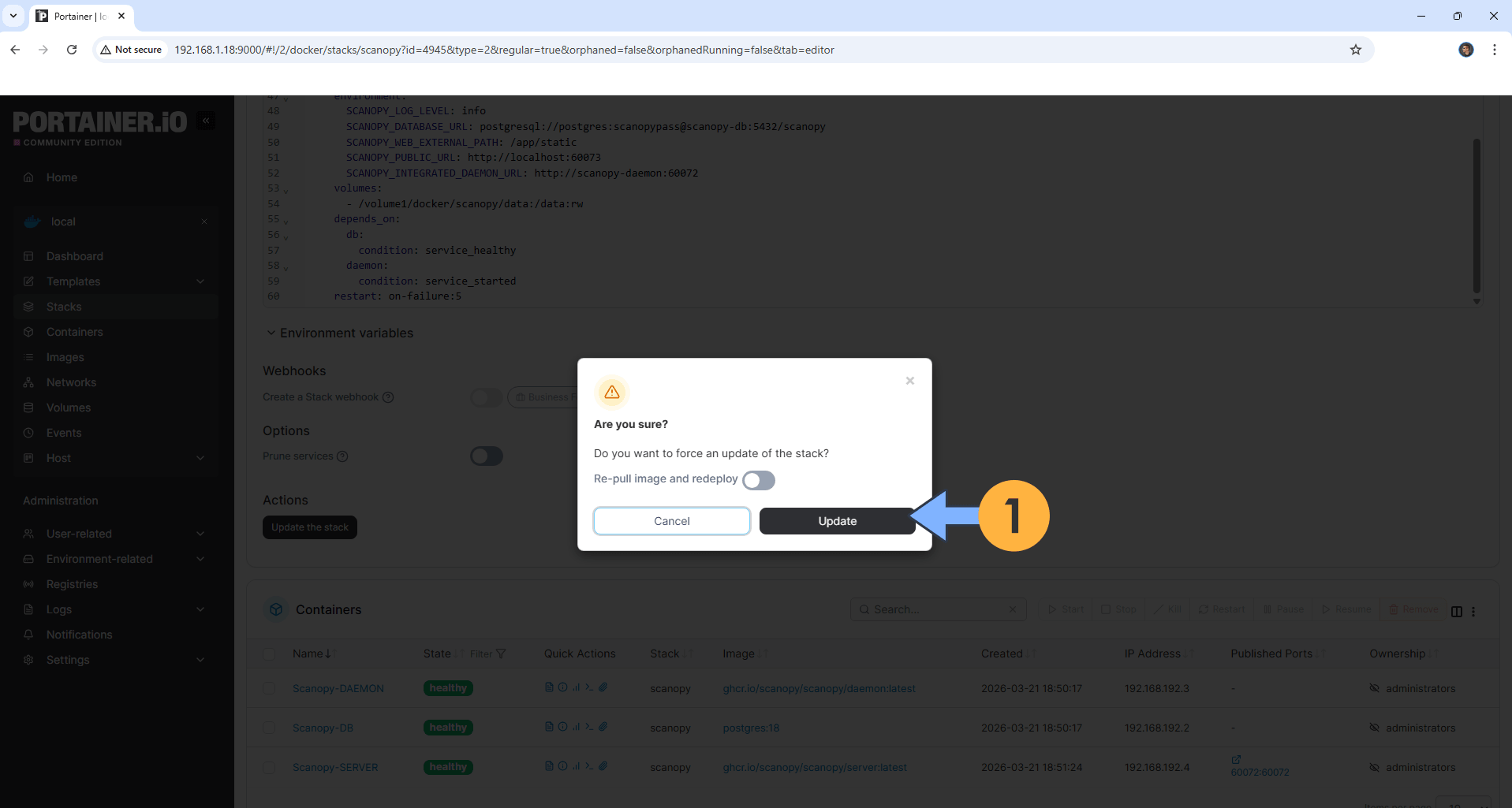
Click Update. Follow the instructions in the image below.
STEP 21
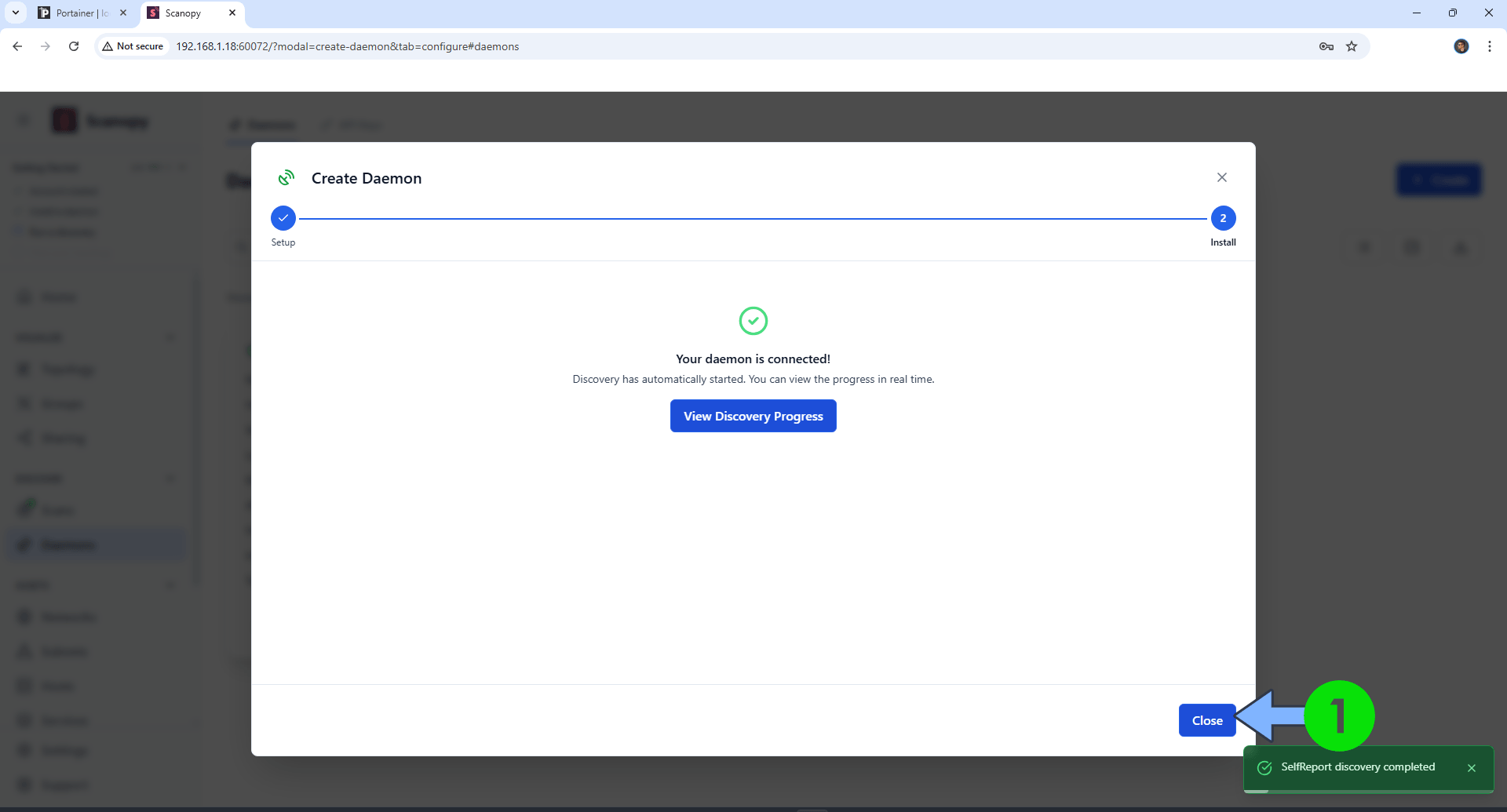
Go Back to your Scanopy page, then click Close. Your Network should have been discovered. Follow the instructions in the image below.
STEP 22
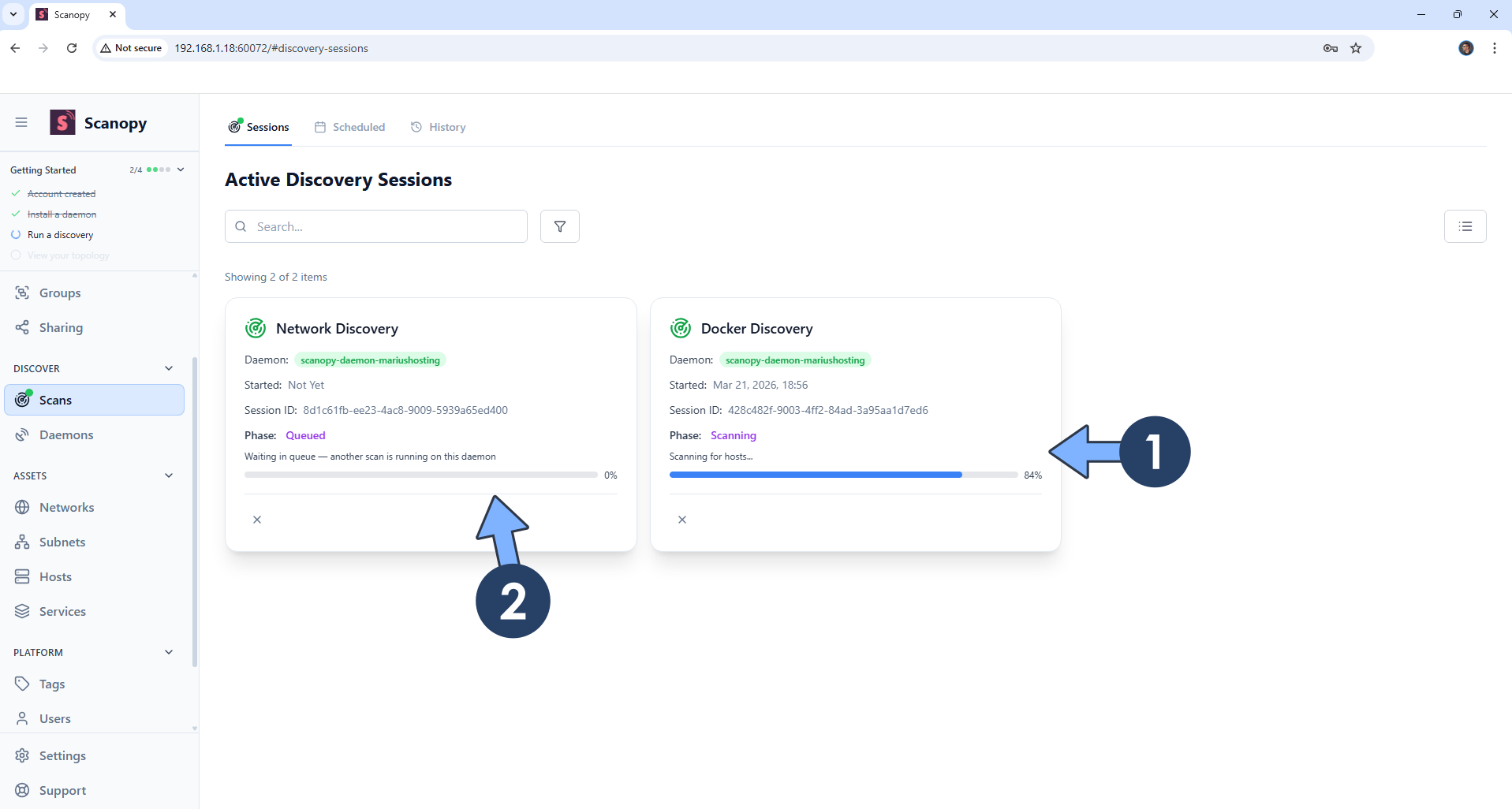
Wait until your Docker Discovery and Network Discovery are scanned. The process will take quite a bit of time, approximately 15 minutes. First the Docker Discovery, then the Network Discovery. After the scan is completed, go straight to STEP 23. Follow the instructions in the image below.
STEP 23
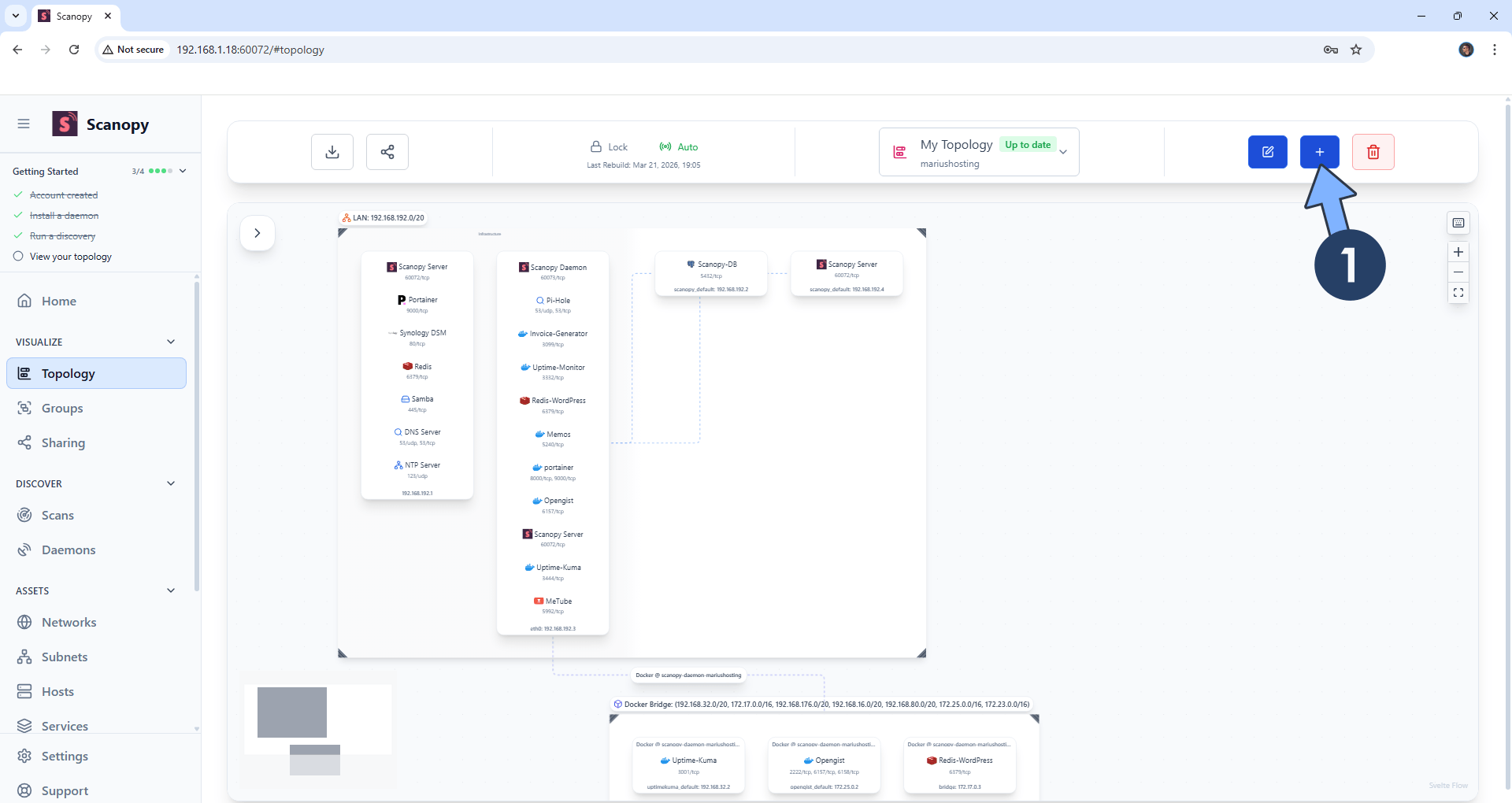
On the left sidebar, click Topology. Click the + icon. Follow the instructions in the image below.
STEP 24
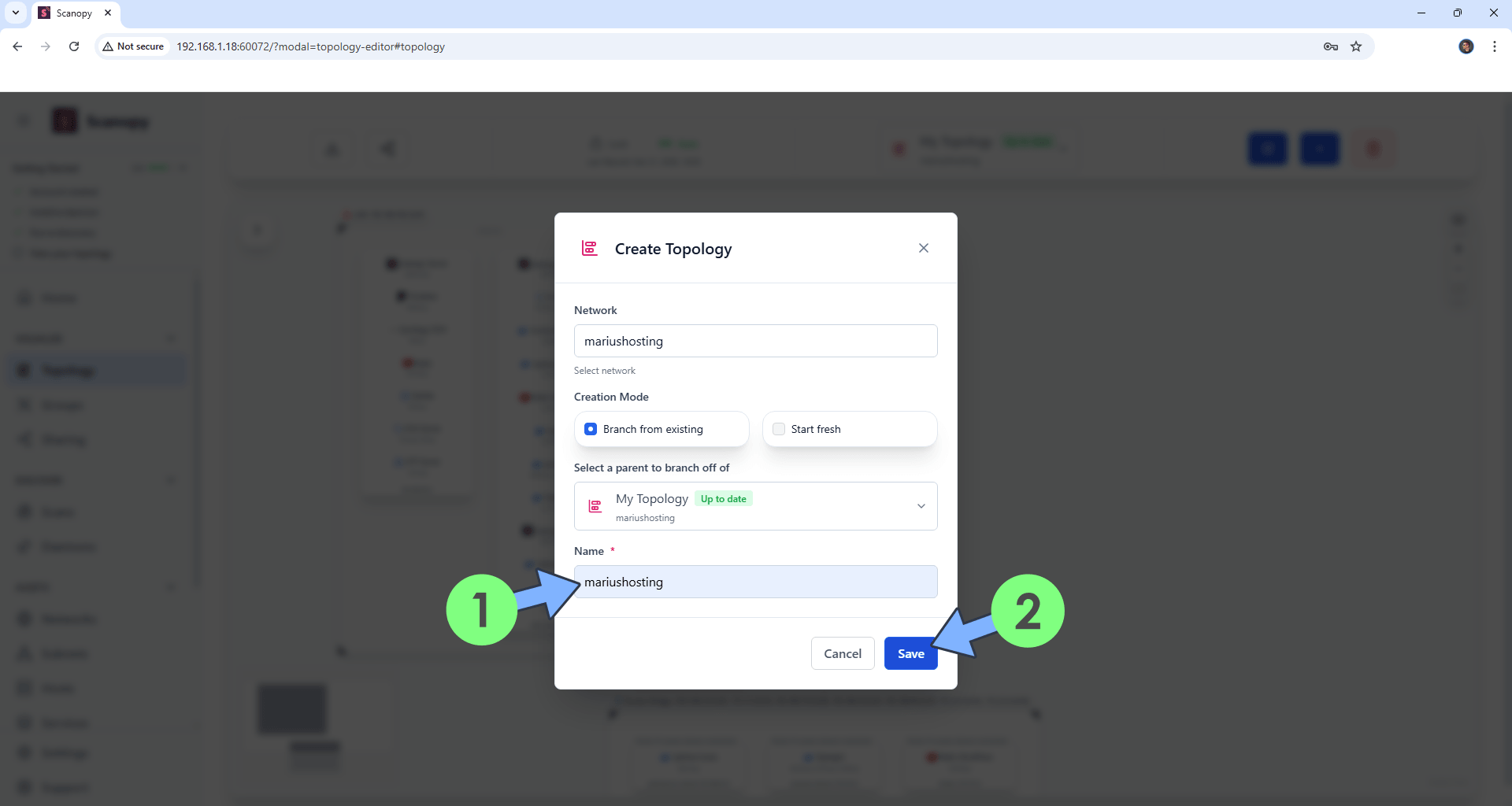
Type in a Name, then click Save. Follow the instructions in the image below.
STEP 25
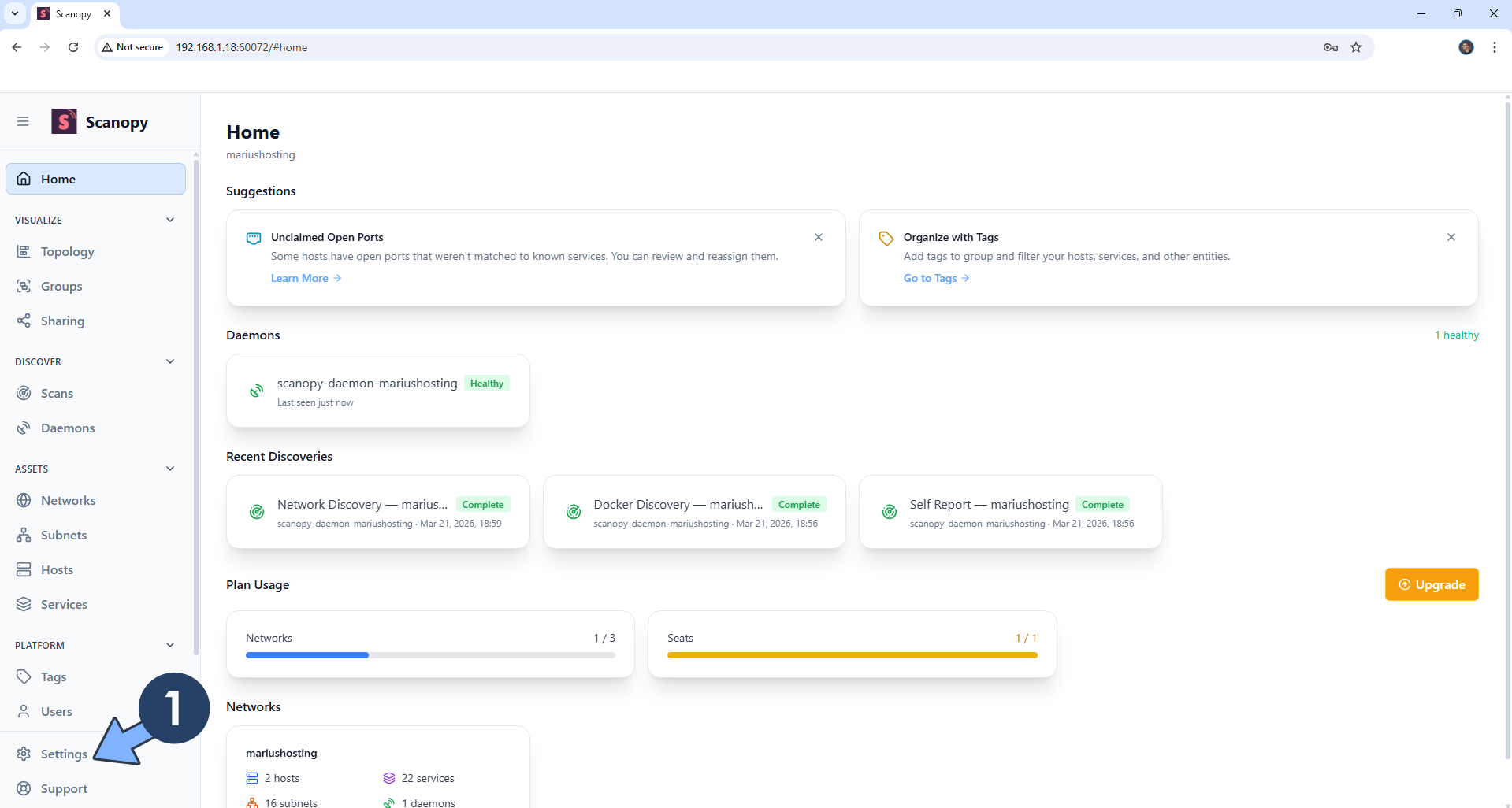
On the left sidebar, click Settings. Follow the instructions in the image below.
STEP 26
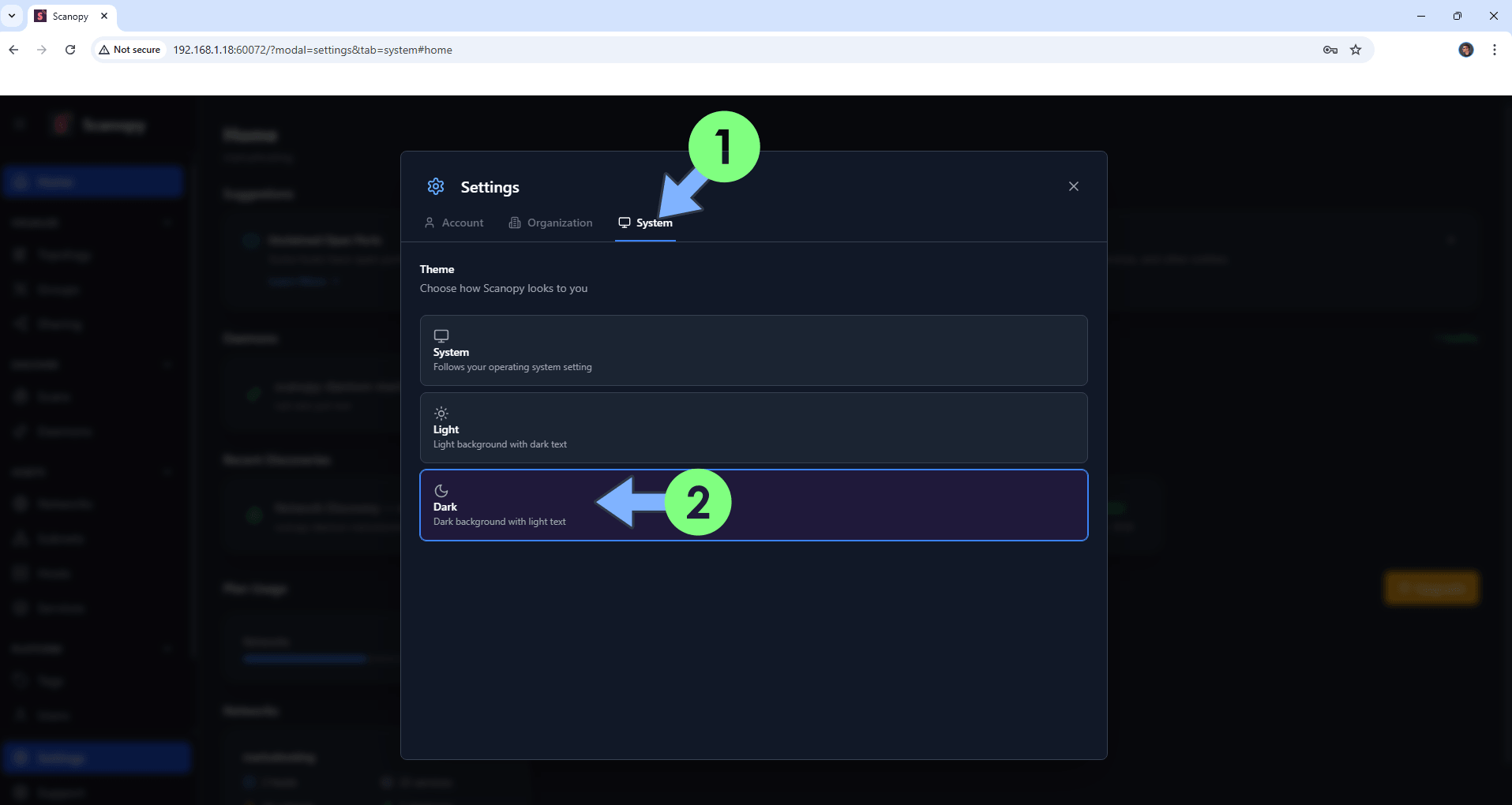
Click the System tab. Switch the theme to Dark. Follow the instructions in the image below.
STEP 27
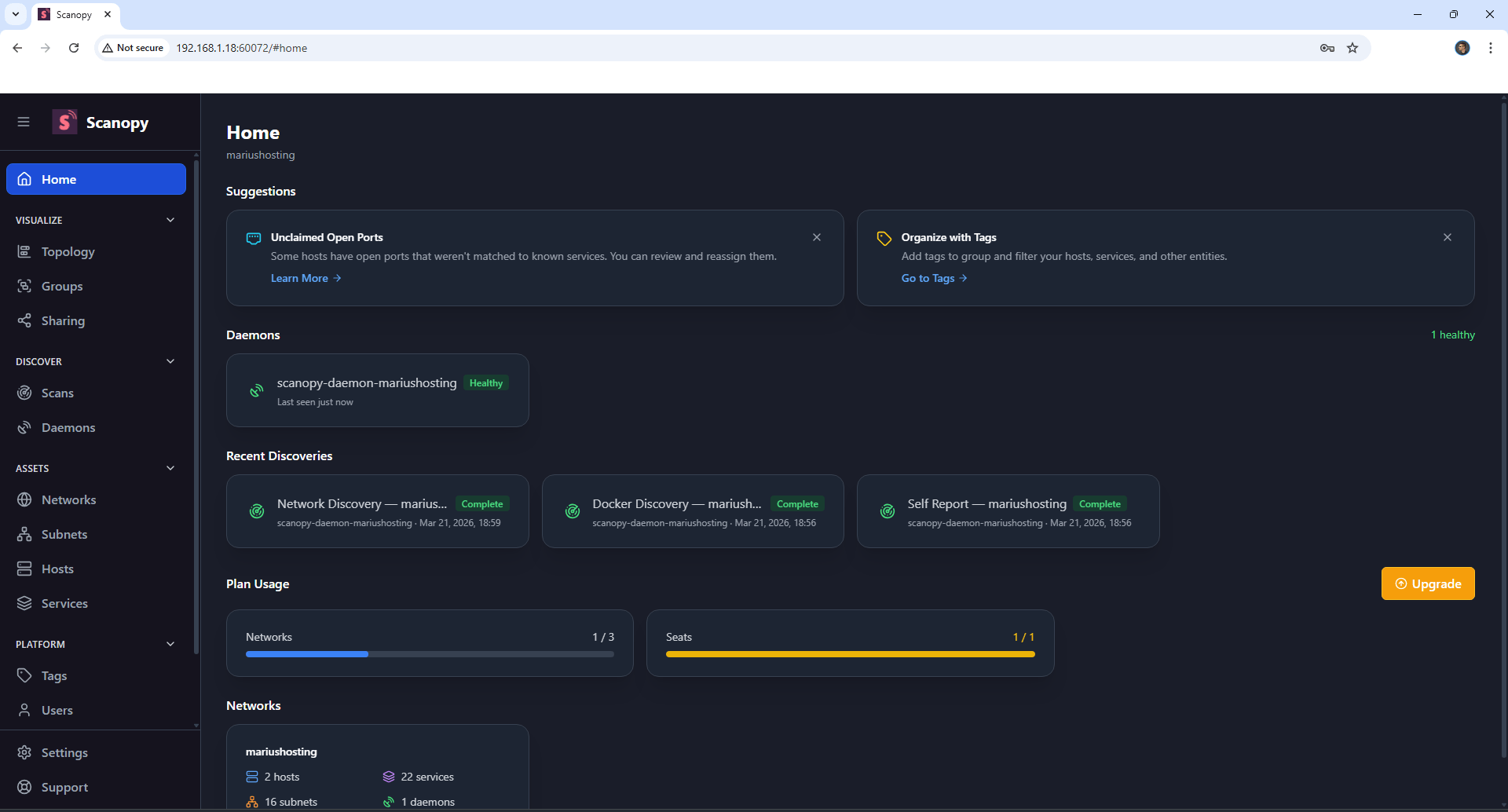
Your Scanopy dashboard at a glance!
Enjoy Scanopy!
If you encounter issues by using this container, make sure to check out the Common Docker issues article.
Note: If you want to run the Scanopy container over HTTPS, check How to Run Docker Containers Over HTTPS. In order to make Scanopy work via HTTPS, it’s mandatory to activate WebSocket.
Note: Can I run Docker on my Synology NAS? See the supported models.
Note: How to Back Up Docker Containers on your Synology NAS.
Note: Find out how to update the Scanopy container with the latest image.
Note: How to Free Disk Space on Your NAS if You Run Docker.
Note: How to Schedule Start & Stop For Docker Containers.
Note: How to Activate Email Notifications.
Note: How to Add Access Control Profile on Your NAS.
Note: How to Change Docker Containers Restart Policy.
Note: How to Use Docker Containers With VPN.
Note: Convert Docker Run Into Docker Compose.
Note: How to Clean Docker.
Note: How to Clean Docker Automatically.
Note: Best Practices When Using Docker and DDNS.
Note: Some Docker Containers Need WebSocket.
Note: Find out the Best NAS Models For Docker.
Note: Activate Gmail SMTP For Docker Containers.
This post was updated on Saturday / April 4th, 2026 at 3:18 PM