

Checkmate is an open-source, self-hosted monitoring tool designed to track server hardware, uptime, response times, and incidents in real-time with beautiful visualizations. It’s an alternative to Uptime Kuma. It supports diverse checks including Docker, ping, SSL, ports, game servers, and page speed, plus optional infrastructure metrics via a lightweight agent, customizable status pages, incident tracking, and alerts across email, Discord, Slack, and more. In this step by step guide I will show you how to install Checkmate on your Synology NAS using Docker & Portainer. ⚠️Note: This guide works only on a Synology NAS that supports AVX.
💡Note: This guide works perfectly with the latest Checkmate v3.12.0 release.
STEP 1
Please Support My work by Making a Donation.
STEP 2
Install Portainer using my step by step guide. If you already have Portainer installed on your Synology NAS, skip this STEP. Attention: Make sure you have installed the latest Portainer version.
STEP 3
Make sure you have a synology.me Wildcard Certificate. Follow my guide to get a Wildcard Certificate. If you already have a synology.me Wildcard certificate, skip this STEP.
STEP 4
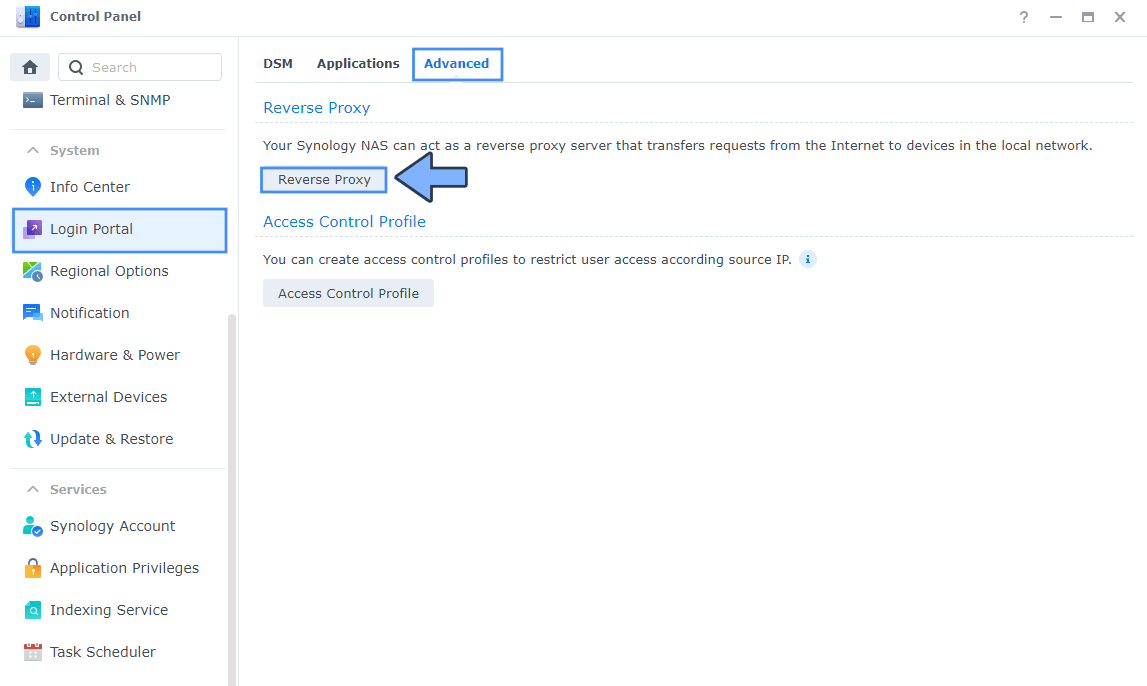
Go to Control Panel / Login Portal / Advanced Tab / click Reverse Proxy. Follow the instructions in the image below.
STEP 5
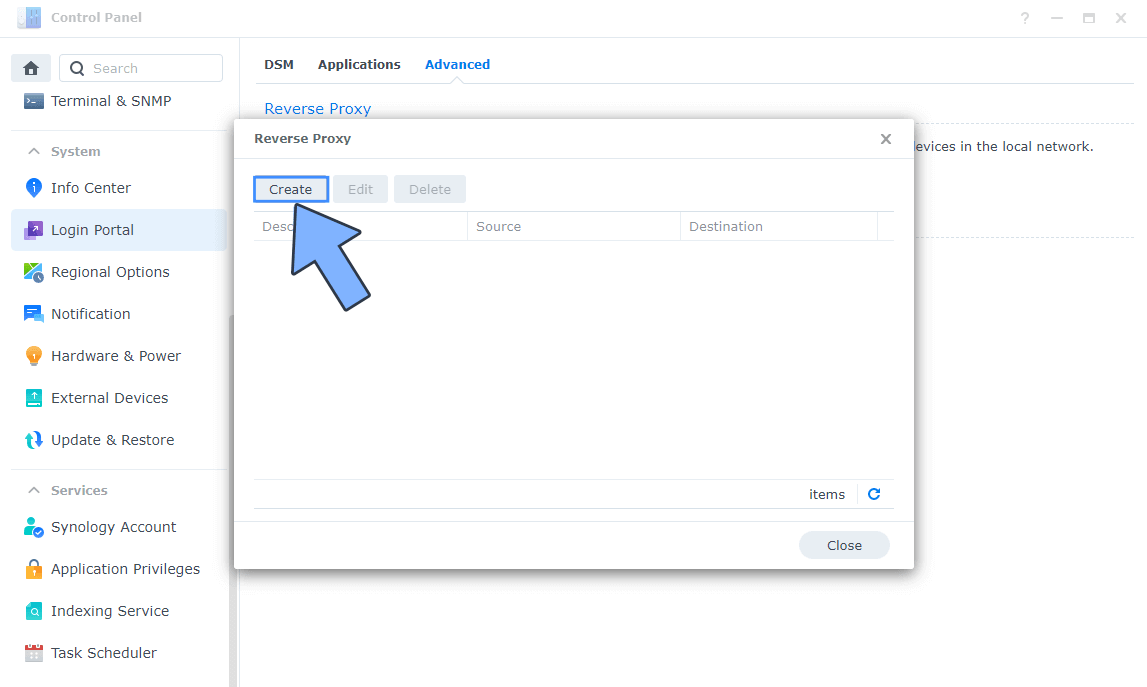
Now click the “Create” button. Follow the instructions in the image below.
STEP 6
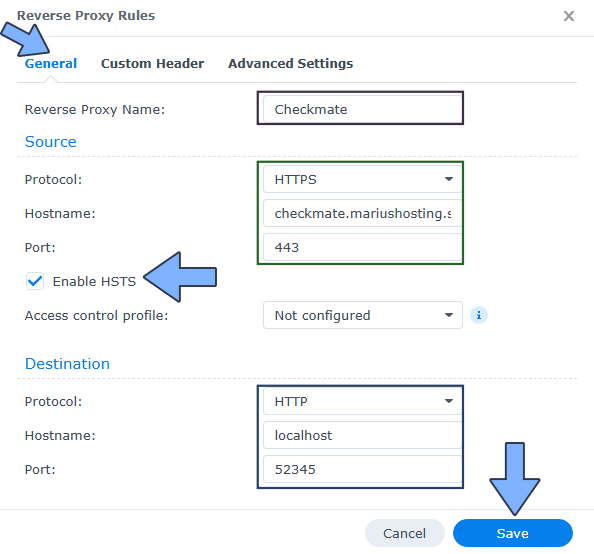
After you click the Create button, the window below will open. Follow the instructions in the image below.
On the General area, set the Reverse Proxy Name description: type in Checkmate. After that, add the following instructions:
Source:
Protocol: HTTPS
Hostname: checkmate.yourname.synology.me
Port: 443
Check Enable HSTS
Destination:
Protocol: HTTP
Hostname: localhost
Port: 52345
STEP 7
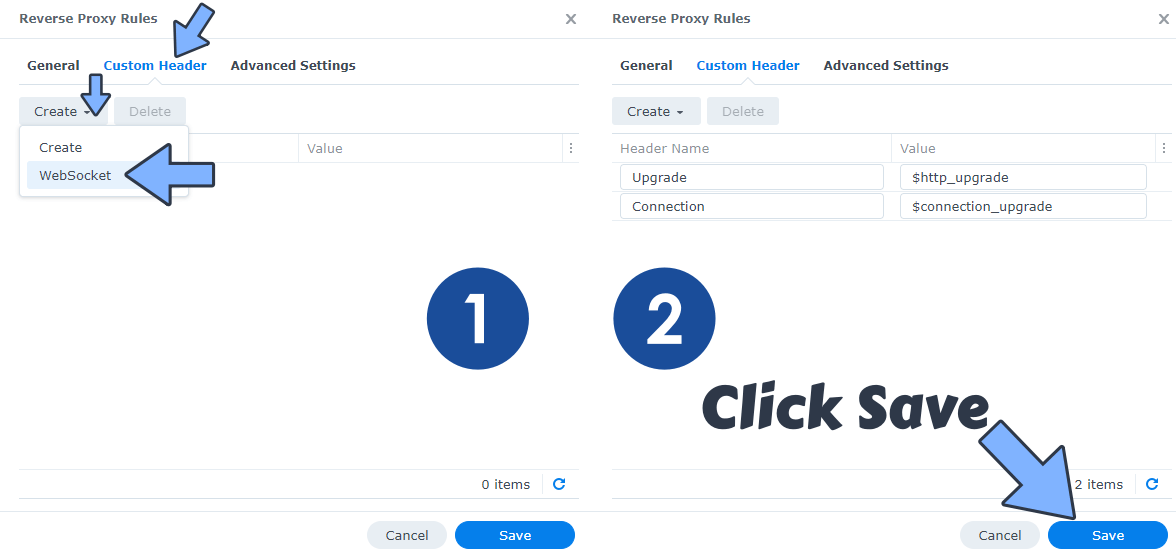
On the Reverse Proxy Rules, click the Custom Header tab. Click Create and then, from the drop-down menu, click WebSocket. After you click on WebSocket, two Header Names and two Values will be automatically added. Click Save. Follow the instructions in the image below.
STEP 8
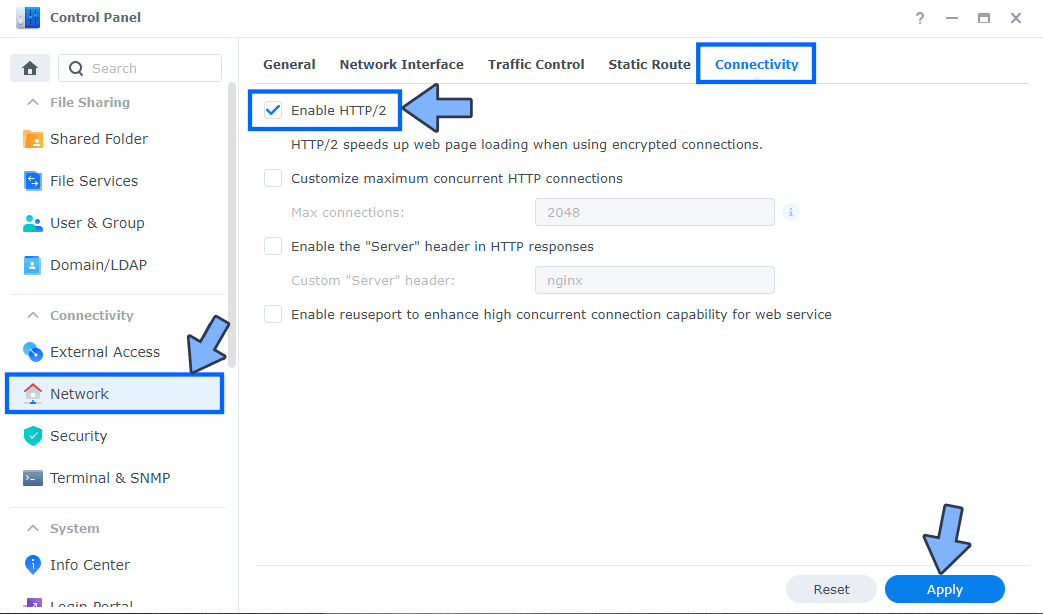
Go to Control Panel / Network / Connectivity tab/ Check Enable HTTP/2 then click Apply. Follow the instructions in the image below.
STEP 9
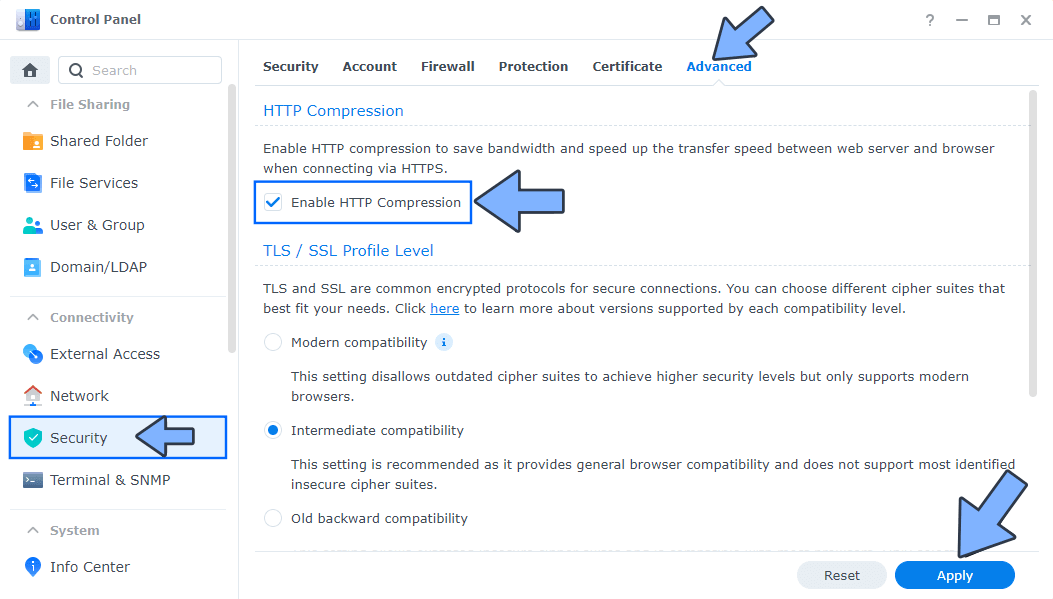
Go to Control Panel / Security / Advanced tab/ Check Enable HTTP Compression then click Apply. Follow the instructions in the image below.
STEP 10
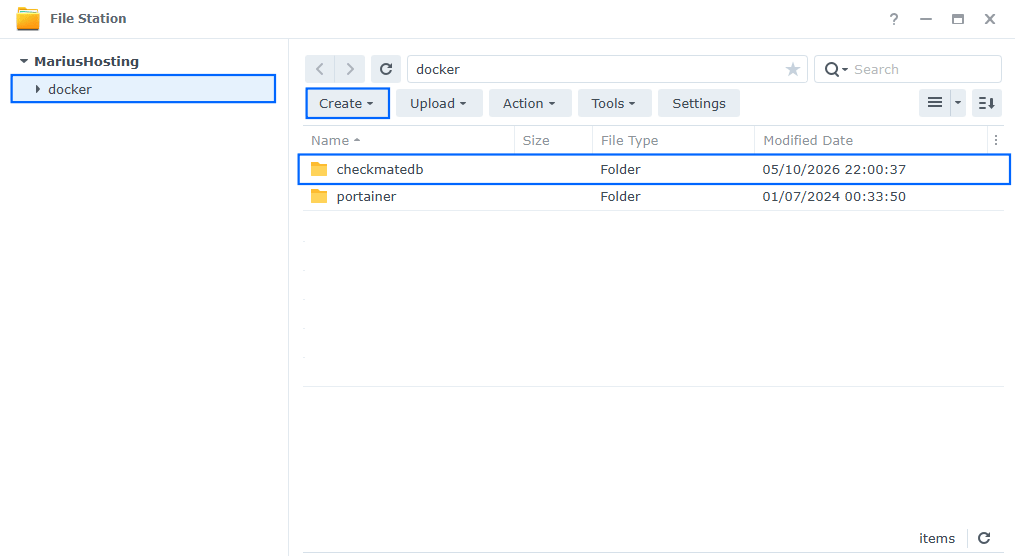
Go to File Station and open the docker folder. Inside the docker folder, create one new folder and name it checkmatedb. Follow the instructions in the image below.
Note: Be careful to enter only lowercase, not uppercase letters.
STEP 11
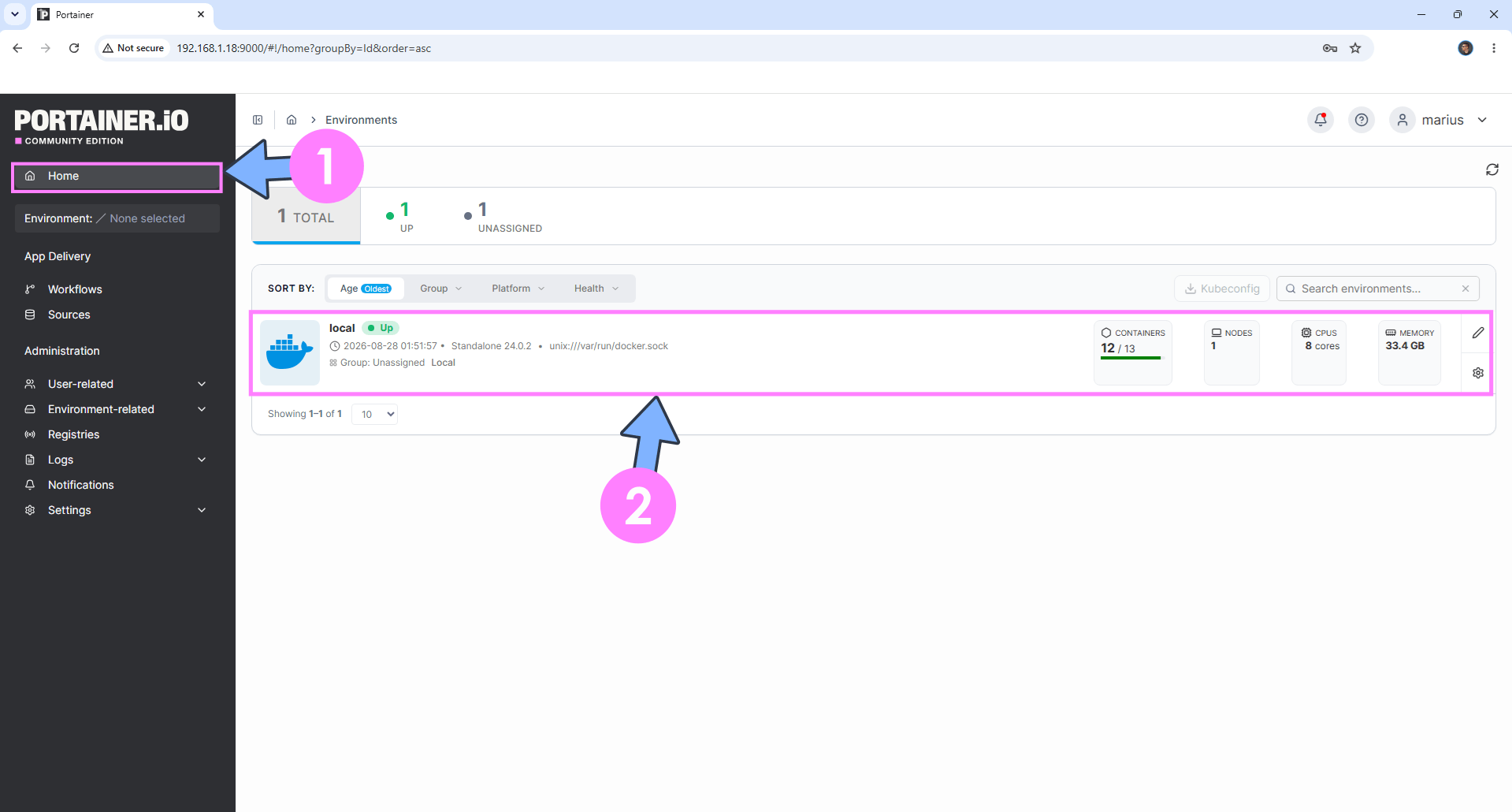
Log into Portainer using your username and password. On the left sidebar in Portainer, click on Home then click inside the local rectangle. Follow the instructions in the image below.
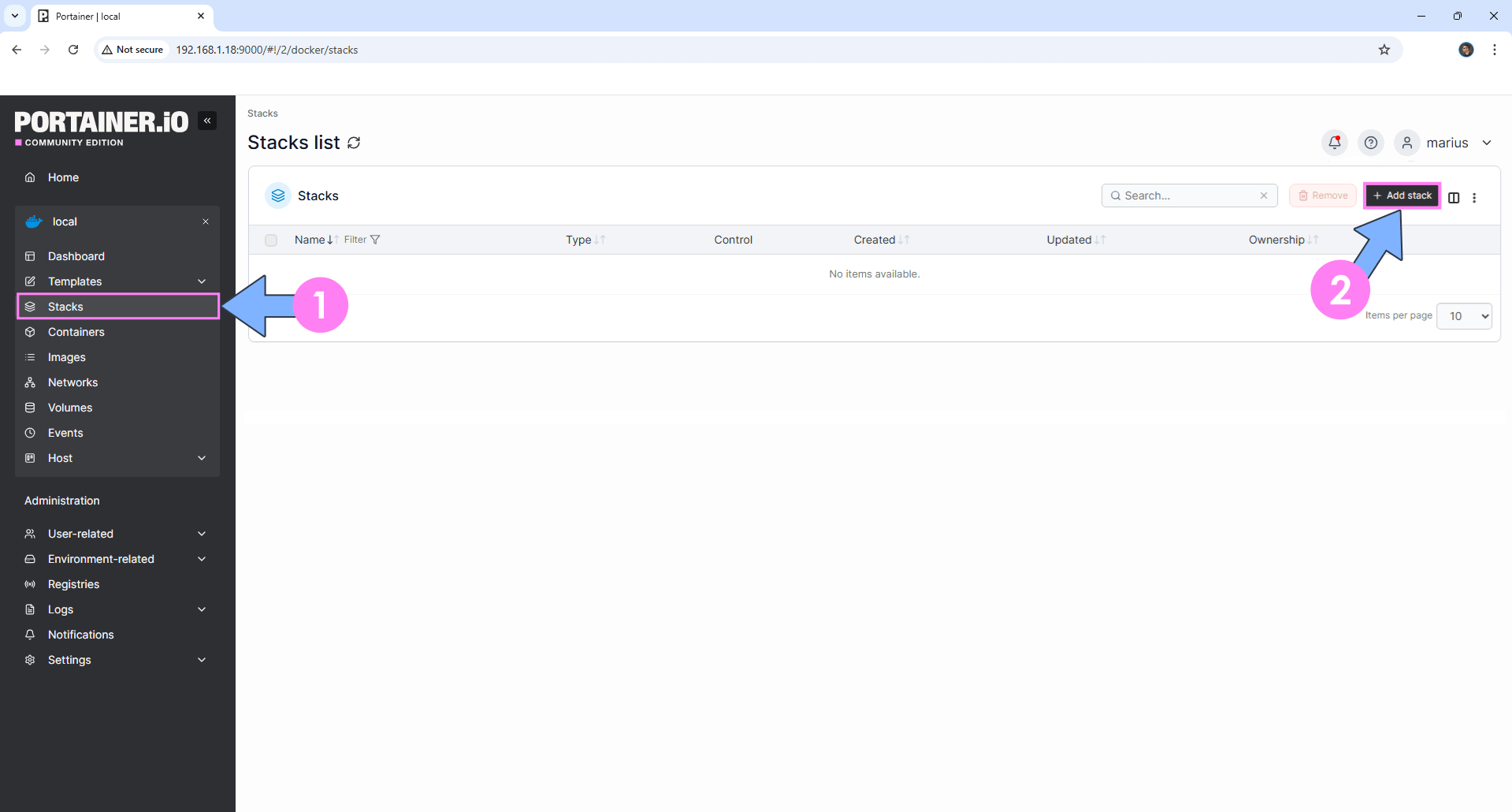
On the left sidebar in Portainer, click on Stacks then + Add stack. Follow the instructions in the image below.
STEP 12
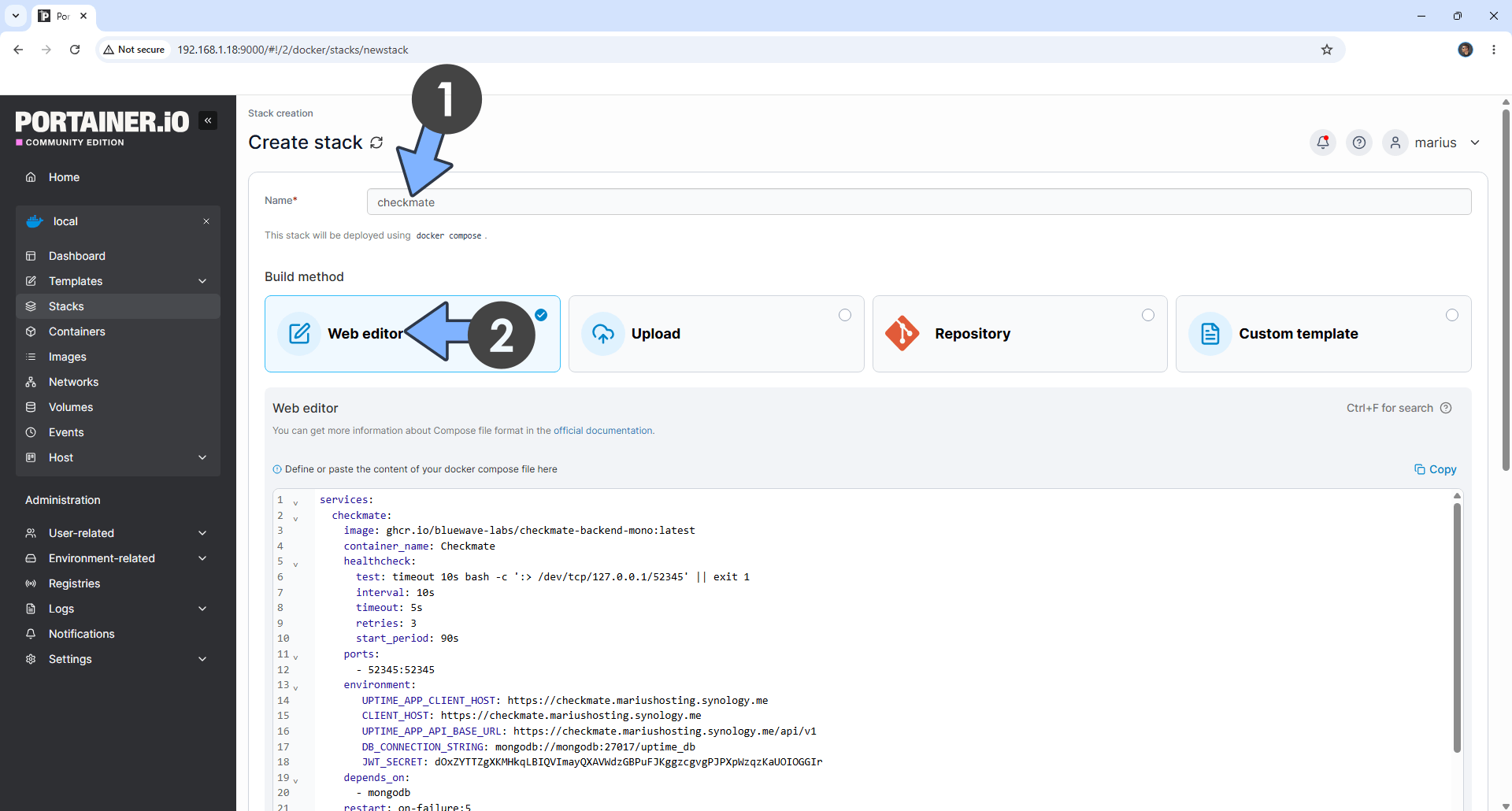
In the Name field, type in checkmate. Follow the instructions in the image below.
Note: Copy Paste the code below in the Portainer Stacks Web editor.
services:
  checkmate:
    image: ghcr.io/bluewave-labs/checkmate-backend-mono:latest
    container_name: Checkmate
    healthcheck:
      test: timeout 10s bash -c ':> /dev/tcp/127.0.0.1/52345' || exit 1
      interval: 10s
      timeout: 5s
      retries: 3
      start_period: 90s
    ports:
      - 52345:52345
    environment:
       UPTIME_APP_CLIENT_HOST: https://checkmate.yourname.synology.me
       CLIENT_HOST: https://checkmate.yourname.synology.me
       UPTIME_APP_API_BASE_URL: https://checkmate.yourname.synology.me/api/v1
       DB_CONNECTION_STRING: mongodb://mongodb:27017/uptime_db
       JWT_SECRET: dOxZYTTZgXKMHkqLBIQVImayQXAVWdzGBPuFJKggzcgvgPJPXpWzqzKaUOIOGGIr
    depends_on:
      - mongodb
    restart: on-failure:5

  mongodb:
    image: ghcr.io/bluewave-labs/checkmate-mongo:latest
    container_name: Checkmate-DB
    user: 1026:100
    command: ["mongod", "--quiet", "--bind_ip_all"]
    volumes:
      - /volume1/docker/checkmatedb:/data/db:rw
      - /volume1/docker/checkmatedb:/data/configdb:rw
    healthcheck:
      test: echo 'db.runCommand("ping").ok' | mongosh localhost:27017/test --quiet
      interval: 10s
      timeout: 10s
      start_period: 40s
      retries: 5
    restart: on-failure:5
Note: Before you paste the code above in the Web editor area below, change the value for UPTIME_APP_CLIENT_HOST and type in your own synology.me DDNS with https:// at the beginning that you have previously created at STEP 6.
Note: Before you paste the code above in the Web editor area below, change the value for CLIENT_HOST and type in your own synology.me DDNS with https:// at the beginning that you have previously created at STEP 6.
Note: Before you paste the code above in the Web editor area below, change the value for UPTIME_APP_API_BASE_URL and type in your own synology.me DDNS with https:// at the beginning that you have previously created at STEP 6 followed by /api/v1
Note: Before you paste the code above in the Web editor area below, change the value for JWT_SECRET. (Generate your own Random 64 length JWT_SECRET.)
Note: Before you paste the code above in the Web editor area below, change the value numbers for user with your own UID and GID values. (Follow my step by step guide on how to do this.) 1026 is my personal UID value and 100 is my personal GID value. You have to type in your own values.
STEP 13
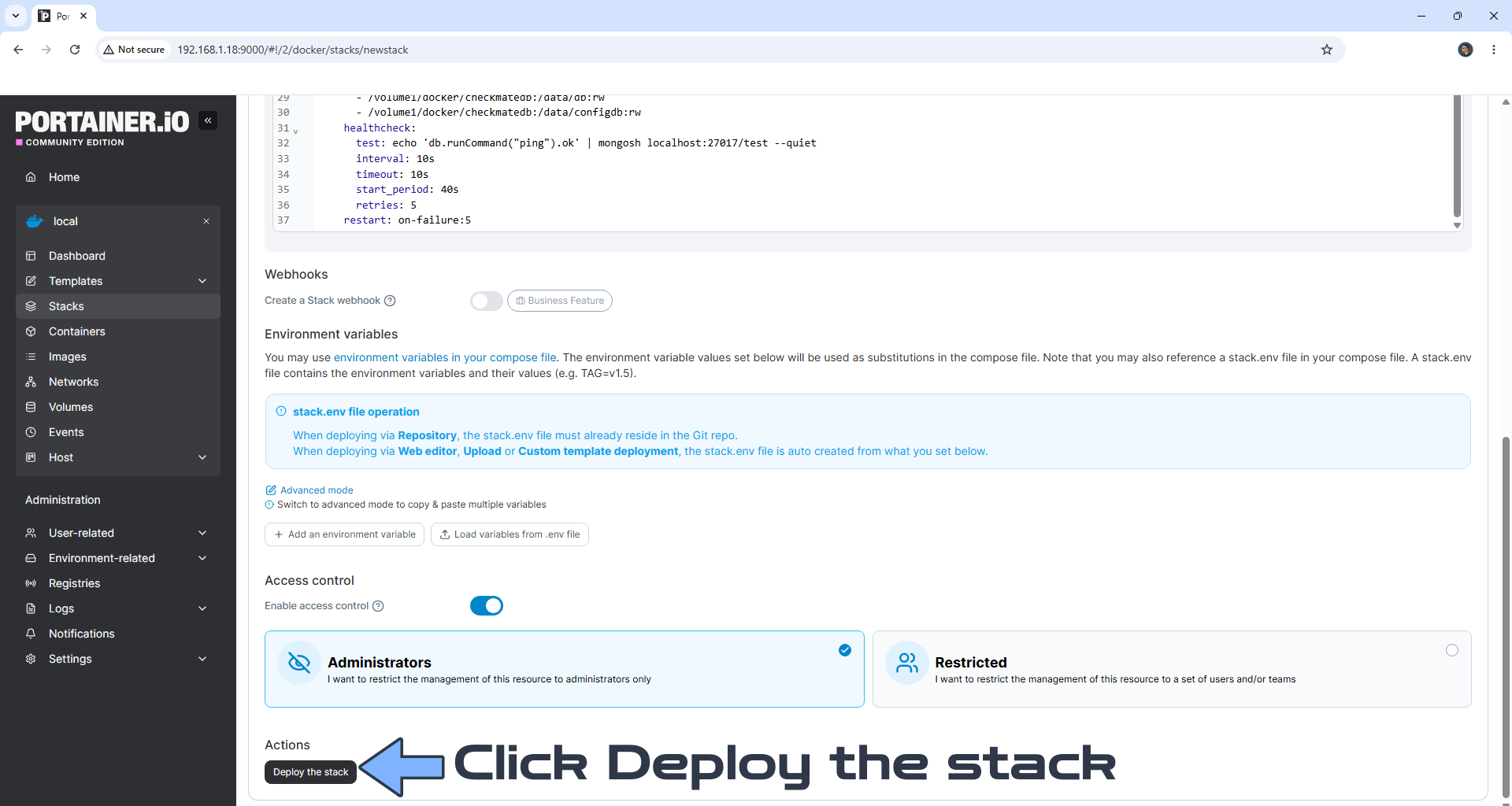
Scroll down on the page until you see a button called Deploy the stack. Click on it. Follow the instructions in the image below. The installation process can take up to a few minutes. It will depend on your Internet speed connection.
STEP 14
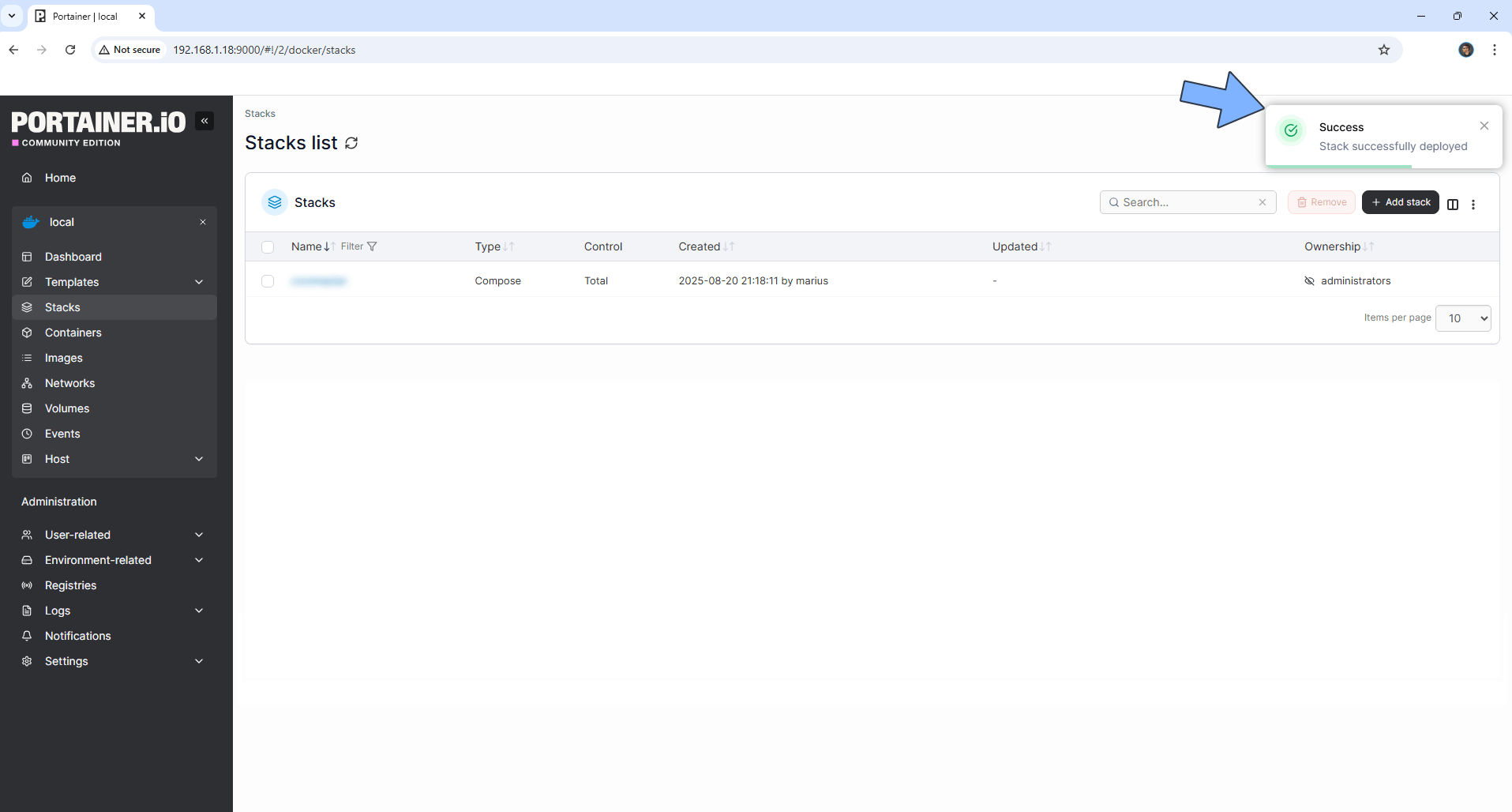
If everything goes right, you will see the following message at the top right of your screen: “Success Stack successfully deployed“.
STEP 15
🟢Please Support My work by Making a Donation. Almost 99,9% of the people that install something using my guides forget to support my work, or just ignore STEP 1. I’ve been very honest about this aspect of my work since the beginning: I don’t run any ADS, I don’t require subscriptions, paid or otherwise, I don’t collect IPs, emails, and I don’t have any referral links from Amazon or other merchants. I also don’t have any POP-UPs or COOKIES. I have repeatedly been told over the years how much I have contributed to the community. It’s something I love doing and have been honest about my passion since the beginning. But I also Need The Community to Support me Back to be able to continue doing this work.
STEP 16
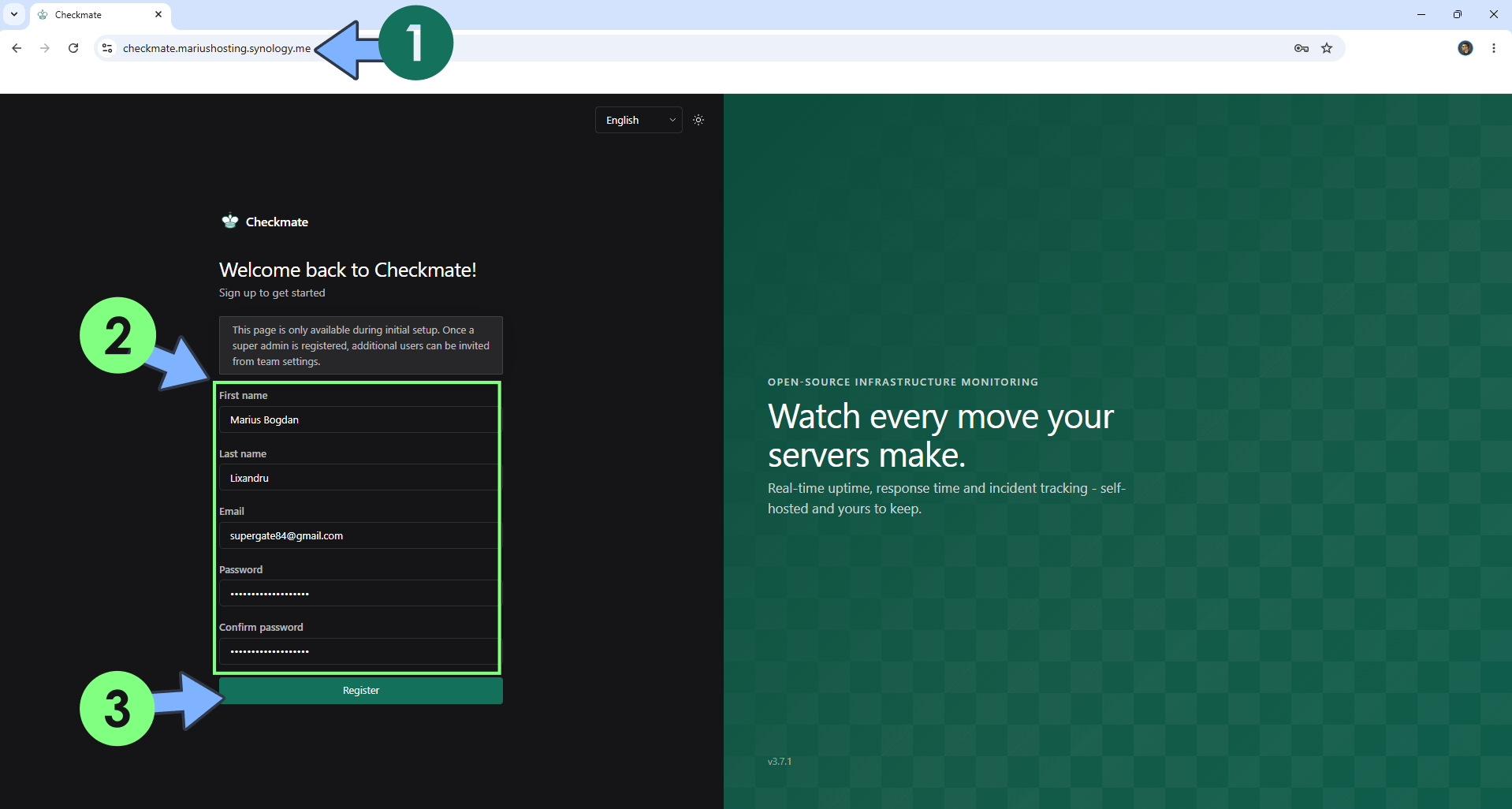
Now open your browser and type in your HTTPS/SSL certificate like this https://checkmate.yourname.synology.me In my case it’s https://checkmate.mariushosting.synology.me If everything goes right, you will see the Checkmate registration page. Type in your own details, then click Register. Follow the instructions in the image below.
STEP 17
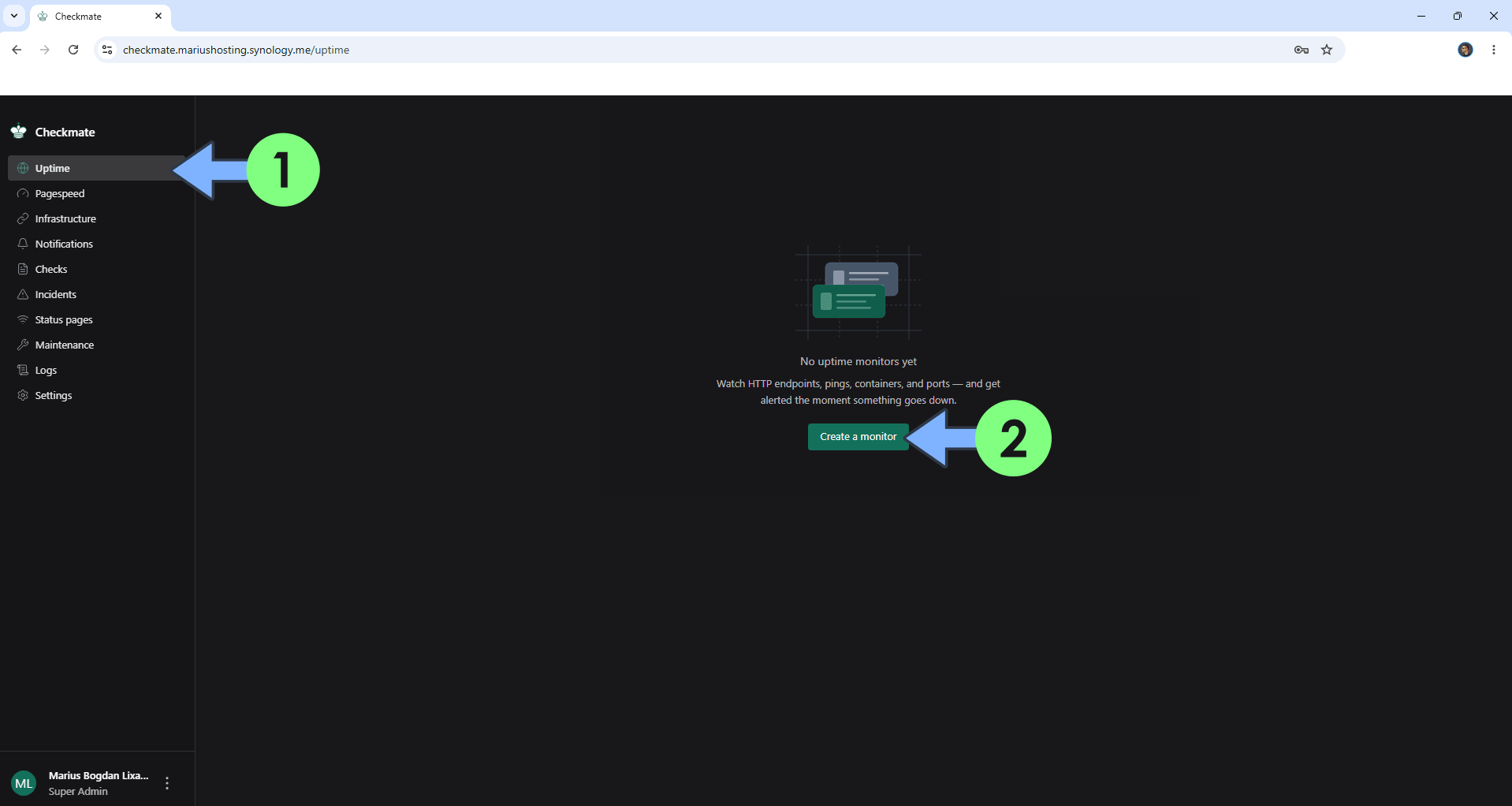
On the left sidebar, click Uptime. Click Create a monitor. Follow the instructions in the image below.
STEP 18
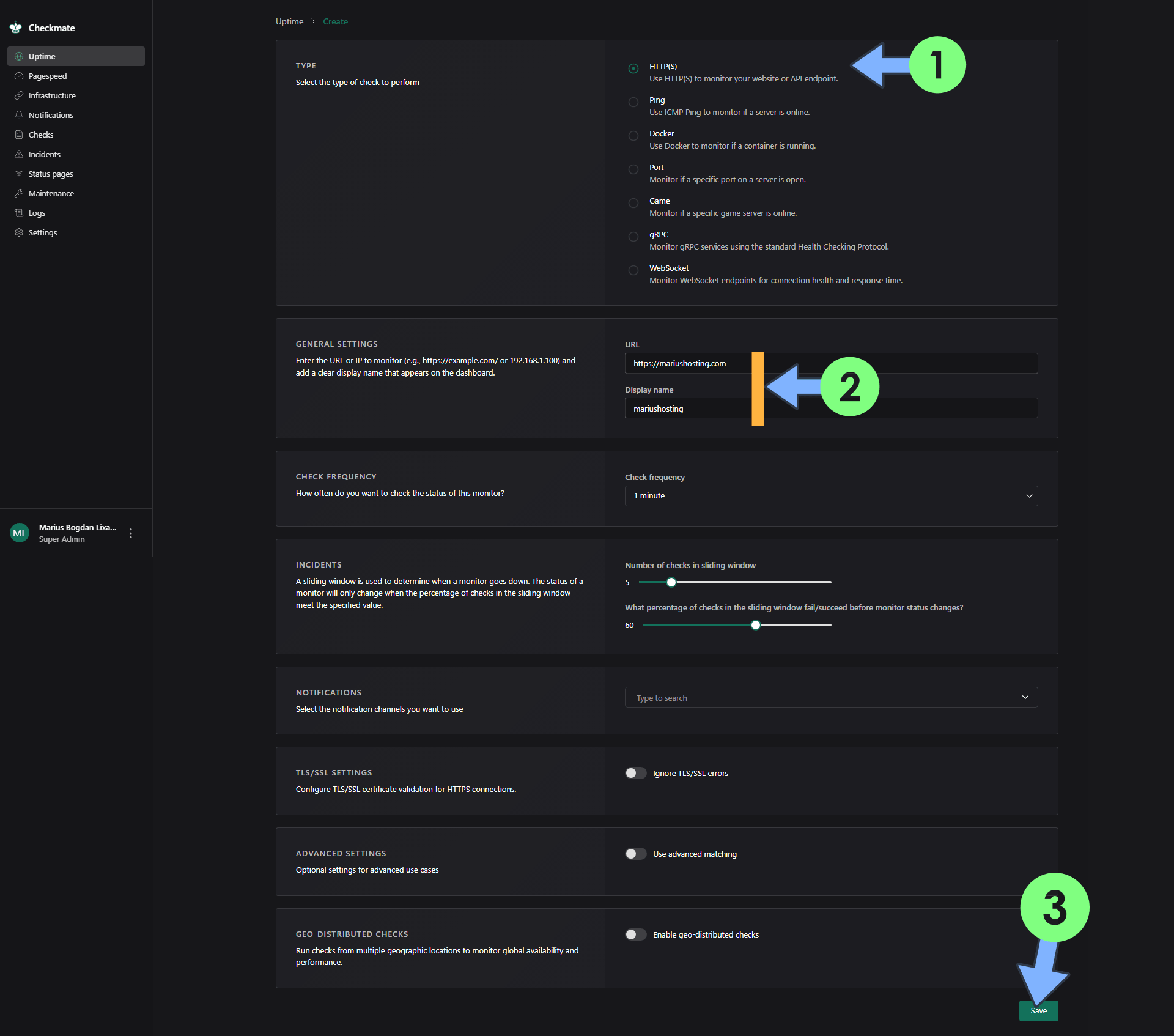
Add your own website details that you want to monitor. Click Save. Follow the instructions in the image below.
STEP 19
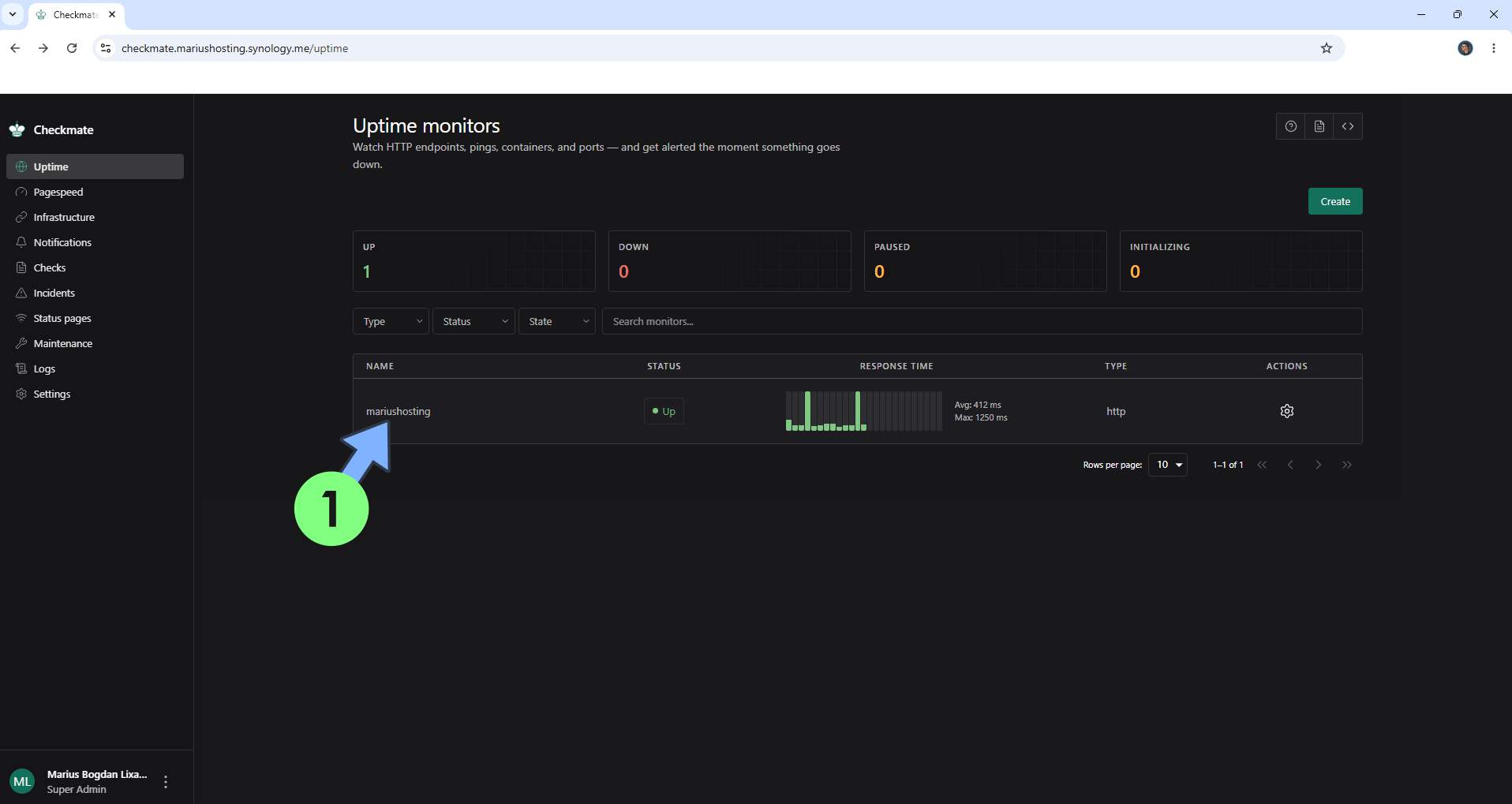
Click on your Website name. Follow the instructions in the image below.
STEP 20
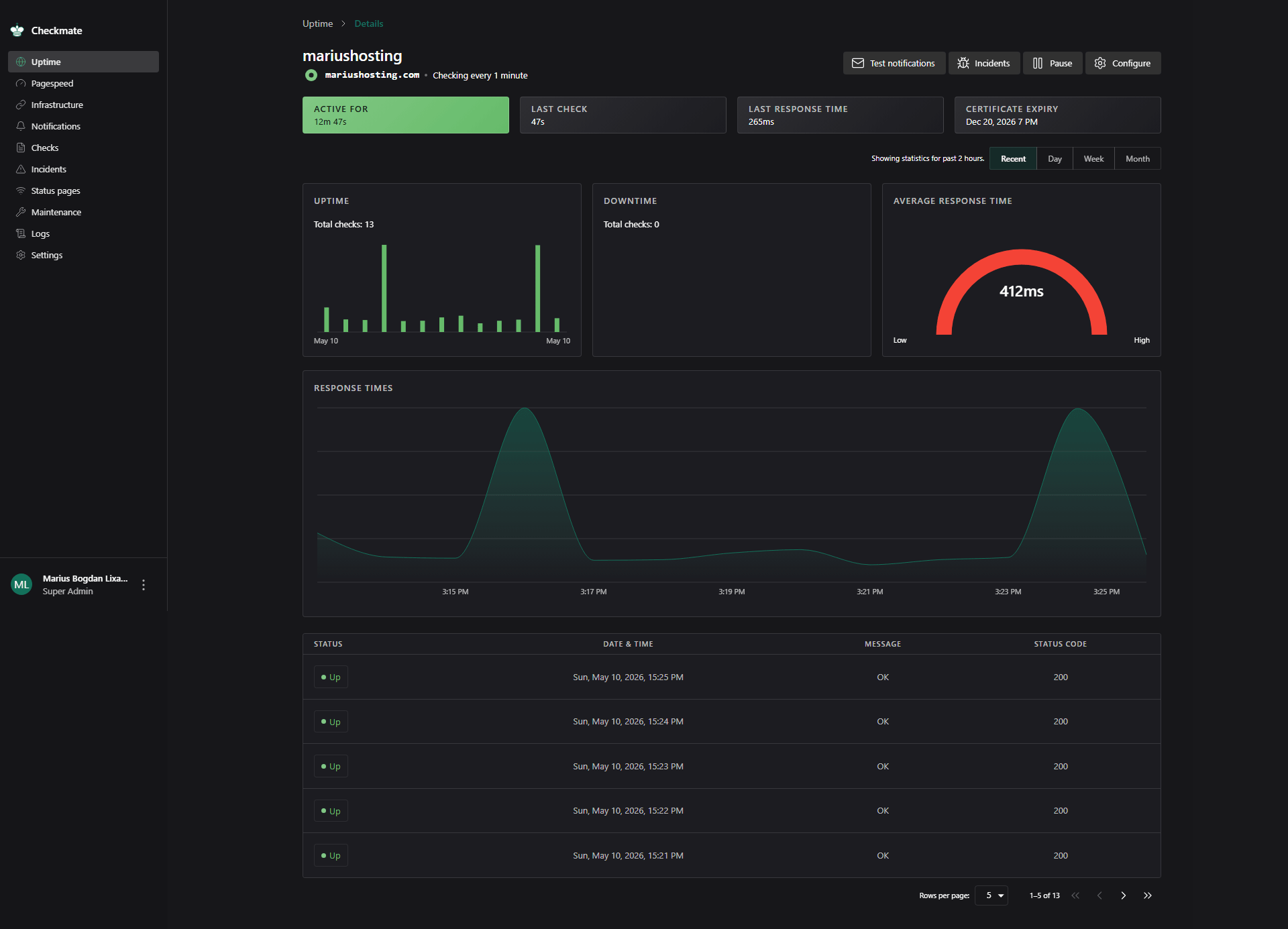
In this area, you will see your website monitor with all the detailed stats at a glance! Go straight to the next STEP.
STEP 21
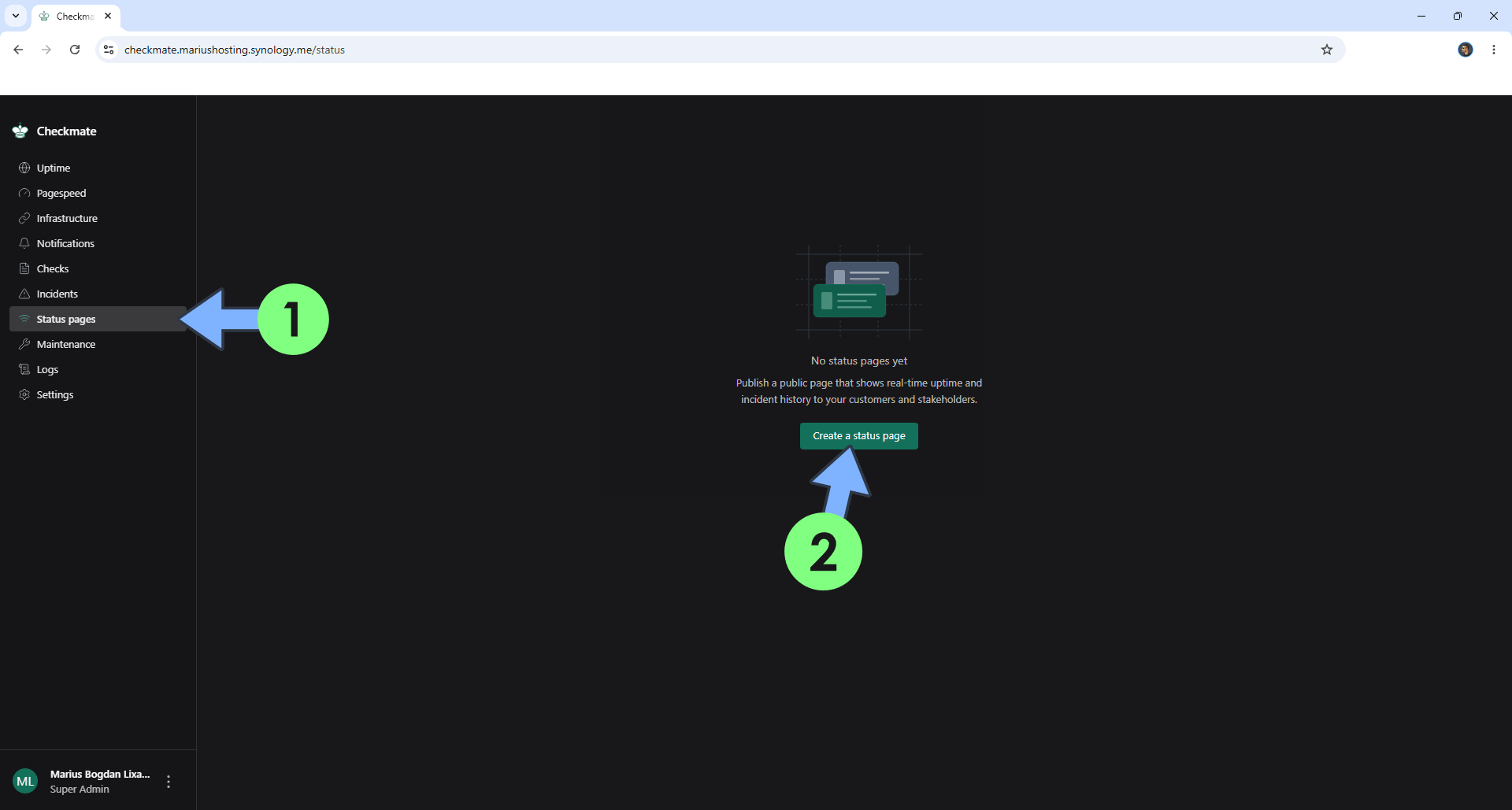
On the left sidebar, click Status pages. Click Create a status page. Follow the instructions in the image below.
STEP 22
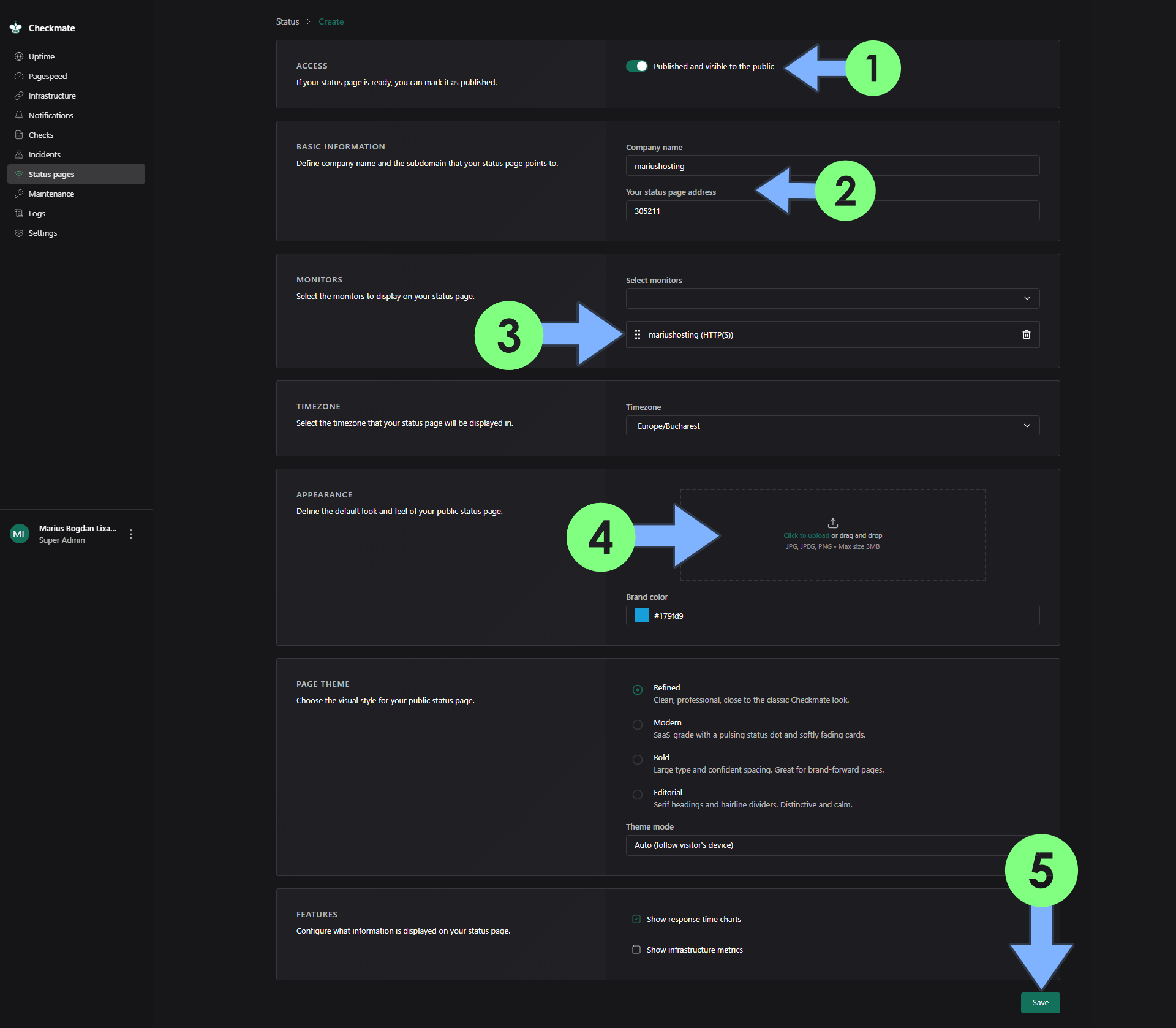
Add your website details, then select the monitor that you want to display in the status page. Upload your logo then click Save. Follow the instructions in the image below.
STEP 23
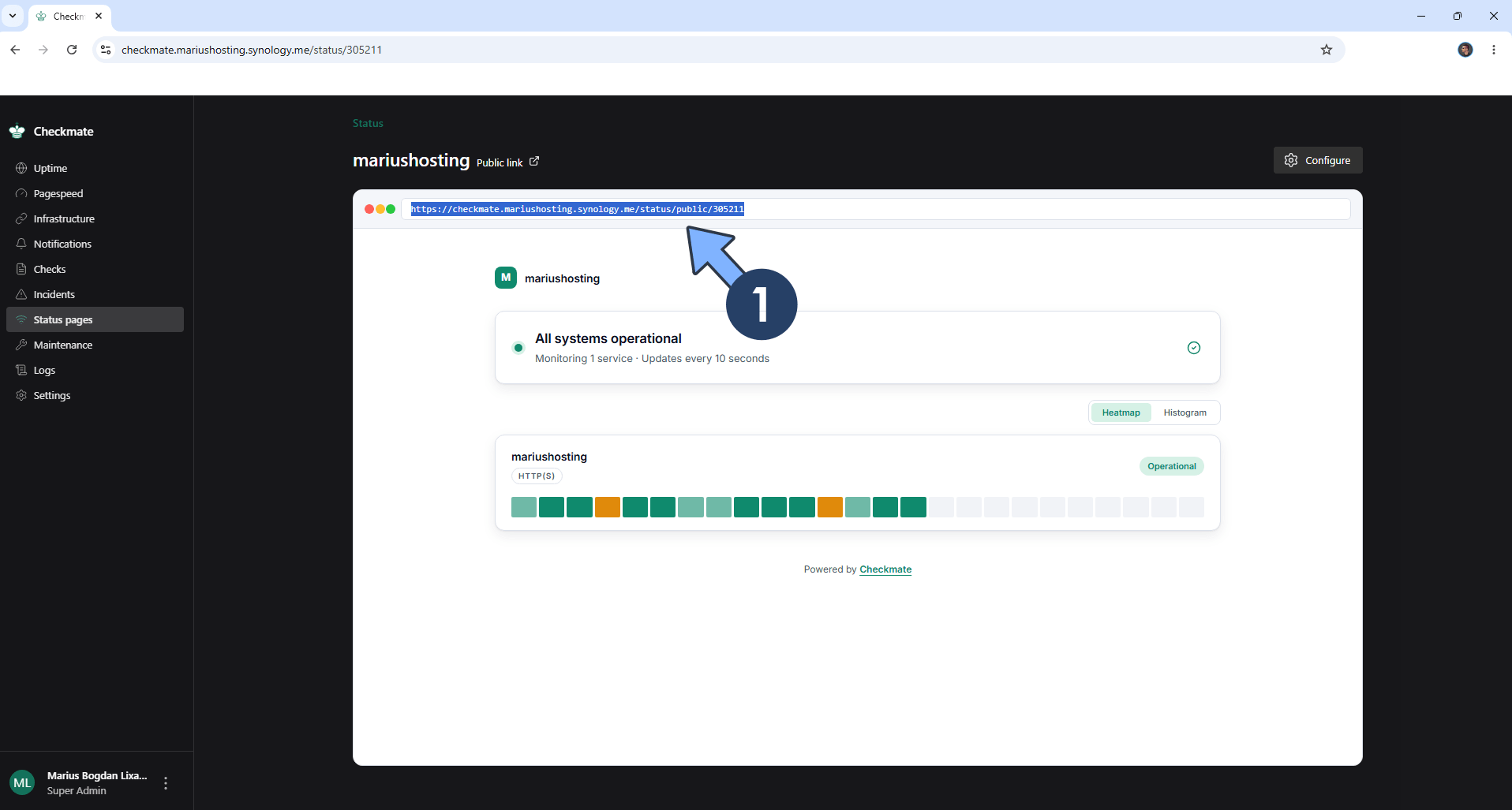
Copy the public link then open in a new page. Follow the instructions in the image below.
STEP 24
Your public status page at a glance!
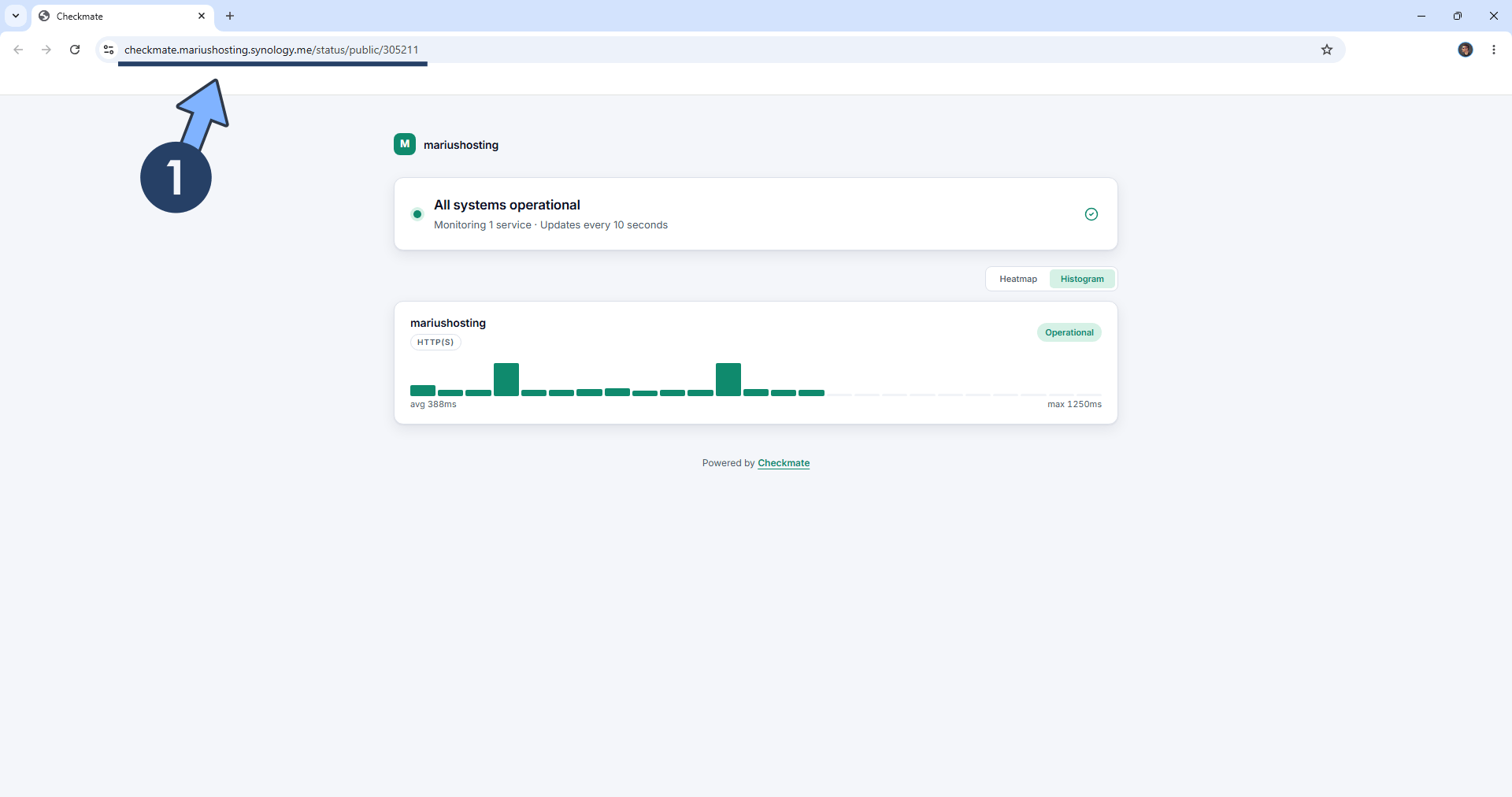
Enjoy Checkmate!
🆘TROUBLESHOOTING
If you encounter issues by using this container, make sure to check out the Common Docker issues article. ⚠️Note: This guide works only on a Synology NAS that supports AVX.
Note: Can I run Docker on my Synology NAS? See the supported models.
Note: How to Back Up Docker Containers on your Synology NAS.
Note: Find out how to update the Checkmate container with the latest image.
Note: How to Free Disk Space on Your NAS if You Run Docker.
Note: How to Schedule Start & Stop For Docker Containers.
Note: How to Activate Email Notifications.
Note: How to Add Access Control Profile on Your NAS.
Note: How to Change Docker Containers Restart Policy.
Note: How to Use Docker Containers With VPN.
Note: Convert Docker Run Into Docker Compose.
Note: How to Clean Docker.
Note: How to Clean Docker Automatically.
Note: Best Practices When Using Docker and DDNS.
Note: Some Docker Containers Need WebSocket.
Note: Find out the Best NAS Models For Docker.
Note: Activate Gmail SMTP For Docker Containers.
This post was updated on Saturday / October 10th, 2026 at 6:35 PM