

OurSchool is a free, open-source, self-hosted homeschool management system designed to replace spreadsheets. It streamlines attendance tracking, subject management, assignment creation and grading, progress reports, and a flexible points-based gamification system for students. The app supports multi-user access (parents/admins and students), academic terms, journals, backups, and a REST API, making it ideal for families who want structured homeschool administration. It’s built with FastAPI + React/TypeScript. In this step by step guide I will show you how to install OurSchool on your Synology NAS using Docker & Portainer.
💡Note:
This guide works perfectly with the latest OurSchool v1.1 release.
STEP 1
Please Support My work by Making a Donation.
STEP 2
Install Portainer using my step by step guide. If you already have Portainer installed on your Synology NAS, skip this STEP. Attention: Make sure you have installed the latest Portainer version.
STEP 3
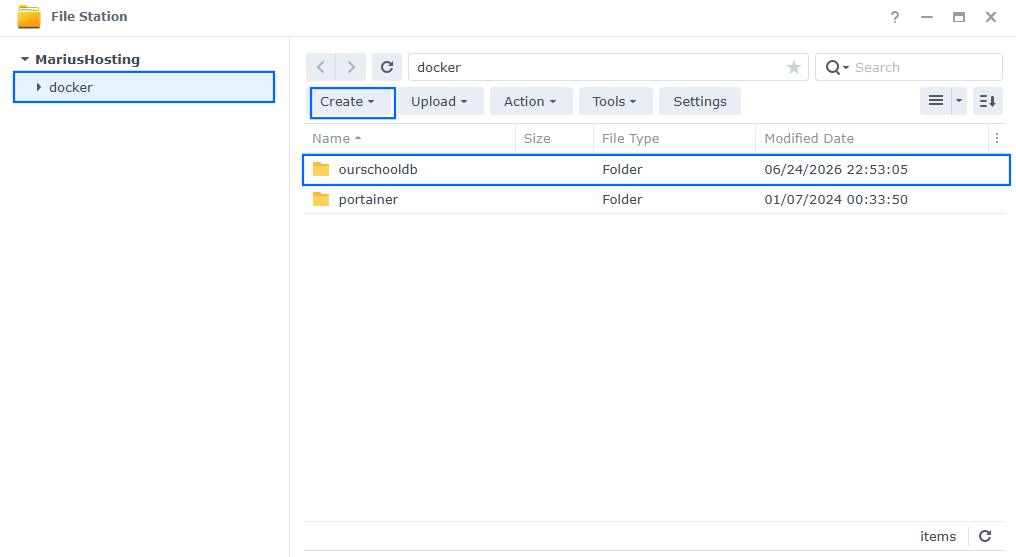
Go to File Station and open the docker folder. Inside the docker folder, create one new folder and name it ourschooldb. Follow the instructions in the image below.
Note: Be careful to enter only lowercase, not uppercase letters.
STEP 4
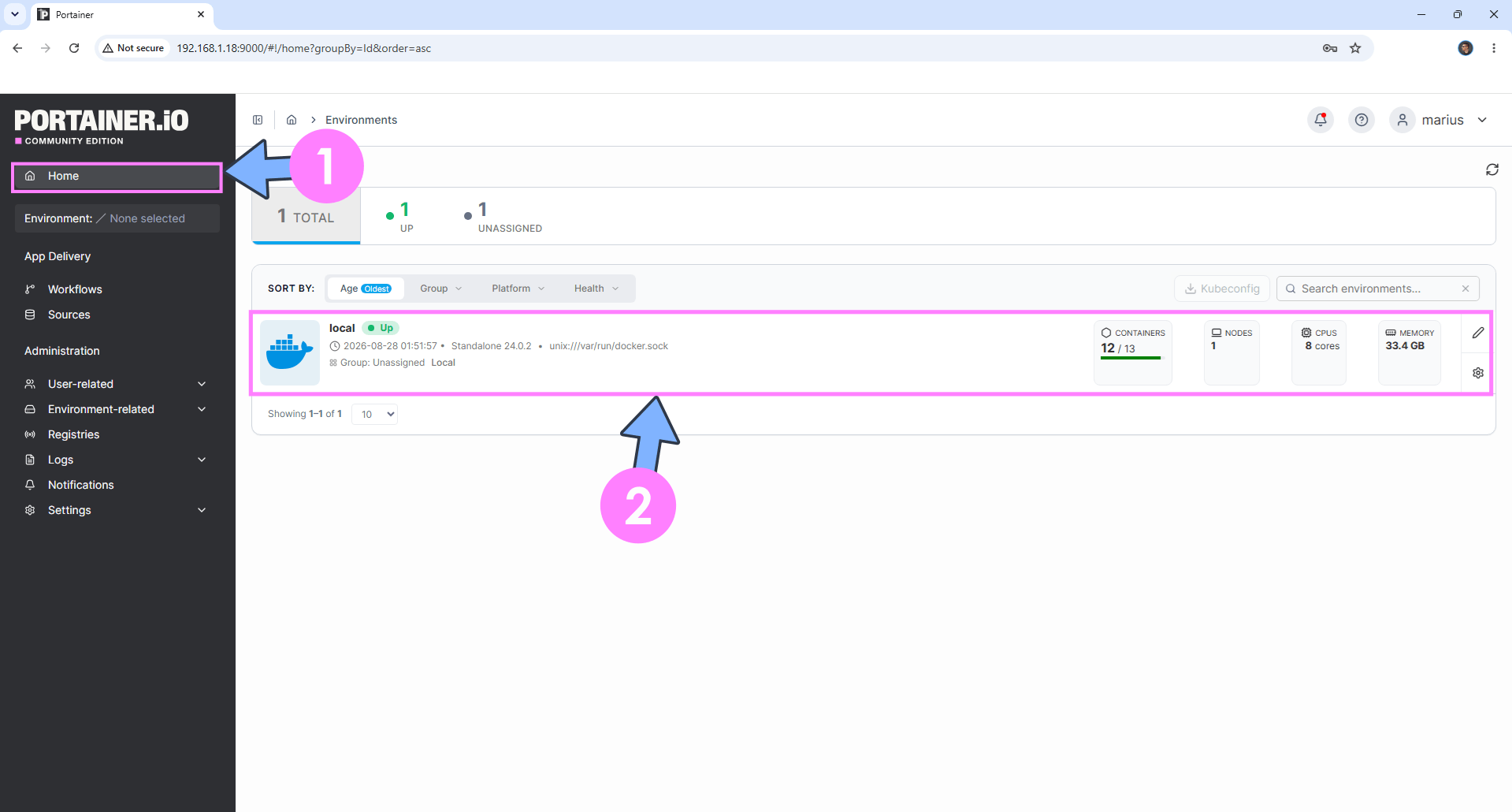
Log into Portainer using your username and password. On the left sidebar in Portainer, click on Home then click inside the local rectangle. Follow the instructions in the image below.
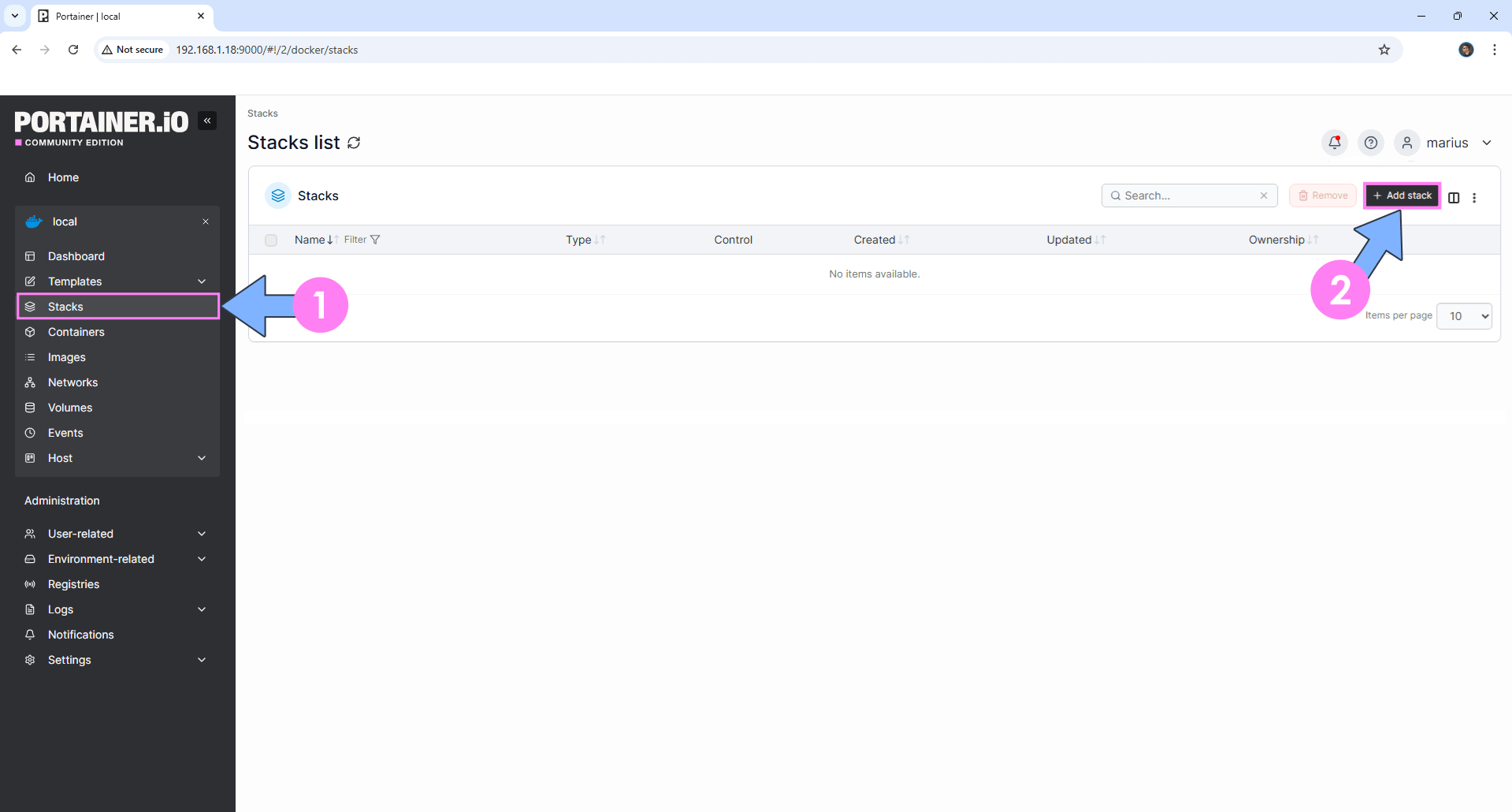
On the left sidebar in Portainer, click on Stacks then + Add stack. Follow the instructions in the image below.
STEP 5
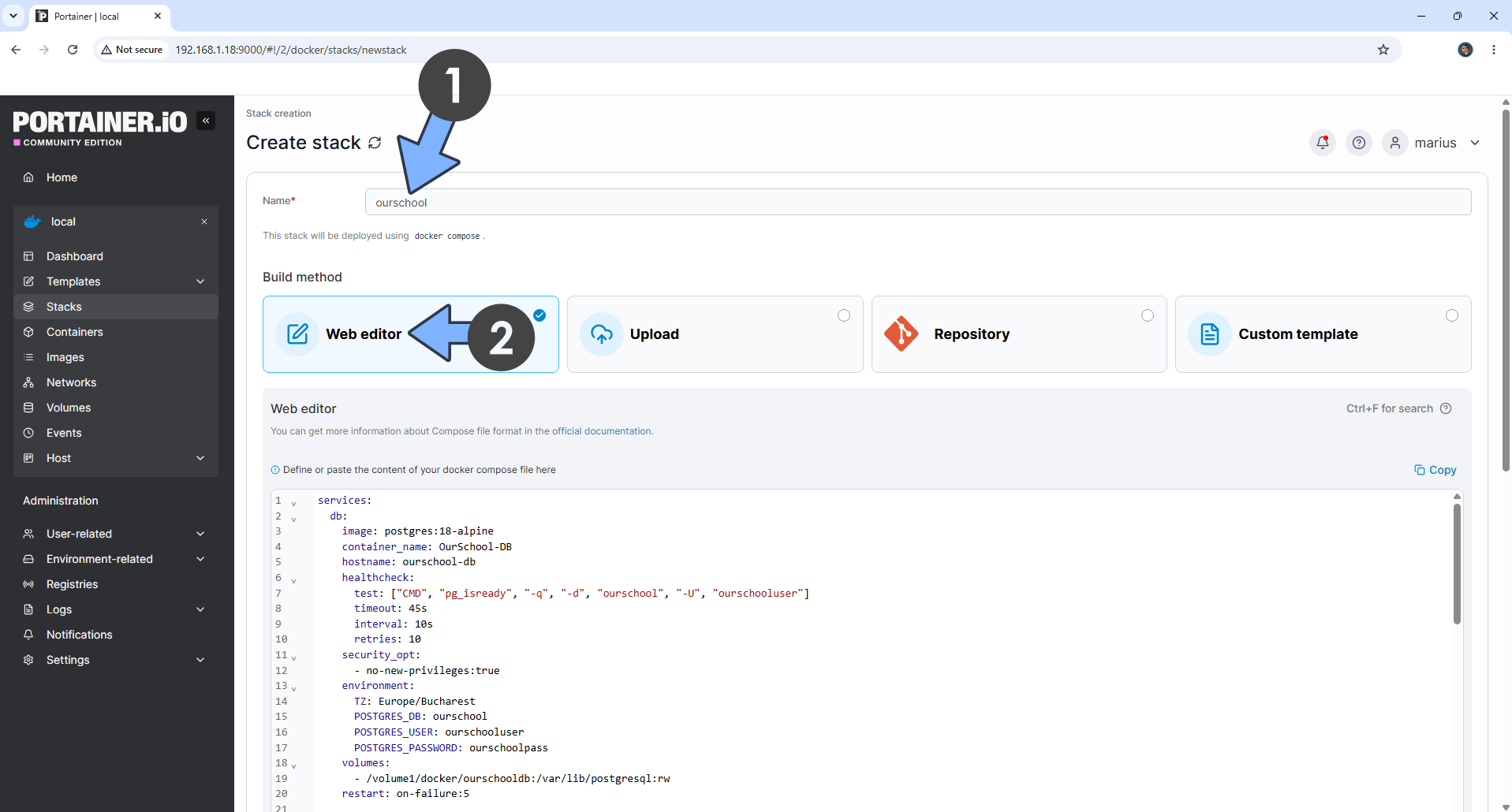
In the Name field type in ourschool. Follow the instructions in the image below.
Note: Copy Paste the code below in the Portainer Stacks Web editor.
services:
  db:
    image: postgres:18-alpine
    container_name: OurSchool-DB
    hostname: ourschool-db
    healthcheck:
      test: ["CMD", "pg_isready", "-q", "-d", "ourschool", "-U", "ourschooluser"]
      timeout: 45s
      interval: 10s
      retries: 10
    security_opt:
      - no-new-privileges:true
    environment:
      TZ: Europe/Bucharest
      POSTGRES_DB: ourschool
      POSTGRES_USER: ourschooluser
      POSTGRES_PASSWORD: ourschoolpass
    volumes:
      - /volume1/docker/ourschooldb:/var/lib/postgresql:rw
    restart: on-failure:5

  backend:
    image: ghcr.io/dgazr/ourschool-backend:1.1-beta3
    container_name: OurSchool-Backend
    security_opt:
      - no-new-privileges:true
    user: 0:0
    healthcheck:
      test: ["CMD", "curl", "-f", "http://localhost:8000/health"]
      interval: 15s
      timeout: 10s
      retries: 5
      start_period: 30s
    environment:
      TZ: Europe/Bucharest
      DATABASE_URL: postgresql+psycopg://ourschooluser:ourschoolpass@ourschool-db:5432/ourschool
      DATABASE_HOST: ourschool-db
      DATABASE_PORT: 5432
      DATABASE_NAME: ourschool
      DATABASE_USER: ourschooluser
      DATABASE_PASSWORD: ourschoolpass
      SECRET_KEY: 09c29b750ab22aed045ebea4a94442f304318688e075b5d468932d776fc6d72b
      ALGORITHM: HS256
      ACCESS_TOKEN_EXPIRE_MINUTES: 30
      BACKEND_HOST: 0.0.0.0
      BACKEND_PORT: 8000
      LOG_LEVEL: INFO
      LOG_FORMAT: json
      ALLOWED_ORIGINS: http://192.168.1.18:4173 #or Your own synology.me DDNS
      VITE_API_BASE_URL: http://192.168.1.18:4173 #or Your own synology.me DDNS
    depends_on:
      db:
        condition: service_healthy
    ports:
      - 8006:8000
    restart: on-failure:5

  frontend:
    image: ghcr.io/dgazr/ourschool-frontend:1.1-beta3
    container_name: OurSchool-FRONTEND
    healthcheck:
      test: ["CMD", "wget", "-qO-", "http://localhost:80"]
      interval: 30s
      timeout: 10s
      retries: 3
      start_period: 10s
    security_opt:
      - no-new-privileges:true
    user: 0:0
    environment:
      TZ: Europe/Bucharest
    depends_on:
      backend:
        condition: service_started
    ports:
      - 4173:80
    restart: on-failure:5
Note: Before you paste the code above in the Web editor area below, change the value for TZ. (Select your current Time Zone from this list.)
Note: Before you paste the code above in the Web editor area below, change the value for SECRET_KEY. (Generate Your Own Free 🏅openssl rand -hex 32 SECRET_KEY.)
Note: Before you paste the code above in the Web editor area below, change the value for ALLOWED_ORIGINS and type in your own NAS local IP followed by :4173 with http:// at the beginning.
Note: Before you paste the code above in the Web editor area below, change the value for VITE_API_BASE_URL and type in your own NAS local IP followed by :4173 with http:// at the beginning.
STEP 6
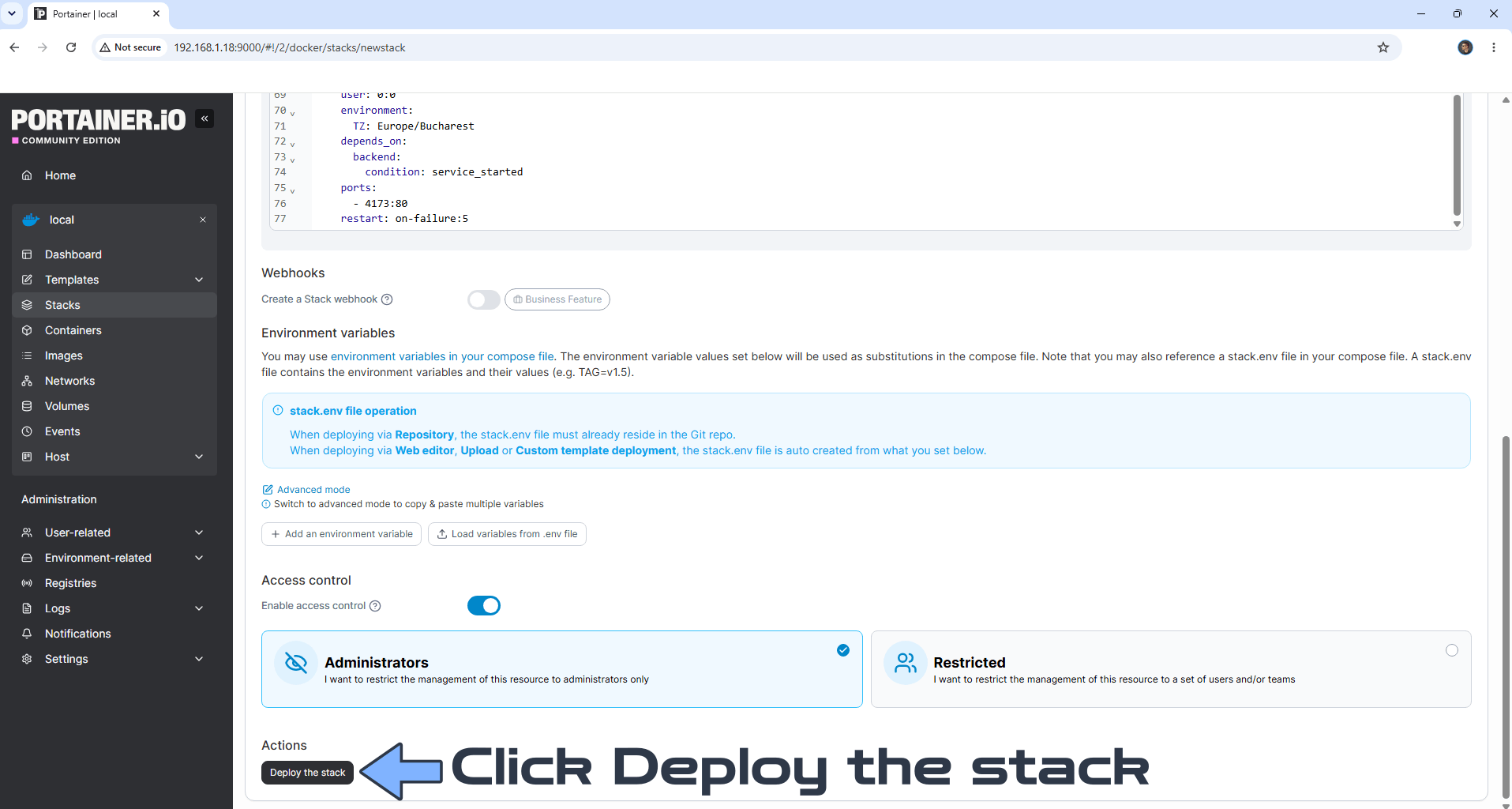
Scroll down on the page until you see a button named Deploy the stack. Click on it. Follow the instructions in the image below. The installation process can take up to a few minutes. It will depend on your Internet speed connection.
STEP 7
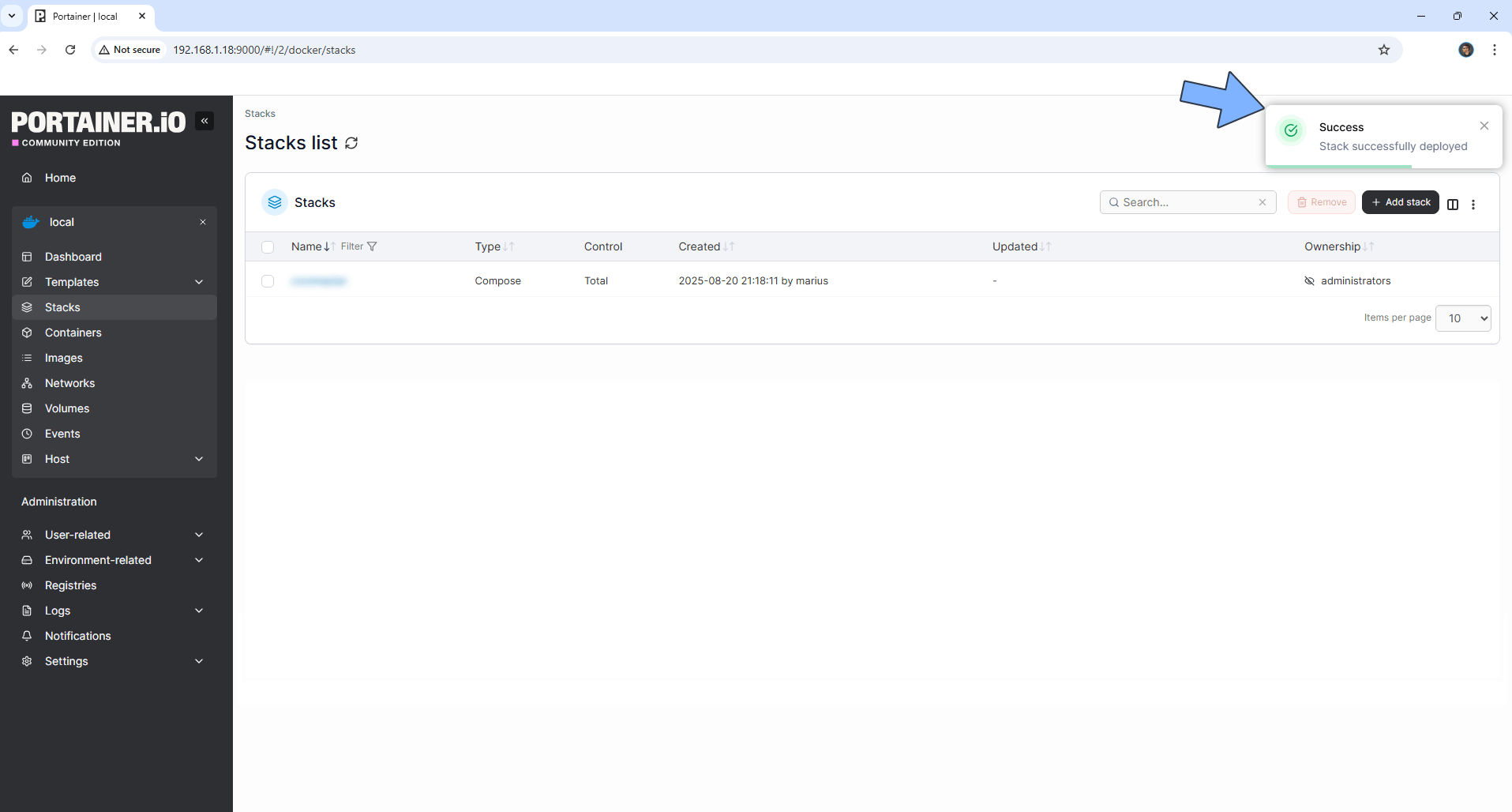
If everything goes right, you will see the following message at the top right of your screen: “Success Stack successfully deployed“.
STEP 8
🟢Please Support My work by Making a Donation. Almost 99,9% of the people that install something using my guides forget to support my work, or just ignore STEP 1. I’ve been very honest about this aspect of my work since the beginning: I don’t run any ADS, I don’t require subscriptions, paid or otherwise, I don’t collect IPs, emails, and I don’t have any referral links from Amazon or other merchants. I also don’t have any POP-UPs or COOKIES. I have repeatedly been told over the years how much I have contributed to the community. It’s something I love doing and have been honest about my passion since the beginning. But I also Need The Community to Support me Back to be able to continue doing this work.
STEP 9
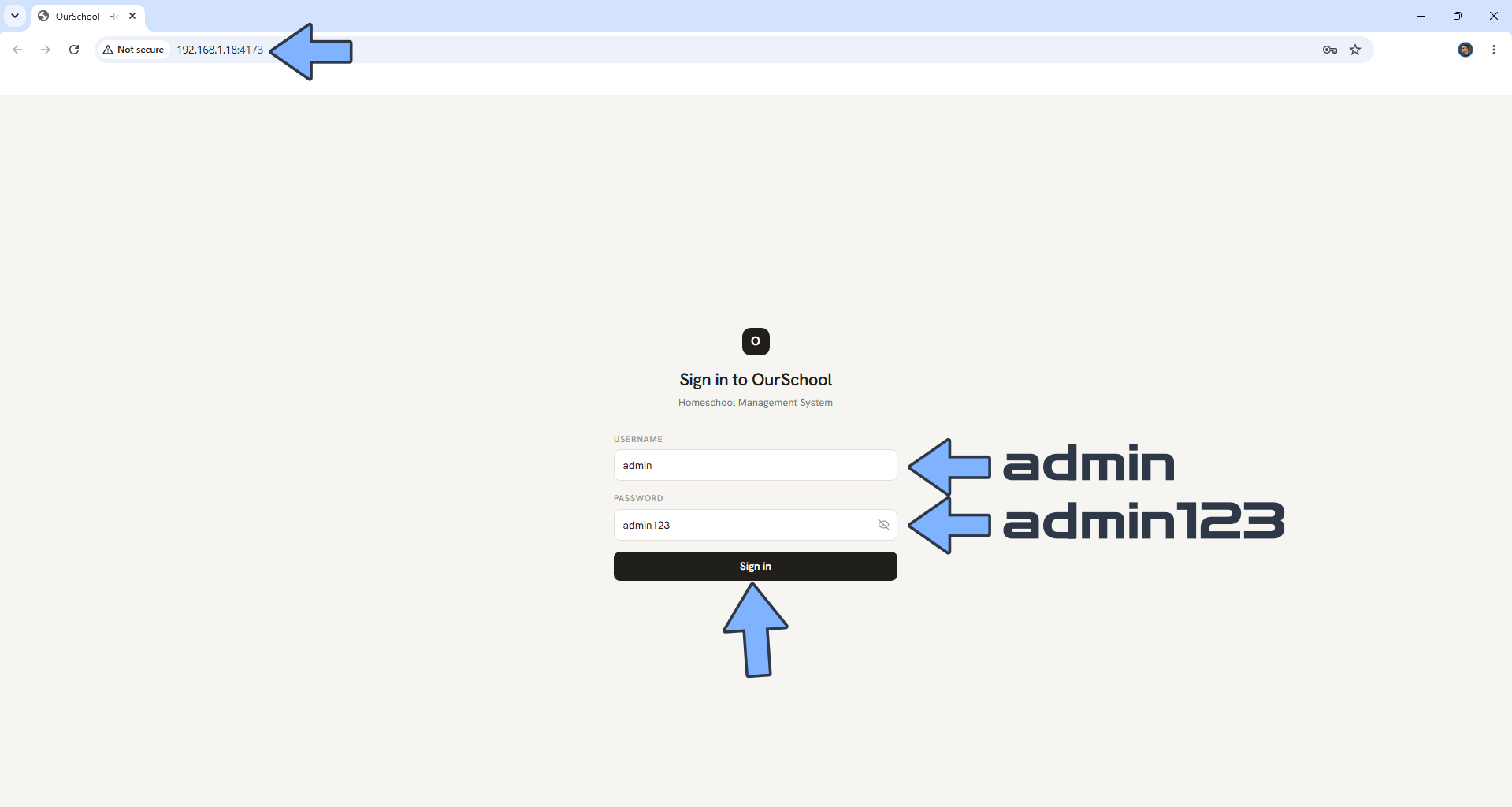
The installation process can take up to a few seconds/minutes. It will depend on your Internet speed connection. Now open your browser and type in http://Synology-ip-address:4173 Type in the default Username and Password, then click Sign in.
⚠️Warning: the default Username is admin and the default Password is admin123
STEP 10
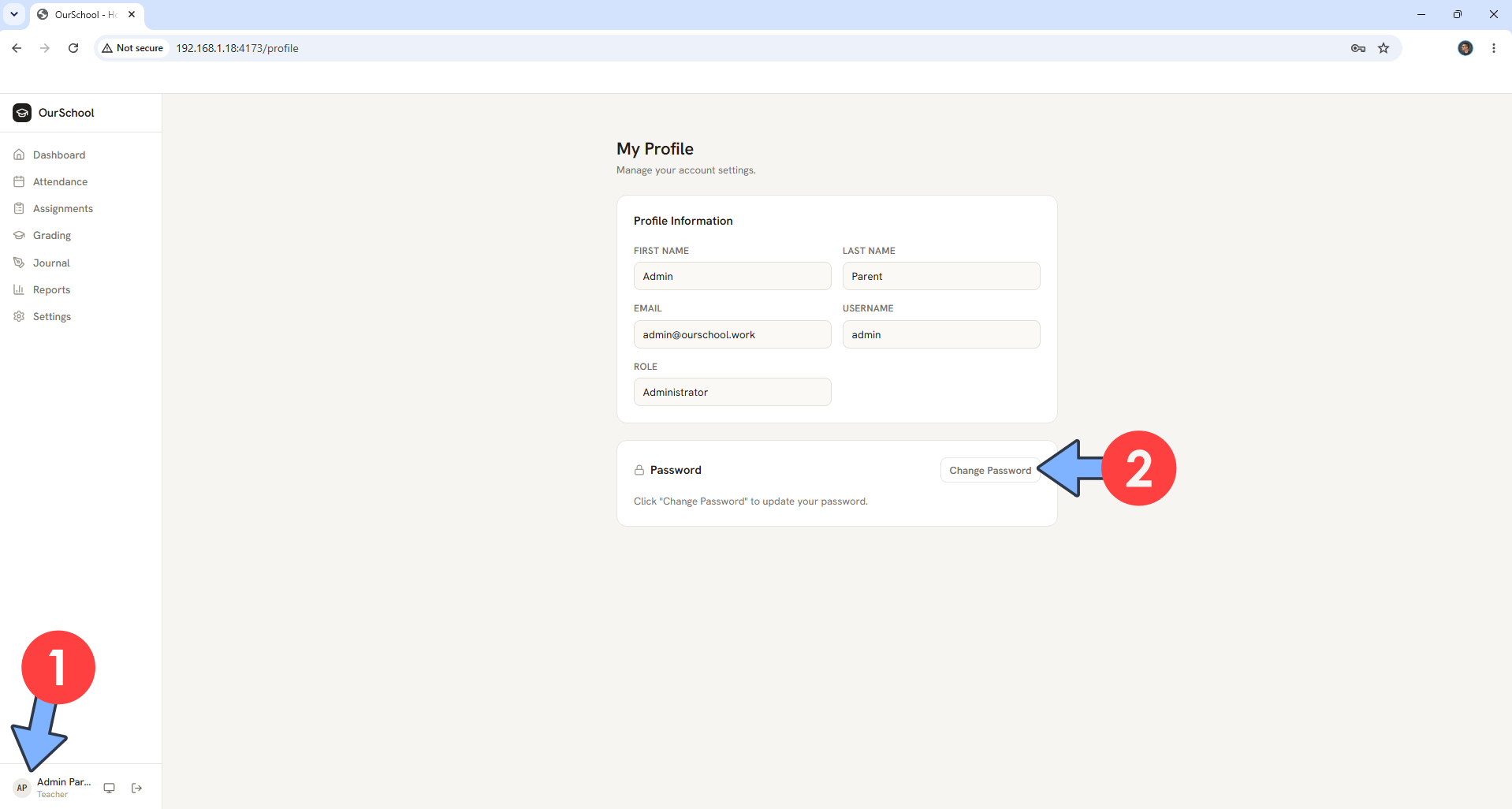
At the bottom of the page, click on Admin Parental. Click Change Password. Follow the instructions in the image below.
STEP 11
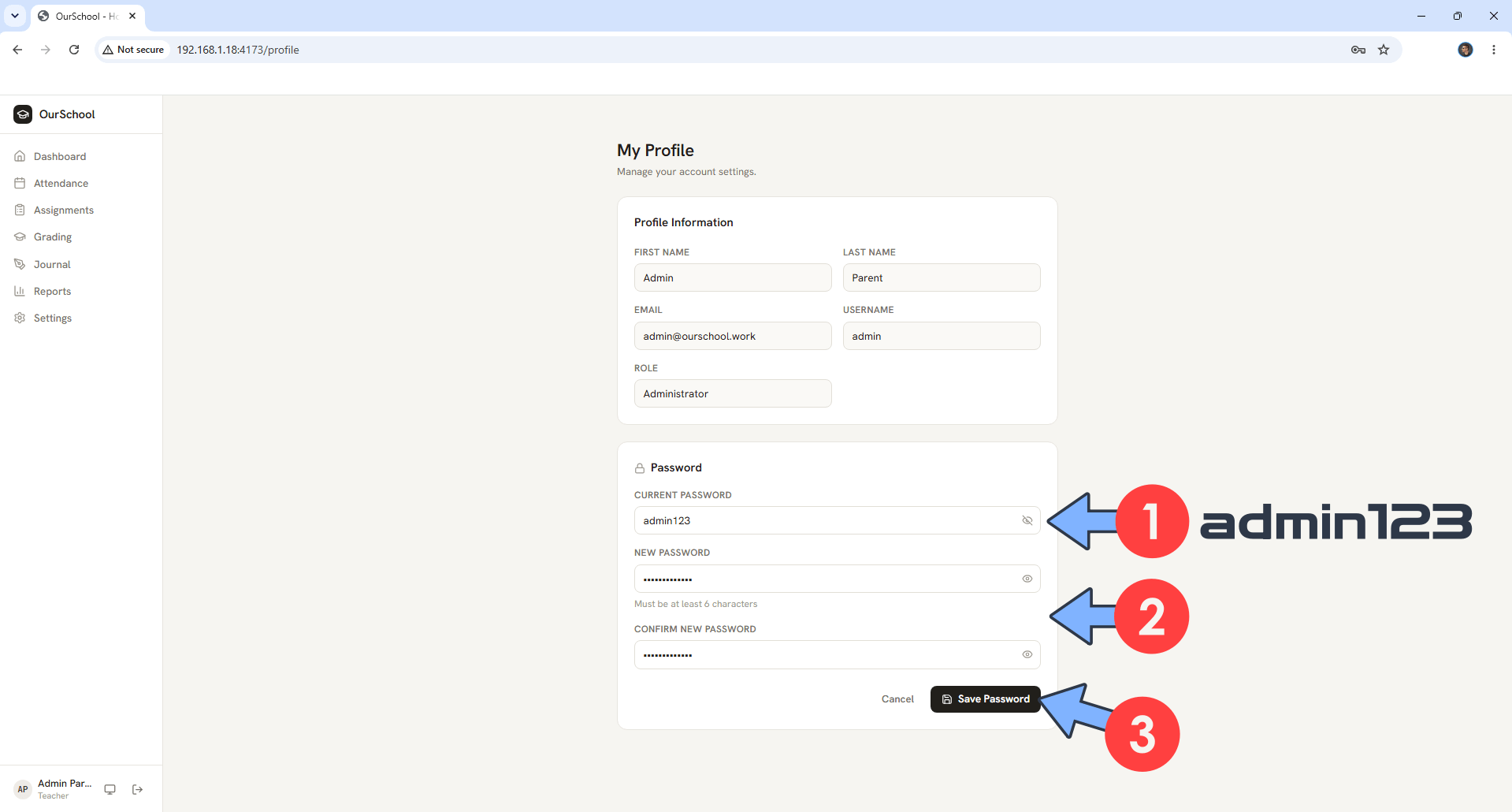
In the current password field, type in admin123 and, in the new password field, type in your new password which MUST include both numbers and letters. Click Save Password. Follow the instructions in the image below.
STEP 12
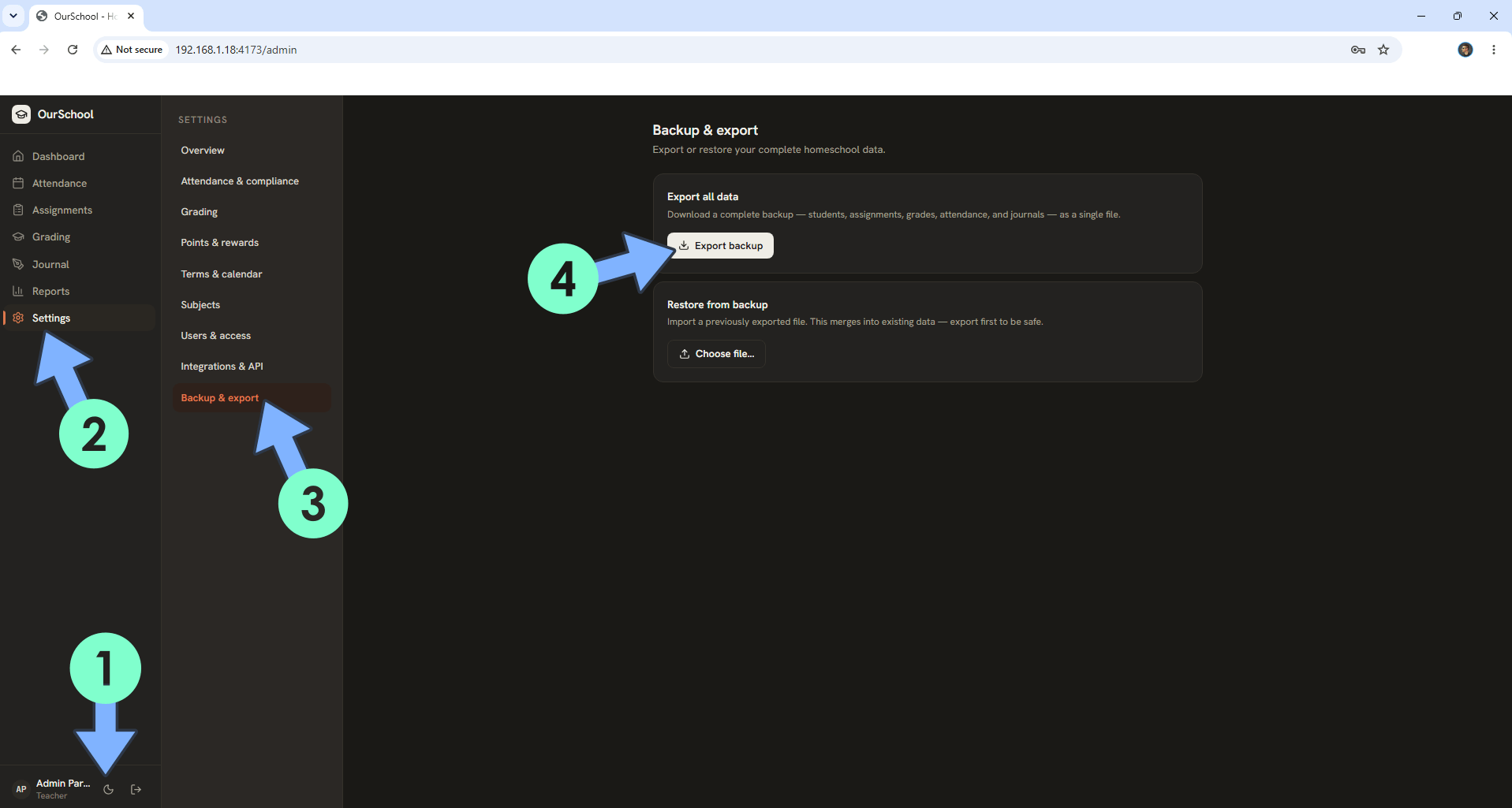
Switch the theme to Dark. On the left sidebar, click Settings. Click Backup & export. Click Export backup. This is how the backup for this app works. You can upload your backup file in a new OurSchool instance. Follow the instructions in the image below.
STEP 13
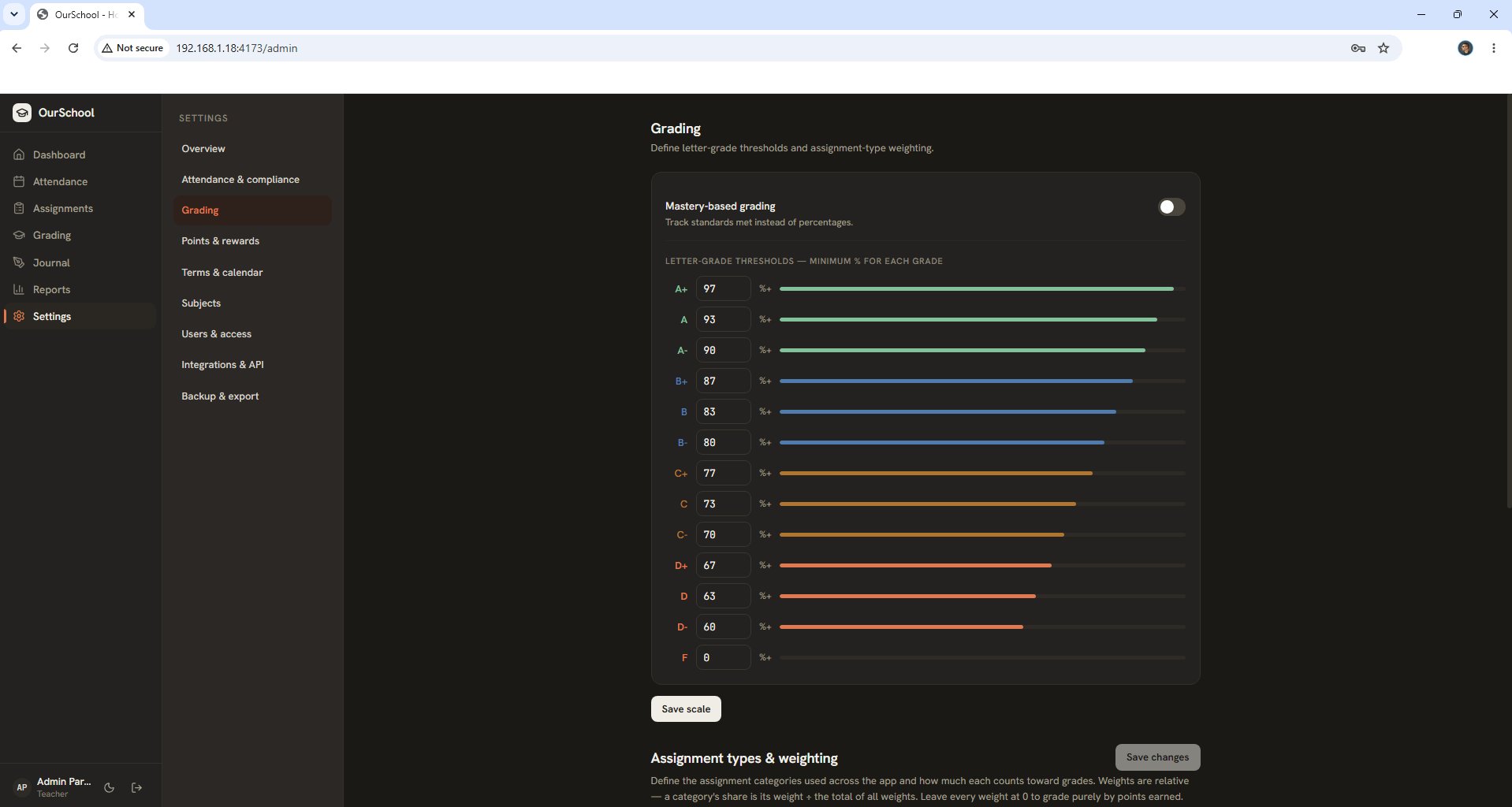
Your dashboard at a glance!
Enjoy OurSchool!
🆘TROUBLESHOOTING
If you encounter issues by using this container, make sure to check out the Common Docker issues article.
Note: If you want to run the OurSchool container over HTTPS, check How to Run Docker Containers Over HTTPS. In order to make OurSchool work via HTTPS, it’s mandatory to activate WebSocket.
Note: Can I run Docker on my Synology NAS? See the supported models.
Note: How to Back Up Docker Containers on your Synology NAS.
Note: Find out how to update the OurSchool container with the latest image.
Note: How to Free Disk Space on Your NAS if You Run Docker.
Note: How to Schedule Start & Stop For Docker Containers.
Note: How to Activate Email Notifications.
Note: How to Add Access Control Profile on Your NAS.
Note: How to Change Docker Containers Restart Policy.
Note: How to Use Docker Containers With VPN.
Note: Convert Docker Run Into Docker Compose.
Note: How to Clean Docker.
Note: How to Clean Docker Automatically.
Note: Best Practices When Using Docker and DDNS.
Note: Some Docker Containers Need WebSocket.
Note: Find out the Best NAS Models For Docker.
This post was updated on Sunday / October 11th, 2026 at 6:15 AM