
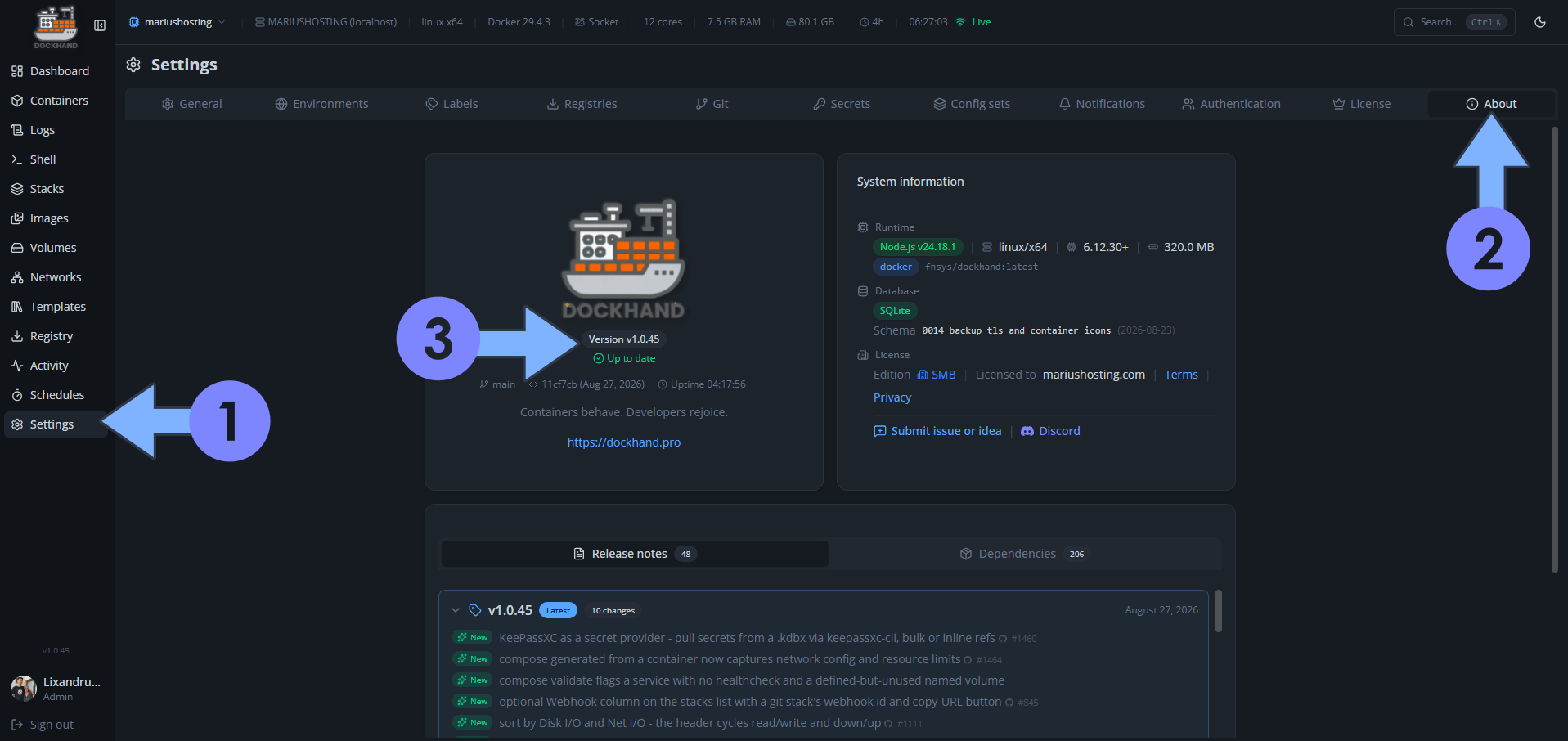
On August 27, 2026, Dockhand switched from version 1.0.44 to the new 1.0.45 version. Dockhand fixes the following issues and adds new options:
New – KeePassXC as a secret provider – pull secrets from a .kdbx via keepassxc-cli, bulk or inline refs
New – Compose generated from a container now captures network config and resource limits
New – Compose validate flags a service with no healthcheck and a defined-but-unused named volume
New – Optional Webhook column on the stacks list with a git stack’s webhook id and copy-URL button
New – Sort by Disk I/O and Net I/O – the header cycles read/write and down/up
New – Option to disable the session timeout
Fix: Security hardening across the API
Fix: Pausing or resuming a backup schedule no longer clears the retention policy
Fix: Emergency script to relocate stack paths after moving DATA_DIR
Fix: Git stacks can now set a custom icon

🌟Starring projects like Dockhand on GitHub is a quick way to thank developers for their work. It boosts visibility so more people discover it, attracts contributors, and motivates the team to keep improving it.
What is Dockhand? Dockhand allows you to easily manage your different Docker environments. Dockhand is a modern, self-hosted Docker management platform with an intuitive web interface for homelabs, small businesses, and enterprises. It simplifies container operations, stack deployments, and observability through real-time management (start/stop/restart containers, web terminals, file transfers), a visual Compose editor, GitOps auto-sync, metrics, logs, OIDC/SSO, MFA, vulnerability scans, and multi-host support via the open-source Hawser agent. You can deploy it quickly as a Docker container with no cloud dependencies or telemetry. It’s forever free for personal use.
This post was updated on Friday / September 25th, 2026 at 9:19 AM