
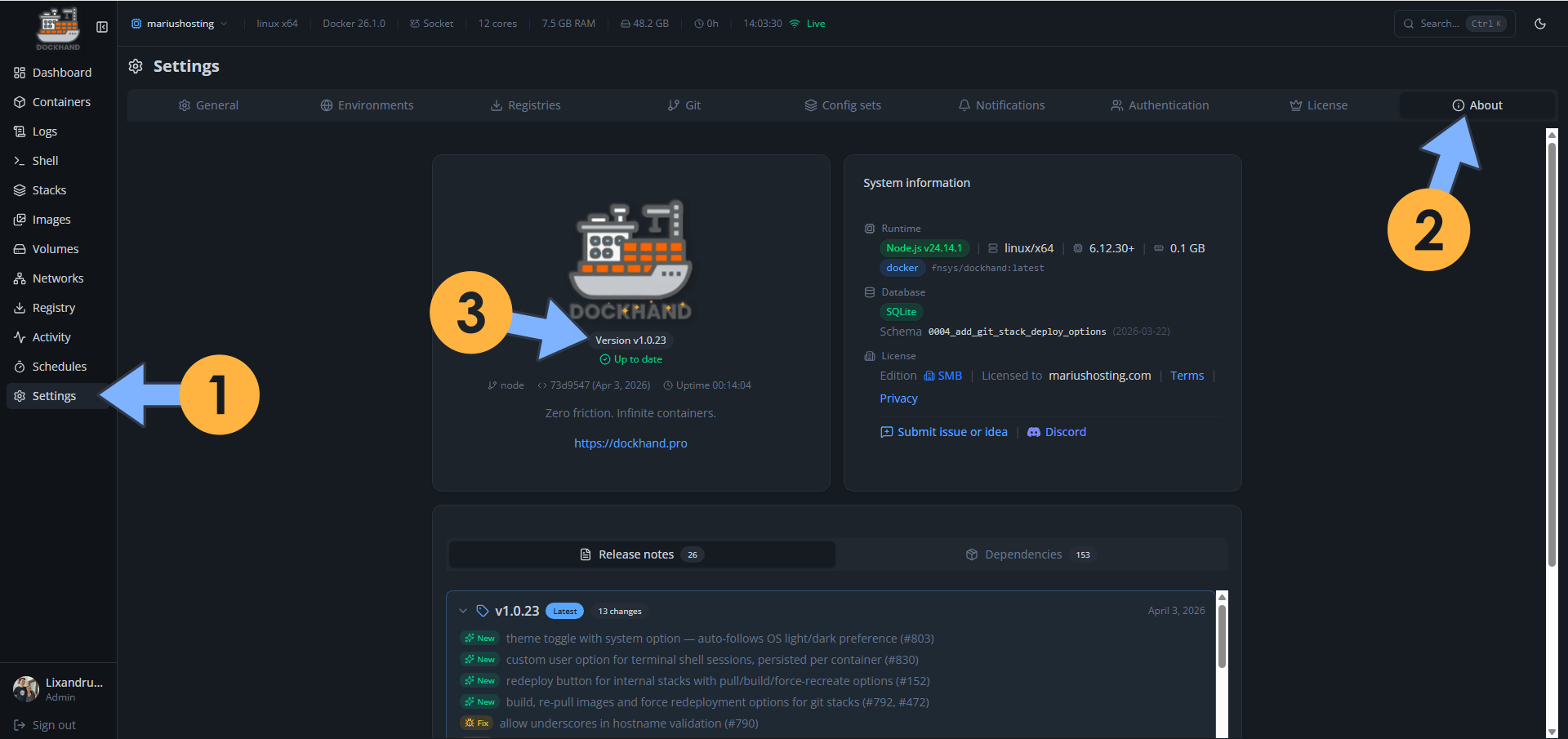
On April 3, 2026, Dockhand switched from version 1.0.22 to the new 1.0.23 version. Dockhand fixes the following issues and adds new options:
New – Build, re-pull images and force redeployment options for git stacks
New – Theme toggle with system option – auto-follows OS light/dark preference
New – Custom user option for terminal shell sessions, persisted per container
New – Redeploy button for internal stacks with pull/build/force-recreate options
Fix: Allow underscores in hostname validation
Fix: HTTPS git repos with self-signed CA certificates fail to clone/pull
Fix: Stack restart fails for containers using network_mode: service: – added recreate option
Fix: Git stack sync deletes data in relative volume paths
Fix: Batch update skips Hawser containers
Fix: Registry delete fails for multi-arch/OCI manifest images
Fix: Scanner cache cleanup to prevent volume bloat
Fix: Negotiate Docker API version for scanner/updater sidecar containers
Fix: Scan vulnerability counts mismatch with displayed list

🌟Starring projects like Dockhand on GitHub is a quick way to thank developers for their work. It boosts visibility so more people discover it, attracts contributors, and motivates the team to keep improving it.
What is Dockhand? Dockhand allows you to easily manage your different Docker environments. Dockhand is a modern, self-hosted Docker management platform with an intuitive web interface for homelabs, small businesses, and enterprises. It simplifies container operations, stack deployments, and observability through real-time management (start/stop/restart containers, web terminals, file transfers), a visual Compose editor, GitOps auto-sync, metrics, logs, OIDC/SSO, MFA, vulnerability scans, and multi-host support via the open-source Hawser agent. You can deploy it quickly as a Docker container with no cloud dependencies or telemetry. It’s forever free for personal use.
This post was updated on Friday / April 3rd, 2026 at 3:36 PM