
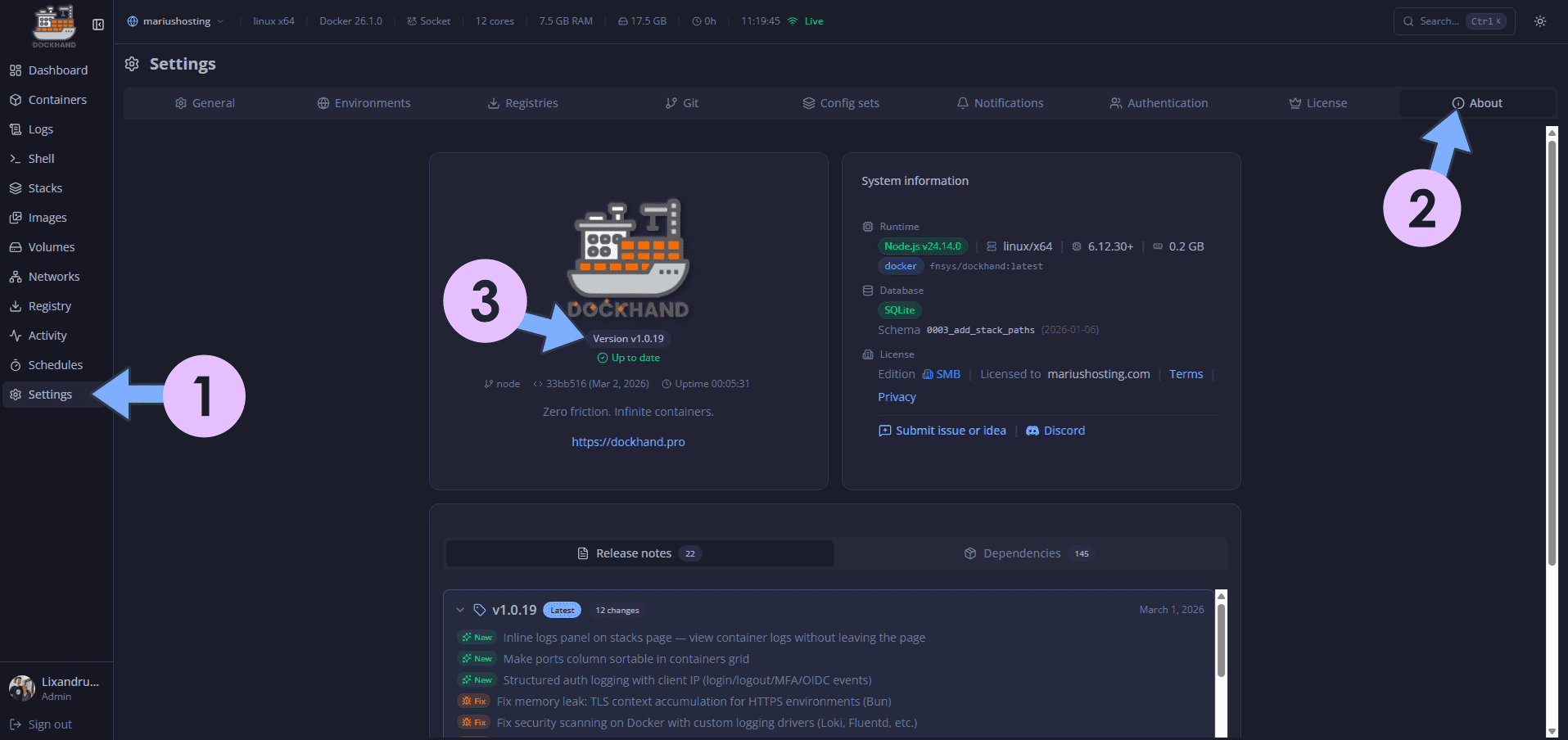
On March 2, 2026, Dockhand switched from version 1.0.18 to the new 1.0.19 version. Dockhand fixes the following issues and adds new options:
New – Inline logs panel on stacks page – view container logs without leaving the page
New – Make ports column sortable in containers grid
New – Structured auth logging with client IP (login/logout/MFA/OIDC events)
Fix: Memory leak: TLS context accumulation for HTTPS environments (Bun)
Fix: Security scanning on Docker with custom logging drivers (Loki, Fluentd, etc.)
Fix: Grouped log viewer not auto-scrolling on new entries
Fix: Container recreation error messages not surfacing actual Docker errors
Fix: LDAP group-to-role mapping
Fix: Container file browser hiding old files
Fix: SSH key permission issues on NAS filesystems
Fix: Binary file corruption when syncing stacks to Hawser agents
Fix: UI timeout issues for long running operations

🌟Starring projects like Dockhand on GitHub is a quick way to thank developers for their work. It boosts visibility so more people discover it, attracts contributors, and motivates the team to keep improving it.
What is Dockhand? Dockhand allows you to easily manage your different Docker environments. Dockhand is a modern, self-hosted Docker management platform with an intuitive web interface for homelabs, small businesses, and enterprises. It simplifies container operations, stack deployments, and observability through real-time management (start/stop/restart containers, web terminals, file transfers), a visual Compose editor, GitOps auto-sync, metrics, logs, OIDC/SSO, MFA, vulnerability scans, and multi-host support via the open-source Hawser agent. You can deploy it quickly as a Docker container with no cloud dependencies or telemetry. It’s forever free for personal use.
This post was updated on Friday / April 10th, 2026 at 12:30 AM