
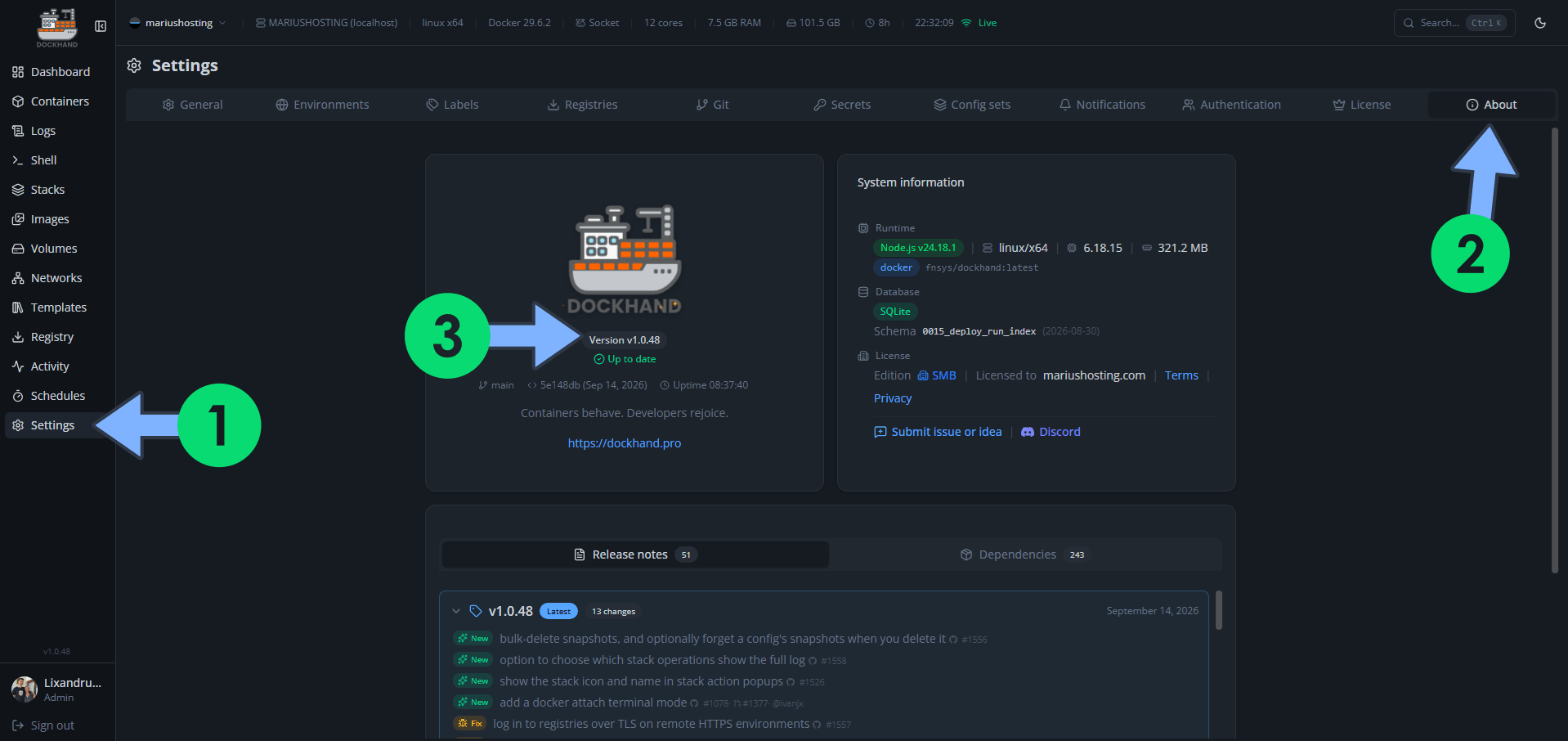
On September 14, 2026, Dockhand switched from version 1.0.47 to the new 1.0.48 version. Dockhand fixes the following issues and adds new options:
New – Bulk-delete snapshots, and optionally forget a config’s snapshots when you delete it
New – Option to choose which stack operations show the full log
New – Show the stack icon and name in stack action popups
New – Add a docker attach terminal mode
Fix: Log in to registries over TLS on remote HTTPS environments
Fix: Vulnerability scans and alerts show the image tag, not just its digest
Fix: Resolve secret provider references when restoring a stack from a backup
Fix: Stop password managers from offering to save stack secret env-var fields
Fix: Repository stats no longer fail on the backups screen
Fix: Dashboard image disk usage no longer counts shared layers multiple times
Fix: Stack action buttons show for stopped and freshly created stacks, regression
Fix: The update dialog no longer shows an unreleased version as the target
Fix: Update Go 1.26.8, docker-compose 5.5.0-r5, nodemailer 9.1.0, js-yaml 4.3.2 for security fixes

🌟Starring projects like Dockhand on GitHub is a quick way to thank developers for their work. It boosts visibility so more people discover it, attracts contributors, and motivates the team to keep improving it.
What is Dockhand? Dockhand allows you to easily manage your different Docker environments. Dockhand is a modern, self-hosted Docker management platform with an intuitive web interface for homelabs, small businesses, and enterprises. It simplifies container operations, stack deployments, and observability through real-time management (start/stop/restart containers, web terminals, file transfers), a visual Compose editor, GitOps auto-sync, metrics, logs, OIDC/SSO, MFA, vulnerability scans, and multi-host support via the open-source Hawser agent. You can deploy it quickly as a Docker container with no cloud dependencies or telemetry. It’s forever free for personal use.
This post was updated on Monday / September 14th, 2026 at 11:46 PM