
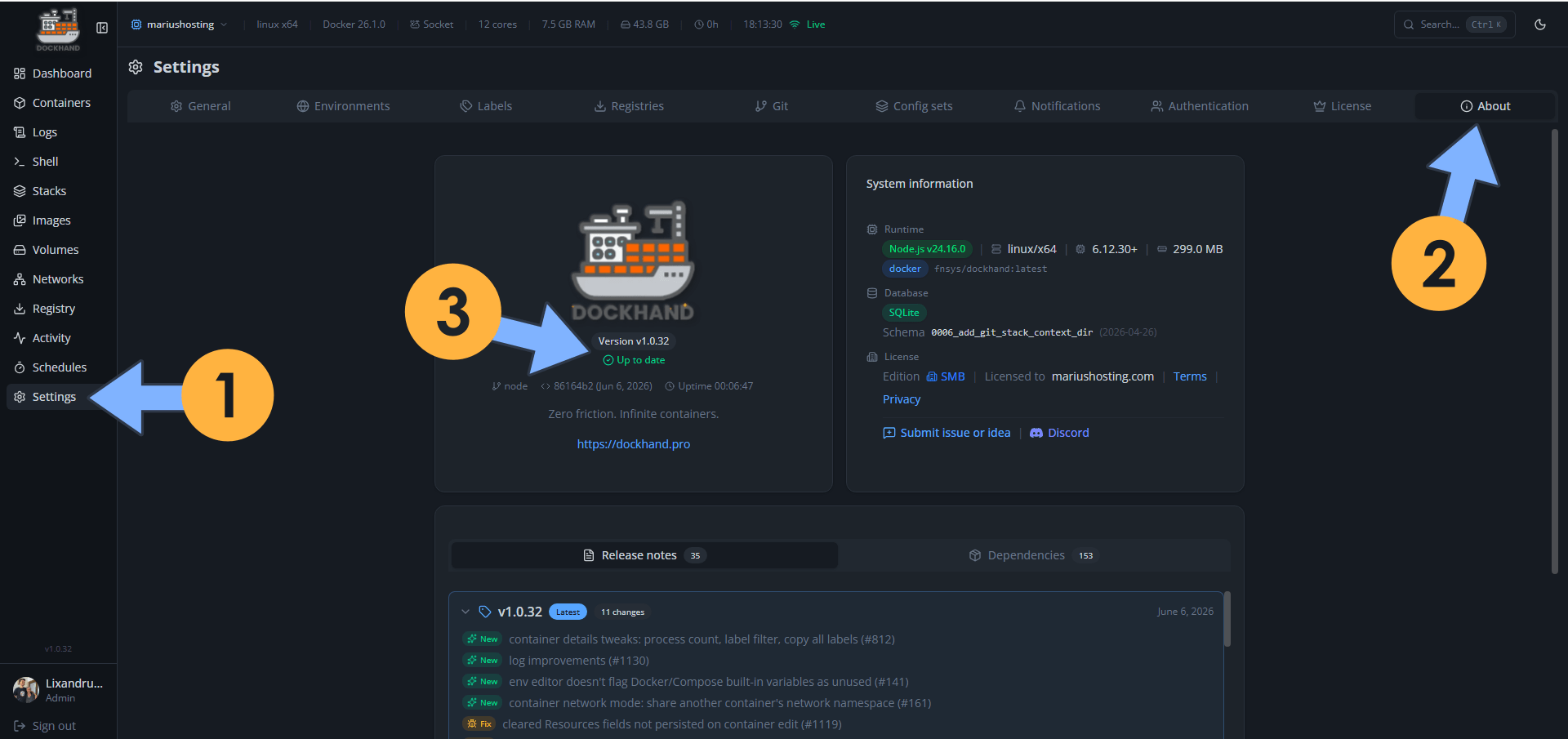
On June 6, 2026, Dockhand switched from version 1.0.31 to the new 1.0.32 version. Dockhand fixes the following issues and adds new options:
New – Container details tweaks: process count, label filter, copy all labels
New – Log improvements
New – Env editor doesn’t flag Docker/Compose built-in variables as unused
New – Container network mode: share another container’s network namespace
Fix: Cleared Resources fields not persisted on container edit
Fix: Long container names overflowed in activity event details dialog
Fix: Git stack recreate and start operations ignored Dockhand-stored env vars
Fix: Dashboard stopped count reset to 0 after refresh for gracefully stopped containers
Fix: Auto-update preserves runtime `-e` env and `-l` label overrides
Fix: Git stack volume binds resolved to wrong host path when compose was in a subdirectory
Fix: Git stacks: subdir compose files now find their adjacent env files

🌟Starring projects like Dockhand on GitHub is a quick way to thank developers for their work. It boosts visibility so more people discover it, attracts contributors, and motivates the team to keep improving it.
What is Dockhand? Dockhand allows you to easily manage your different Docker environments. Dockhand is a modern, self-hosted Docker management platform with an intuitive web interface for homelabs, small businesses, and enterprises. It simplifies container operations, stack deployments, and observability through real-time management (start/stop/restart containers, web terminals, file transfers), a visual Compose editor, GitOps auto-sync, metrics, logs, OIDC/SSO, MFA, vulnerability scans, and multi-host support via the open-source Hawser agent. You can deploy it quickly as a Docker container with no cloud dependencies or telemetry. It’s forever free for personal use.
This post was updated on Saturday / June 6th, 2026 at 10:34 PM