
Dockhand is a modern, self-hosted Docker management platform with an intuitive web interface for homelabs, small businesses, and enterprises. It simplifies container operations, stack deployments, and observability through real-time management (start/stop/restart containers, web terminals, file transfers), a visual Compose editor, GitOps auto-sync, metrics, logs, OIDC/SSO, MFA, vulnerability scans, and multi-host support via the open-source Hawser agent. You can deploy it quickly as a Docker container with no cloud dependencies or telemetry. It’s forever free for personal use. In this step by step guide I will show you how to install Dockhand on your Asustor NAS using Docker.
STEP 1
Please Support My work by Making a Donation.
STEP 2
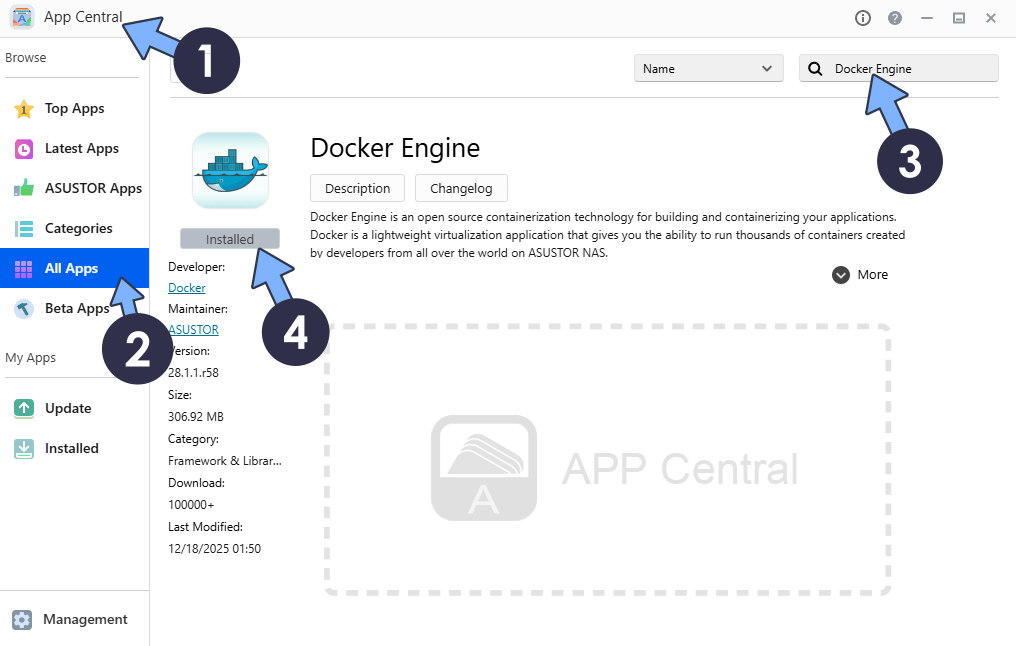
Install Docker Engine. Go to App Central. All Apps. Search for Docker Engine. Install Docker Engine. Follow the instructions in the image below.
STEP 3
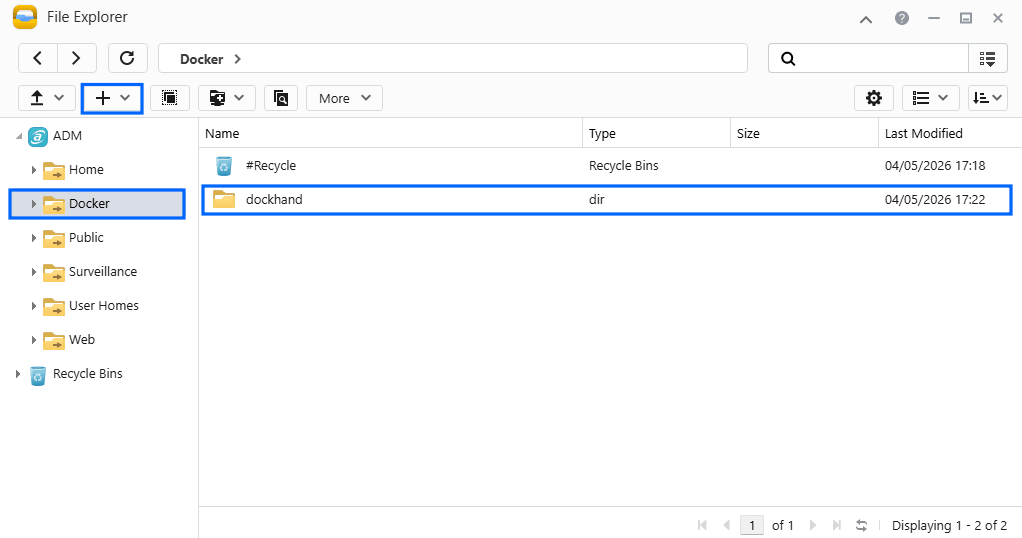
Go to File Explorer and open the Docker folder. Inside the Docker folder, create a new folder and name it dockhand. Follow the instructions in the image below.
Note: Be careful to use only lowercase, not uppercase letters.
STEP 4
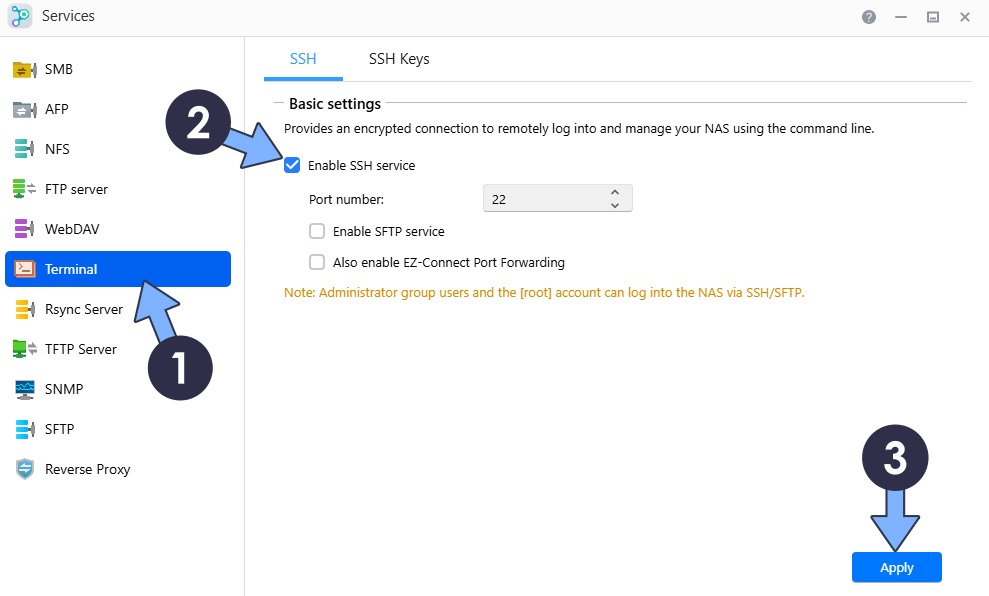
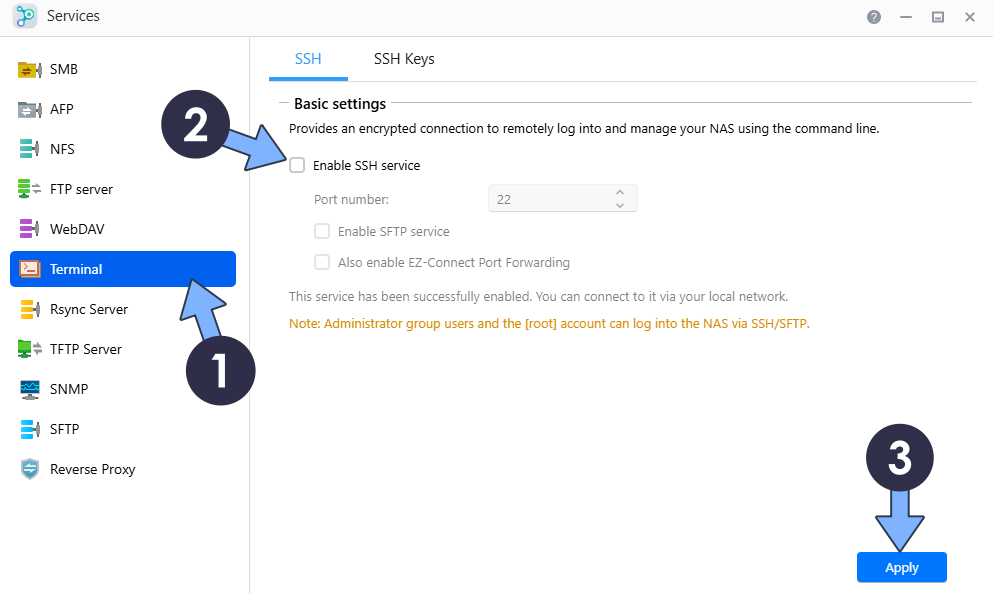
Go to Services / Terminal / SSH tab. Check Enable SSH service on port 22 then click Apply. Follow the instructions in the images below.
STEP 5
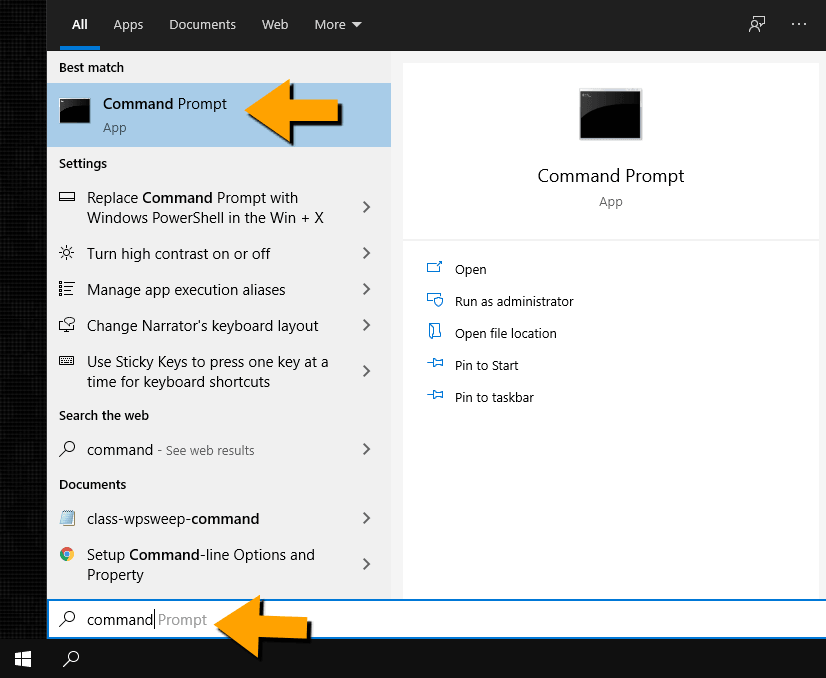
Now open Windows Command Prompt Client. Search for command prompt on your Windows PC. Follow the instructions in the image below. You can also use the PuTTY Client or Mac Z Shell (Client) if you are a Mac user.
STEP 6
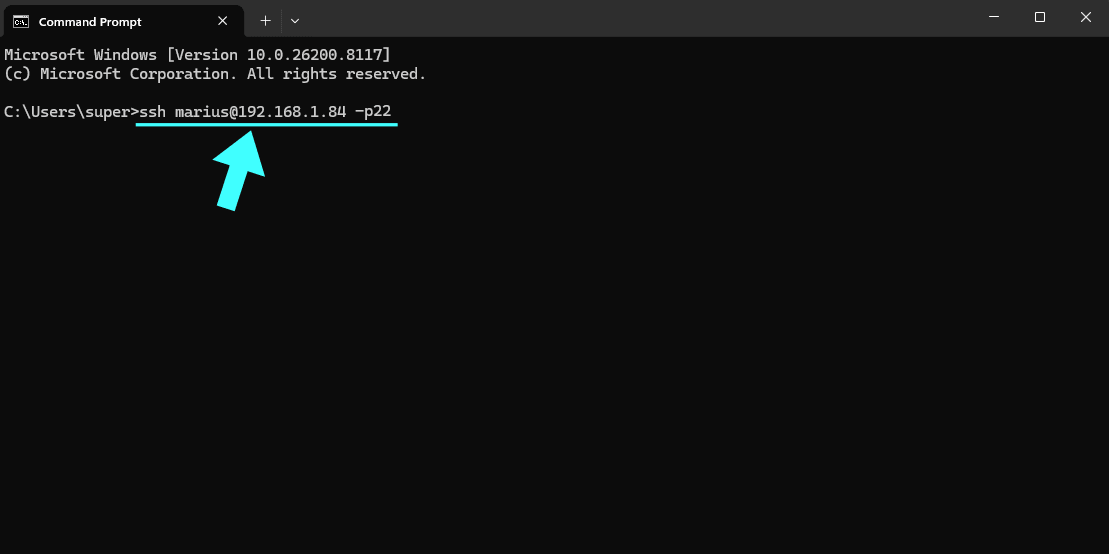
On Windows 11, open Command Prompt or use PuTTY or Mac Z Shell and type ssh yourNASusername@yourNASip -p22 then enter. Follow the instructions in the image below.
STEP 7
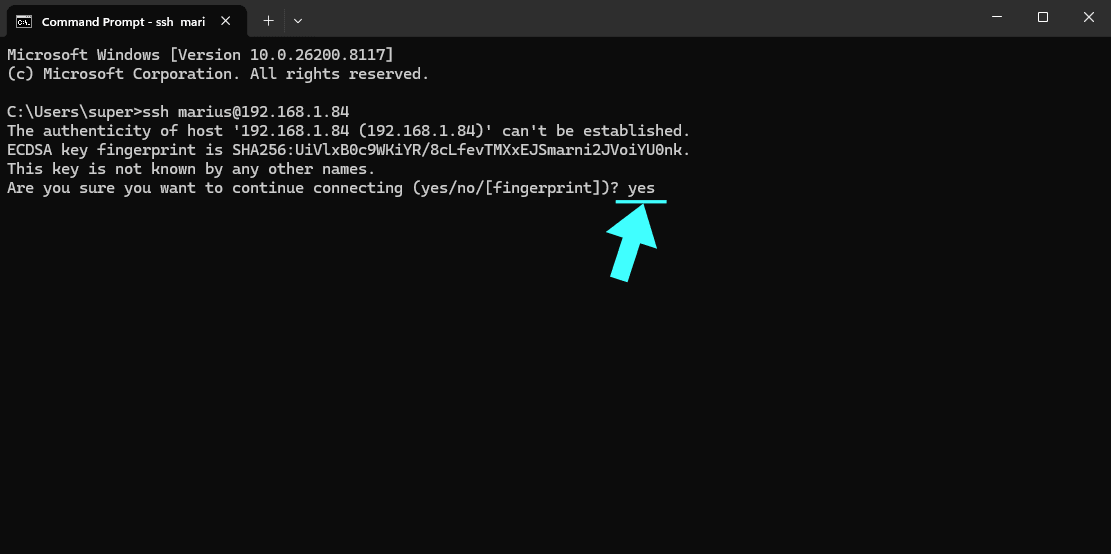
In Command Prompt, this message “Are you sure you want to continue connecting (yes/no)?” can sometimes appear, so type yes then enter. Follow the instructions in the image below.
STEP 8
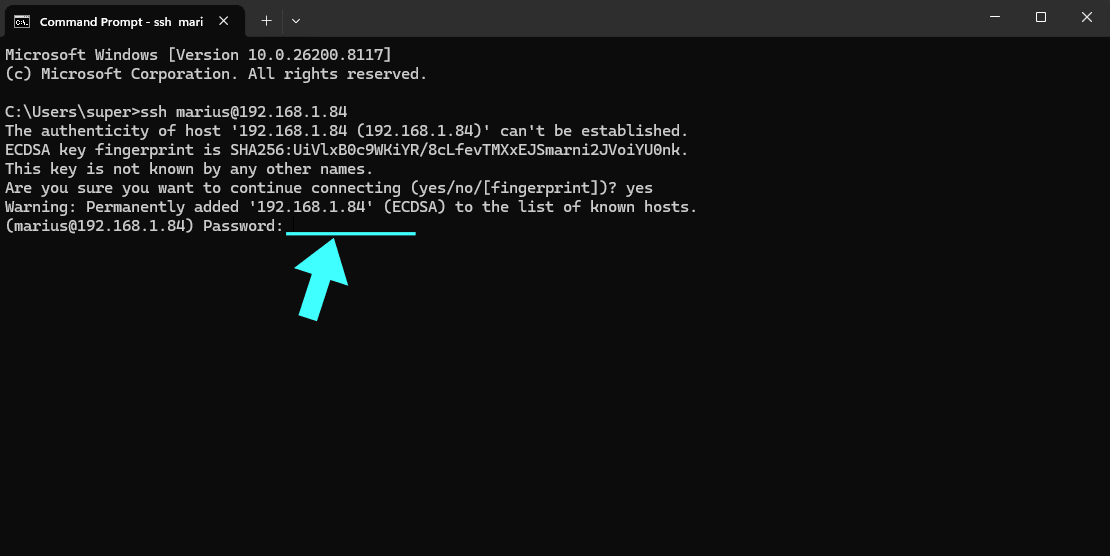
After you press enter, you will be prompted to type in your NAS password. Type it in and press enter. ⚠️Warning: When you enter the password, the command prompt will not show the written password. Just type in your password and hit enter. Follow the instructions in the image below. Your command prompt will look like this:
STEP 9
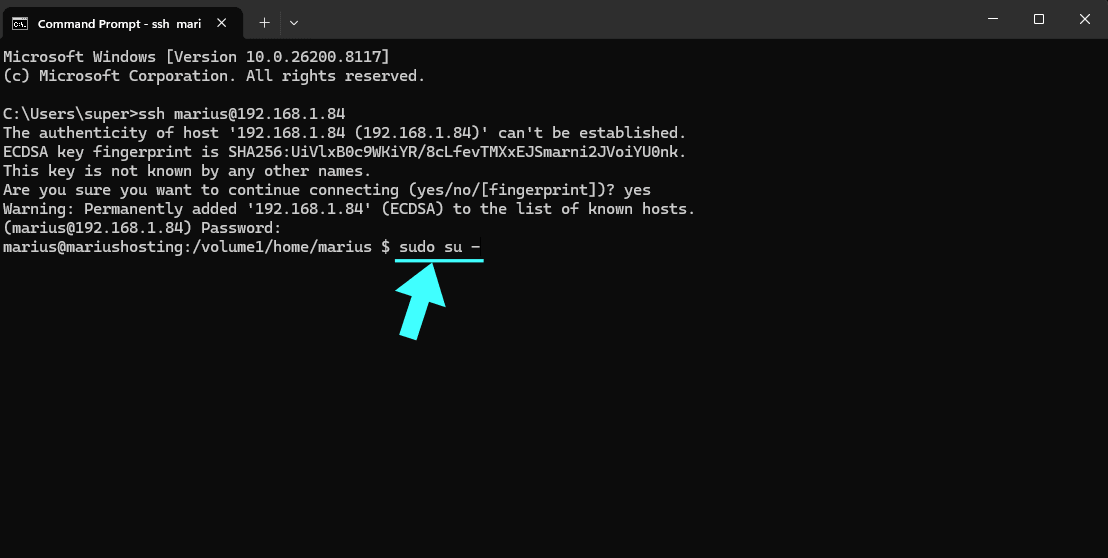
Now type:
sudo su -
Then press enter. Follow the instructions in the image below.
The su command switches to root user with high privileges.
STEP 10
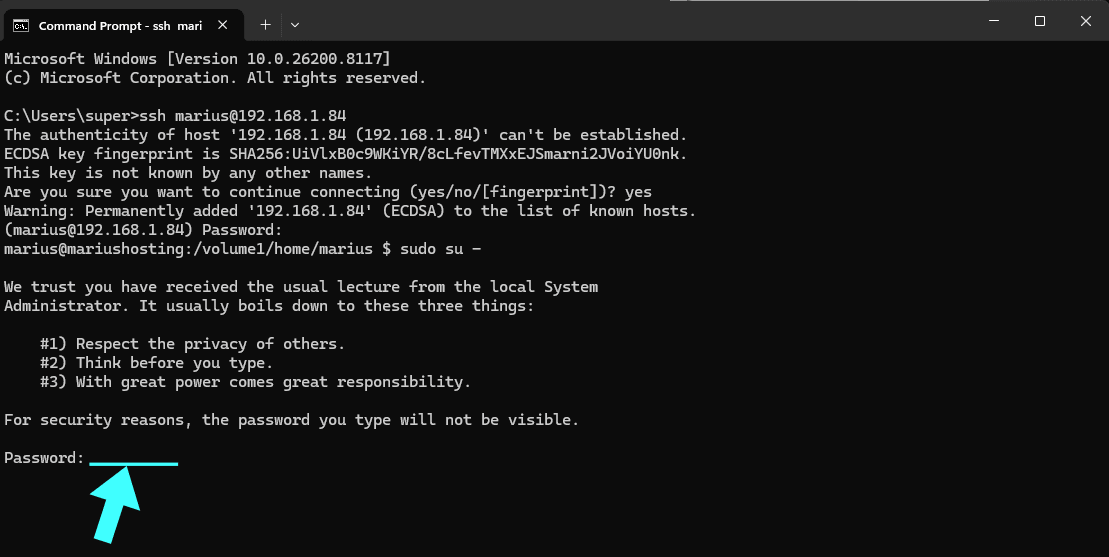
After you press enter, you will be prompted to type in your NAS password then press enter. ⚠️Warning: When you enter the password, the command prompt will not show the written password. Just type in your password and hit enter. Now you have full root access to your NAS. Follow the instructions in the image below.
STEP 11
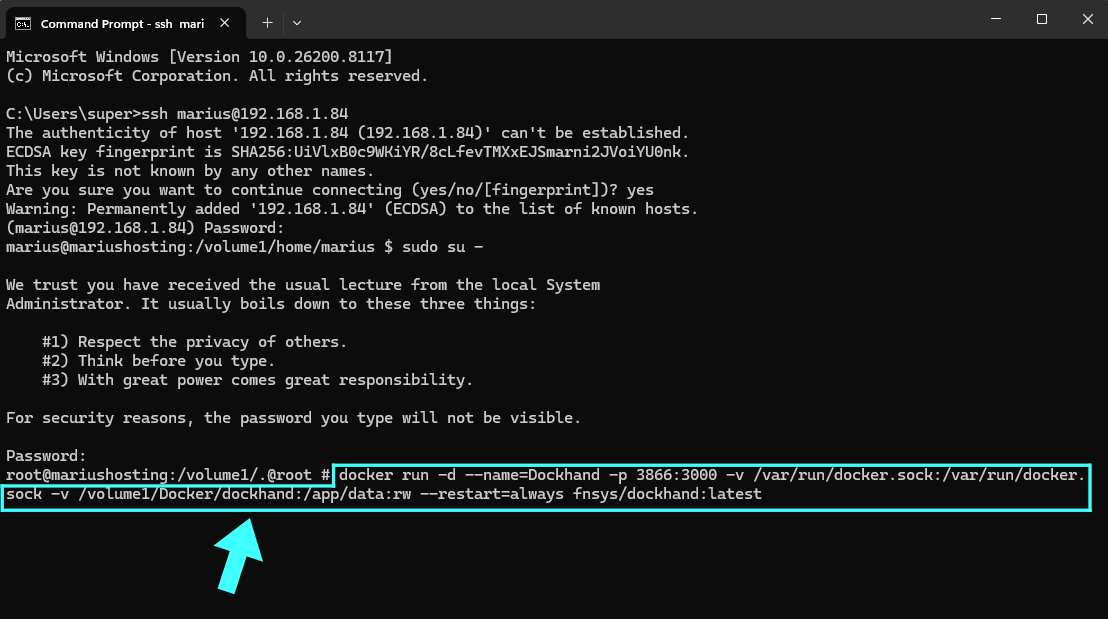
Copy/Paste the code below in your client then press enter.
docker run -d --name=Dockhand -p 3866:3000 -v /var/run/docker.sock:/var/run/docker.sock -v /volume1/Docker/dockhand:/app/data:rw --restart=always fnsys/dockhand:latest
Follow the instructions in the image below.
STEP 12
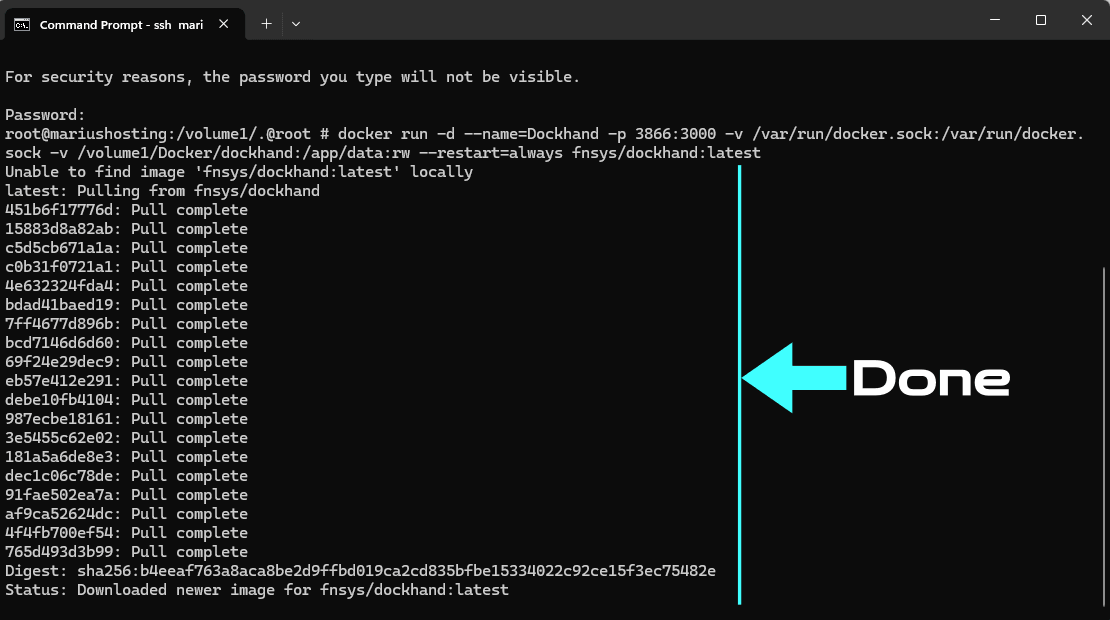
After you press enter, the installation of the docker Dockhand image will start and should be done in a few seconds or minutes, depending on your Internet speed connection. Follow the instructions in the image below.
STEP 13
Go to Services / Terminal / SSH tab. Uncheck Enable SSH service on port 22 then click Apply. Follow the instructions in the images below.
STEP 14
🟢Please Support My work by Making a Donation. Almost 99,9% of the people that install something using my guides forget to support my work, or just ignore STEP 1. I’ve been very honest about this aspect of my work since the beginning: I don’t run any ADS, I don’t require subscriptions, paid or otherwise, I don’t collect IPs, emails, and I don’t have any referral links from Amazon or other merchants. I also don’t have any POP-UPs or COOKIES. I have repeatedly been told over the years how much I have contributed to the community. It’s something I love doing and have been honest about my passion since the beginning. But I also Need The Community to Support me Back to be able to continue doing this work.
STEP 15
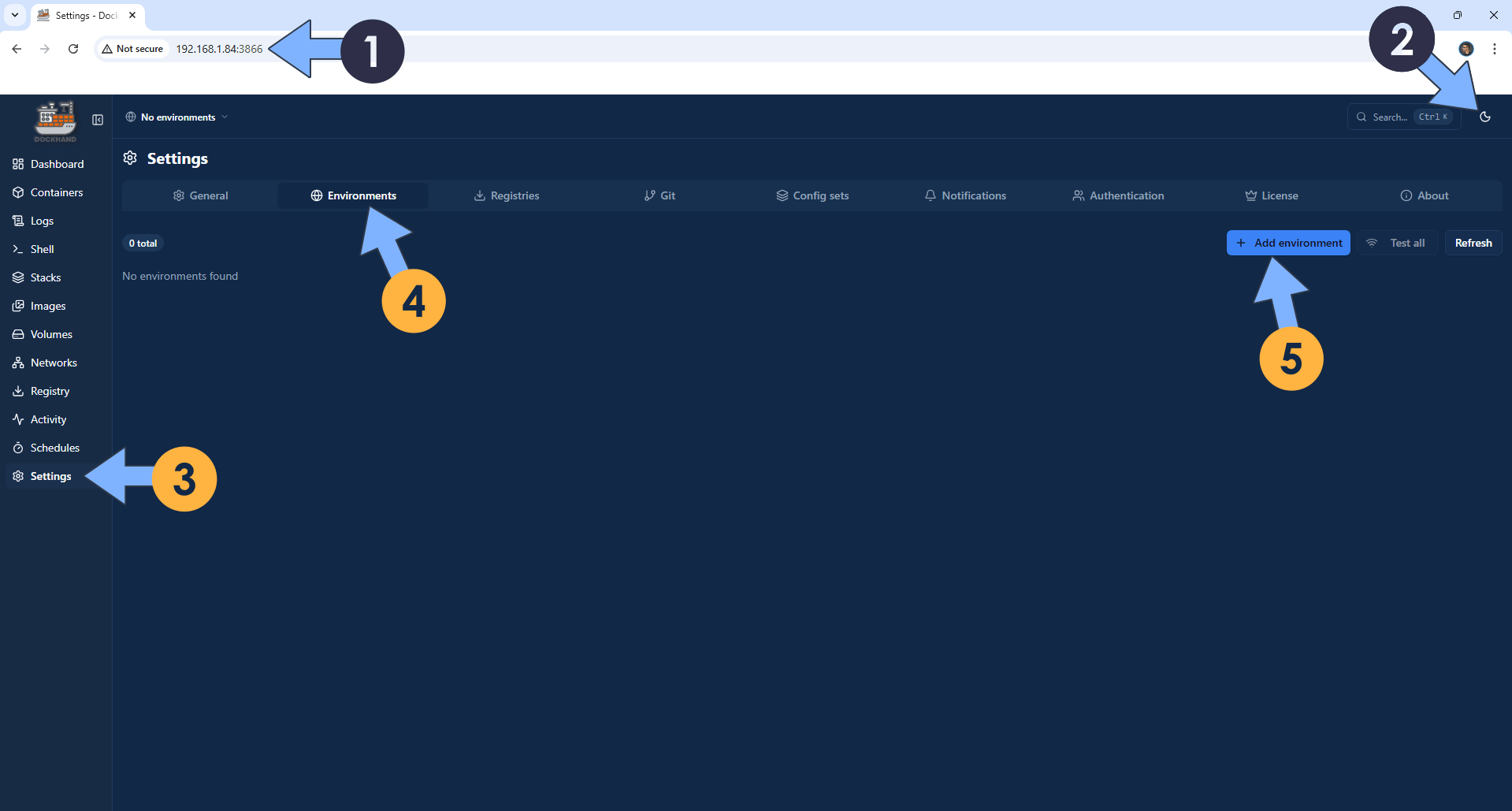
The installation process can take up to a few seconds/minutes. It will depend on your Internet speed connection. Open your browser and type in http://asustor-ip-address:3866 At the top right of the page, switch the theme to Dark. On the left sidebar, click Settings. Select the Environments tab, then click +Add environment. Follow the instructions in the image below.
STEP 16
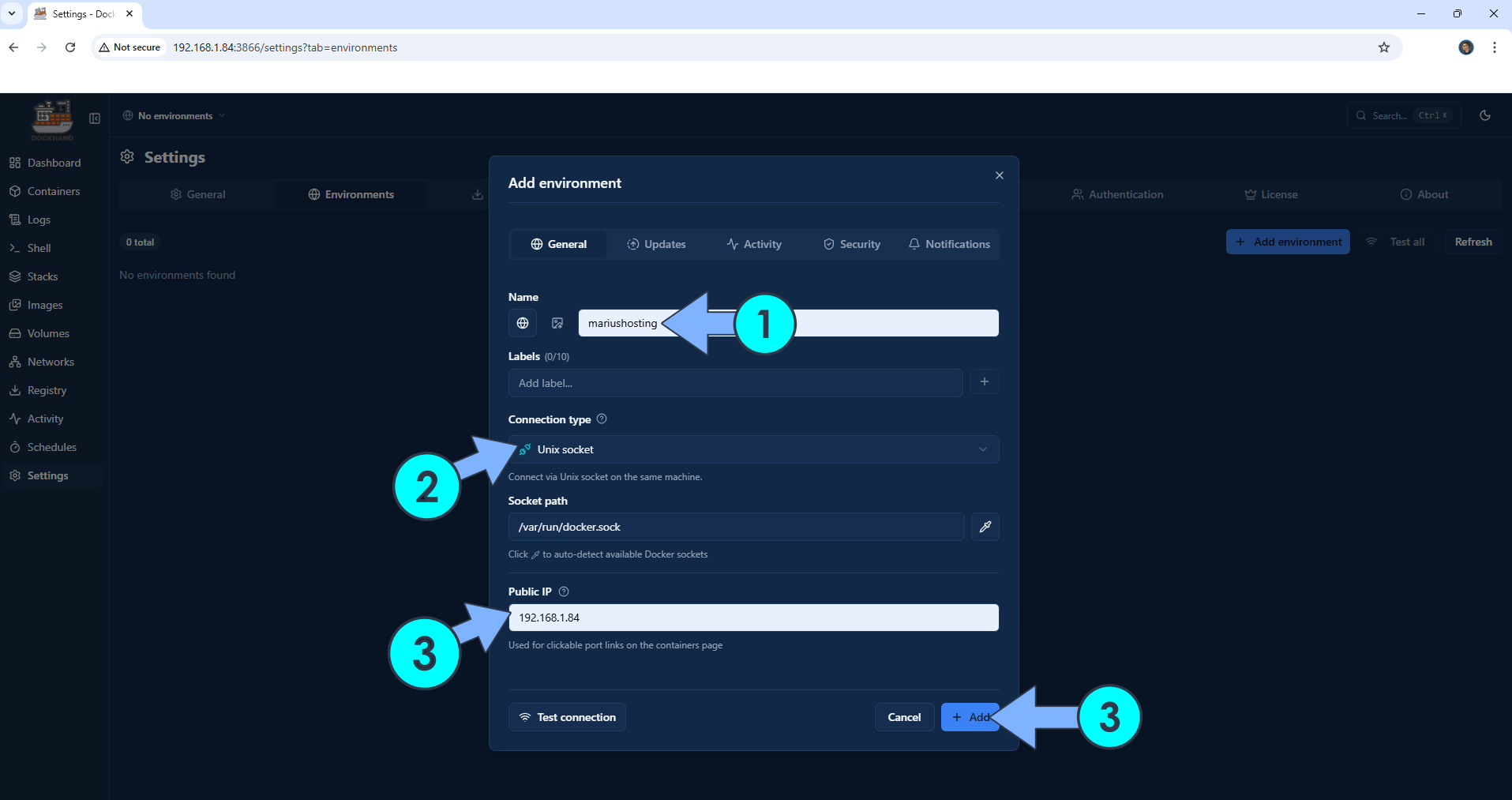
A new pop up window will open. Type in the name of your server. From the dropdown menu, select Unix socket. Type in your local NAS IP in the Public IP field. Click + Add. Follow the instructions in the image below.
STEP 17 A
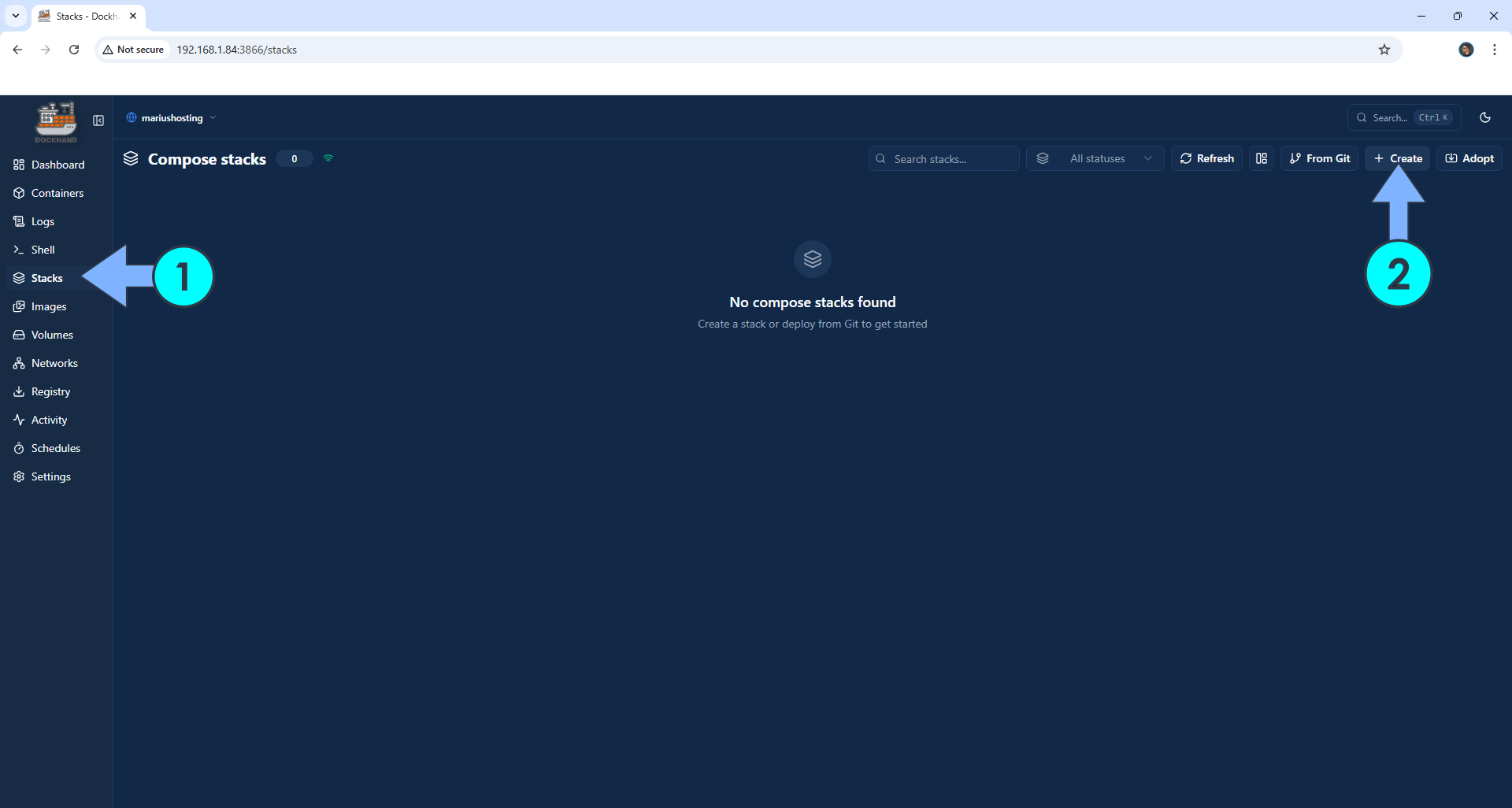
On the left sidebar, click Stacks then + Create. Follow the instructions in the image below.
STEP 17 B
For example, I will copy and paste my docker compose stack from homarr in the Compose file area. Follow the instructions in the image below. After creating the respective folder (STEP 17 C) for your own Docker compose Stack, click the Create & Start button. Follow the instructions in the image below. ⚠️Warning: On Asustor NAS devices, the Docker folder in the volume part should always start with an Uppercase letter. Example: /volume1/Docker/homarr:/appdata:rw not /volume1/docker/homarr:/appdata:rw
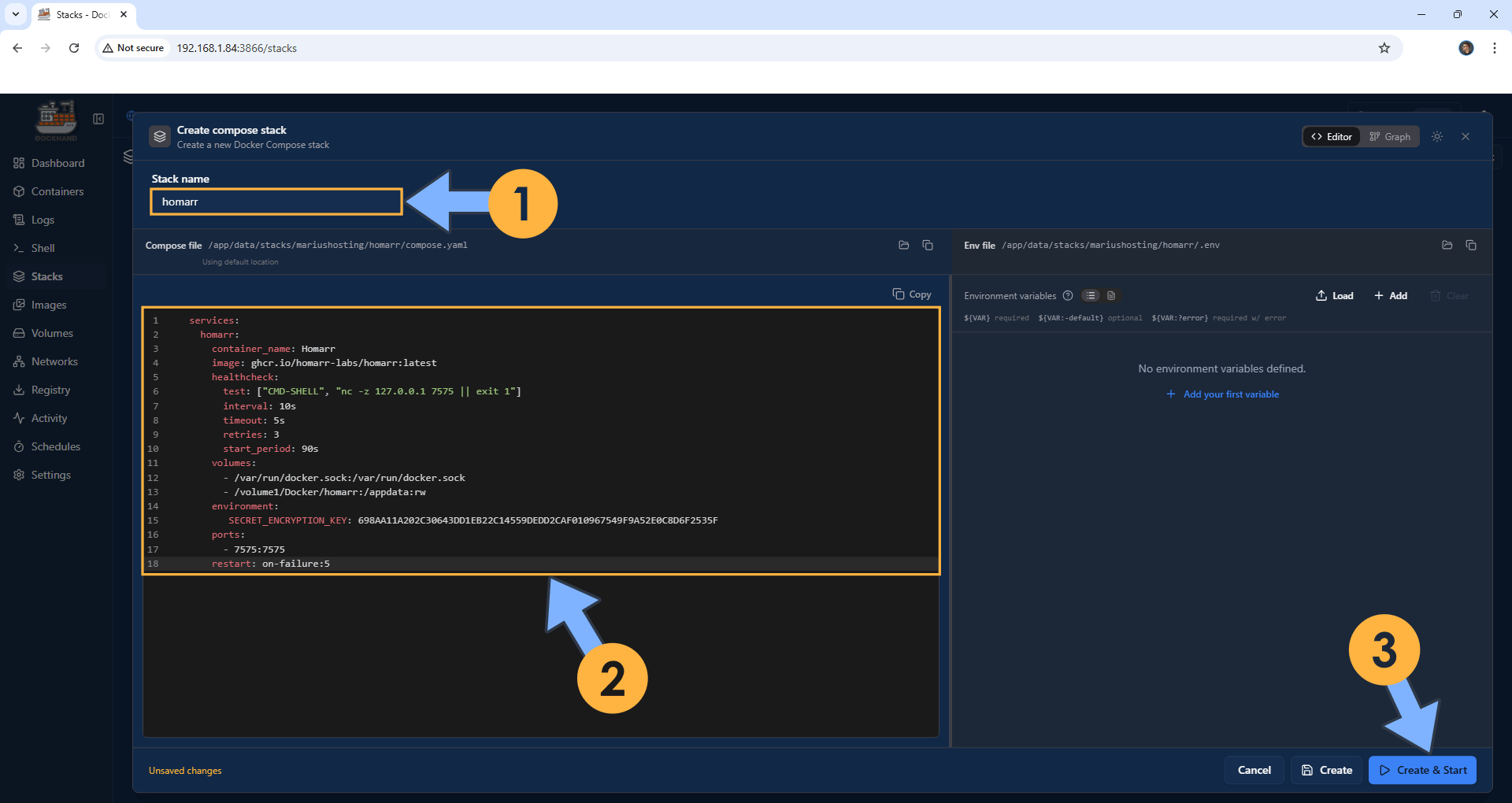
STEP 17 C
In my example, I create my homarr folder name in File Explorer. Follow the instructions in the image below.
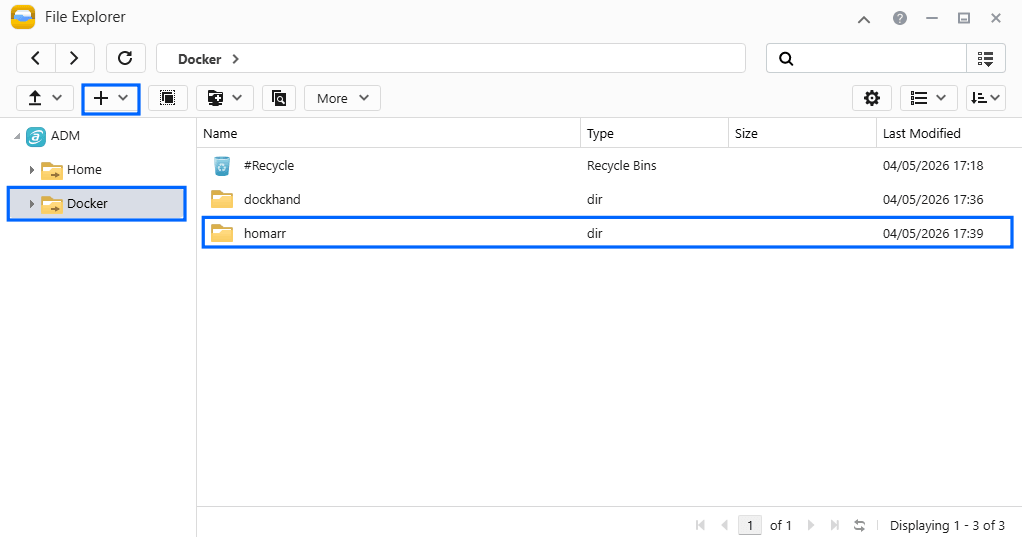
STEP 18
On the left sidebar, click Containers to see your installed container. In this area, you can see the Homarr container that has been successfully installed. Click 7575:7575. Follow the instructions in the image below.
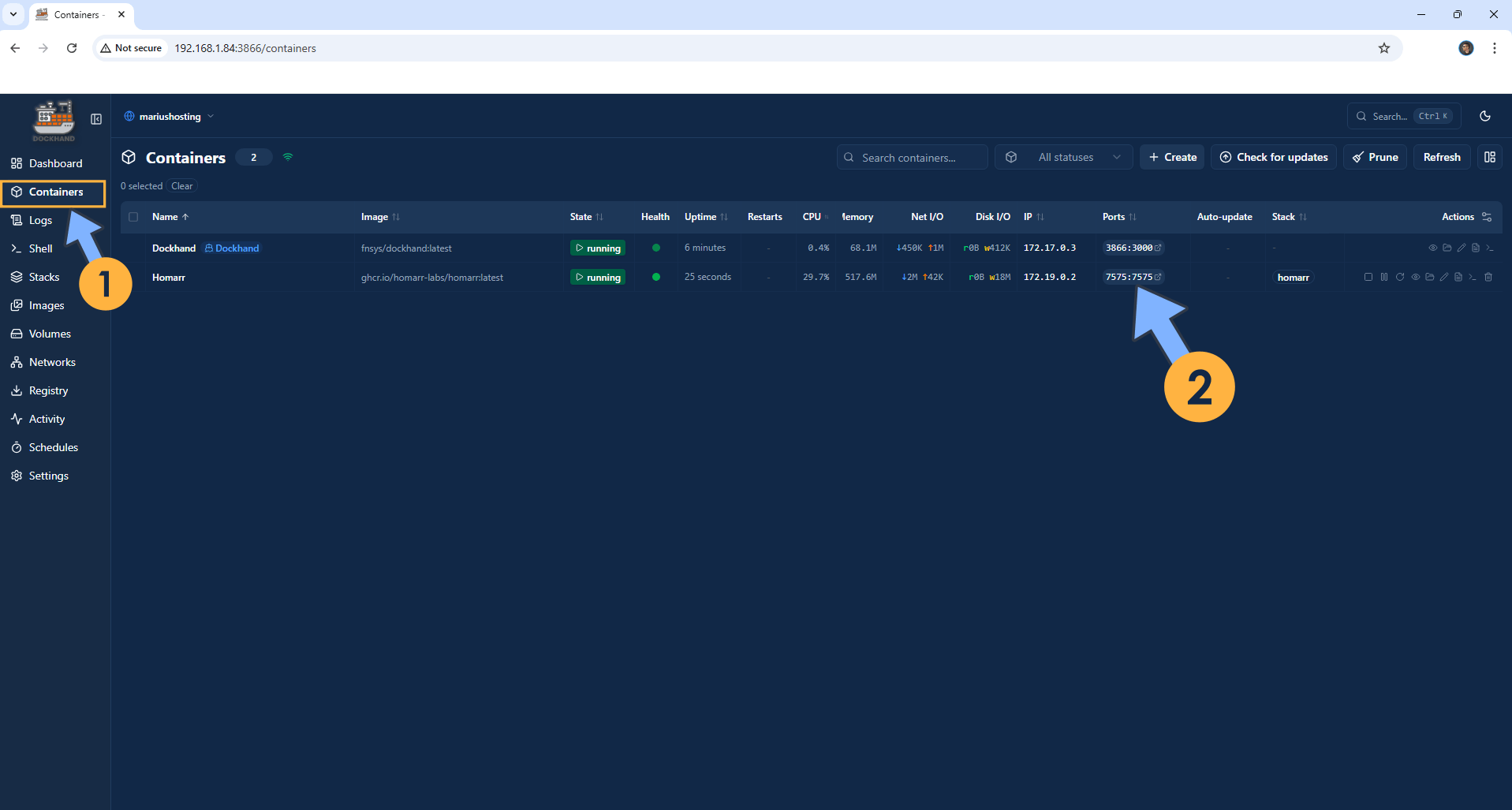
STEP 19
In my case, my Homarr container was successfully installed.
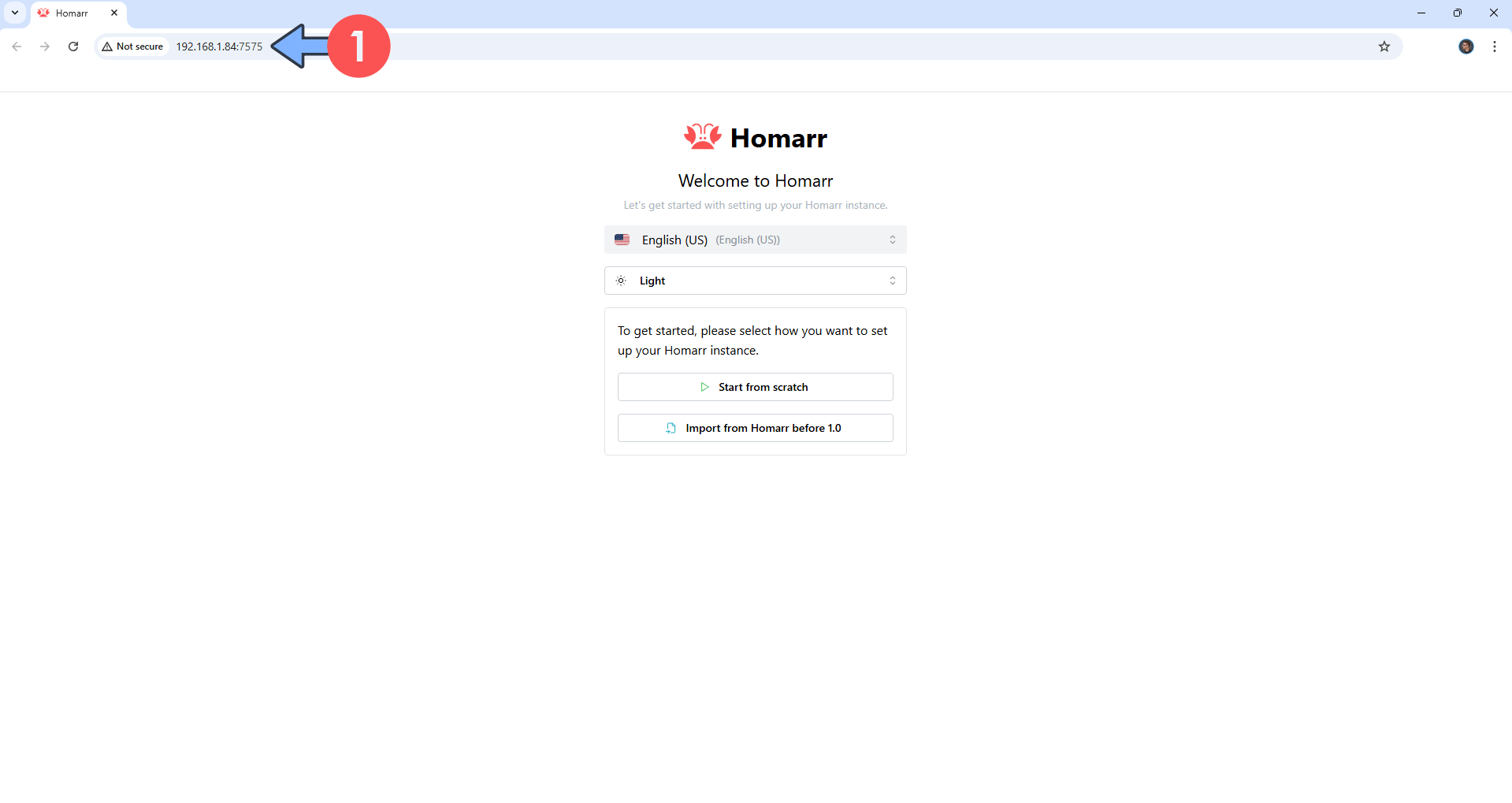
STEP 20
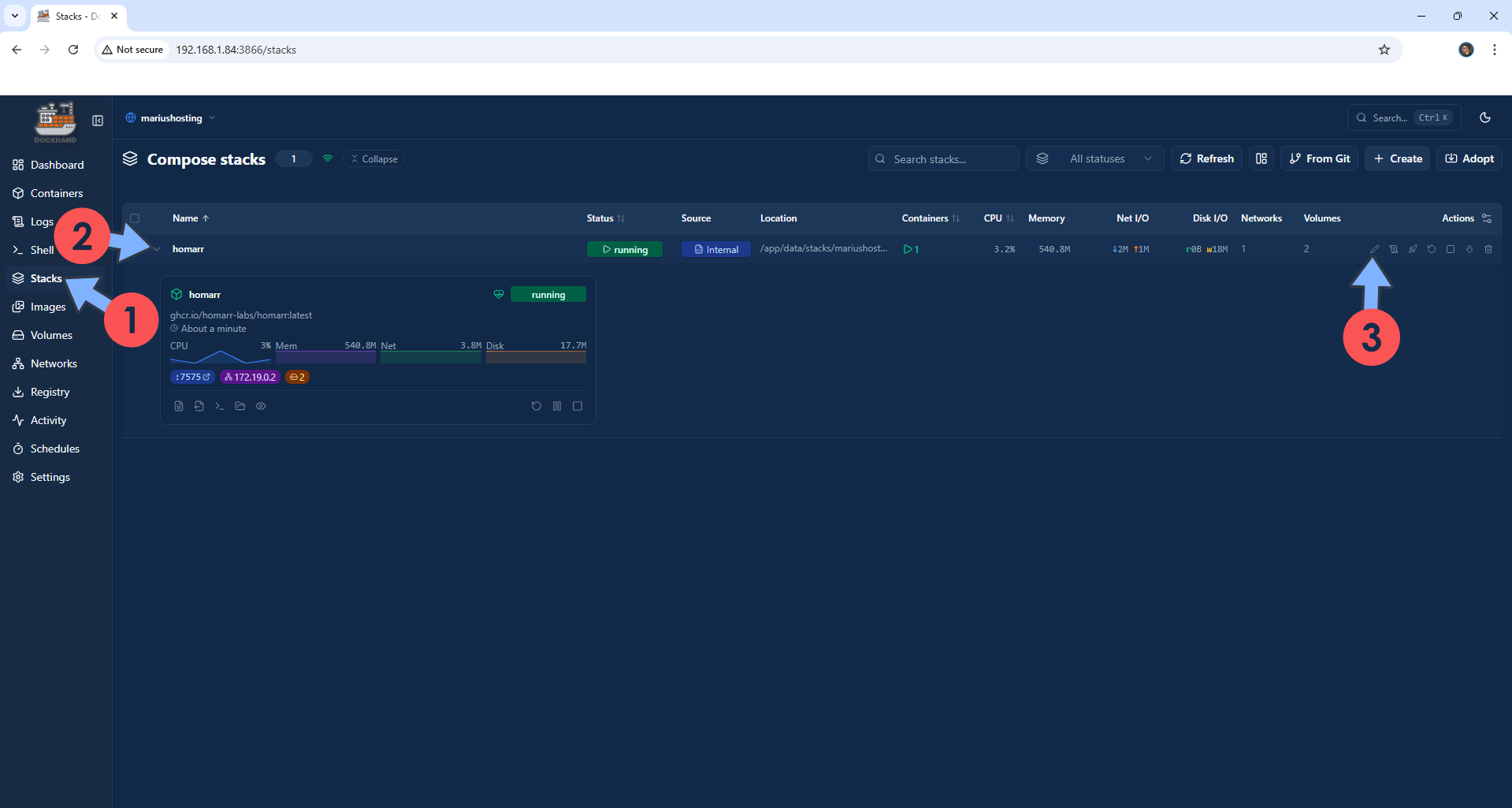
If you want to modify your current compose stack, click Stacks in the left sidebar. Expand your current stack, in my example “homarr”, then click the little pencil icon. Follow the instructions in the image below.
STEP 21
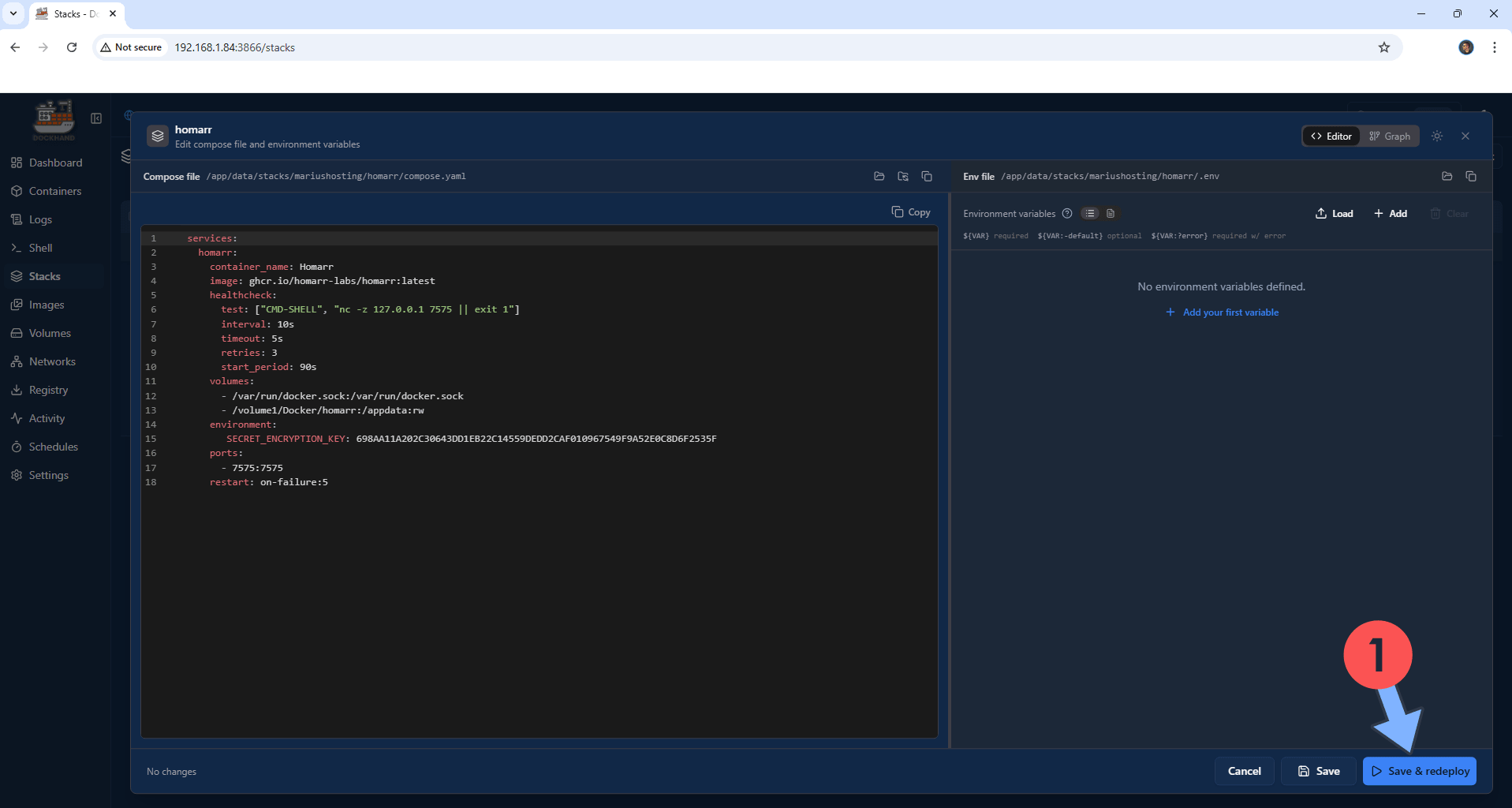
In this editor, you can easily modify your current compose stack. After you edit it, click Save & redeploy. Follow the instructions in the image below.
STEP 22
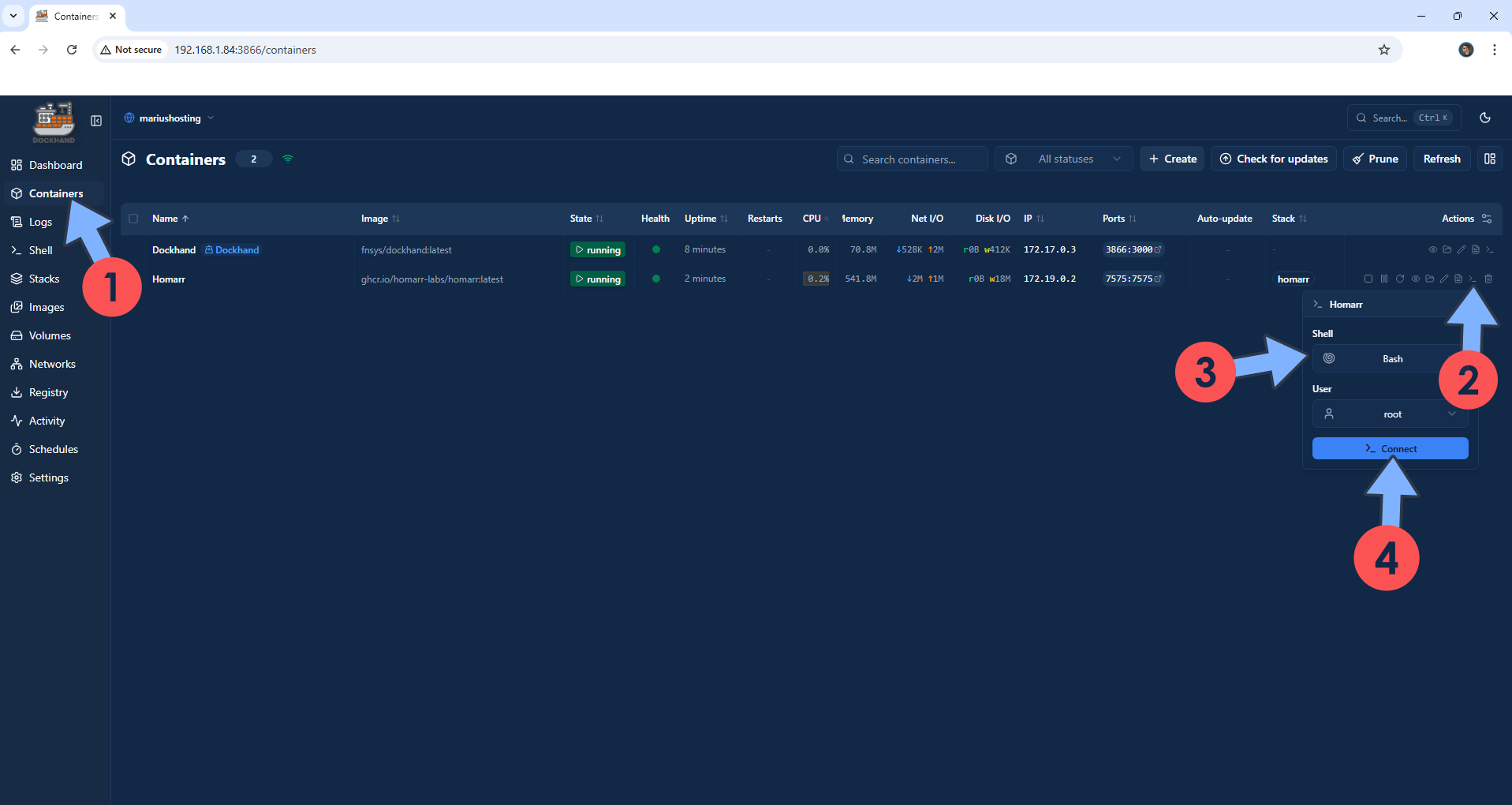
If you want, you can also access the container terminal. On the left sidebar, click Containers then select the container that you want to run the terminal. Click the little terminal icon. Click on the Shell that you want, in my example, Bash, then click Connect and the terminal will automatically show up. Follow the instructions in the image below.
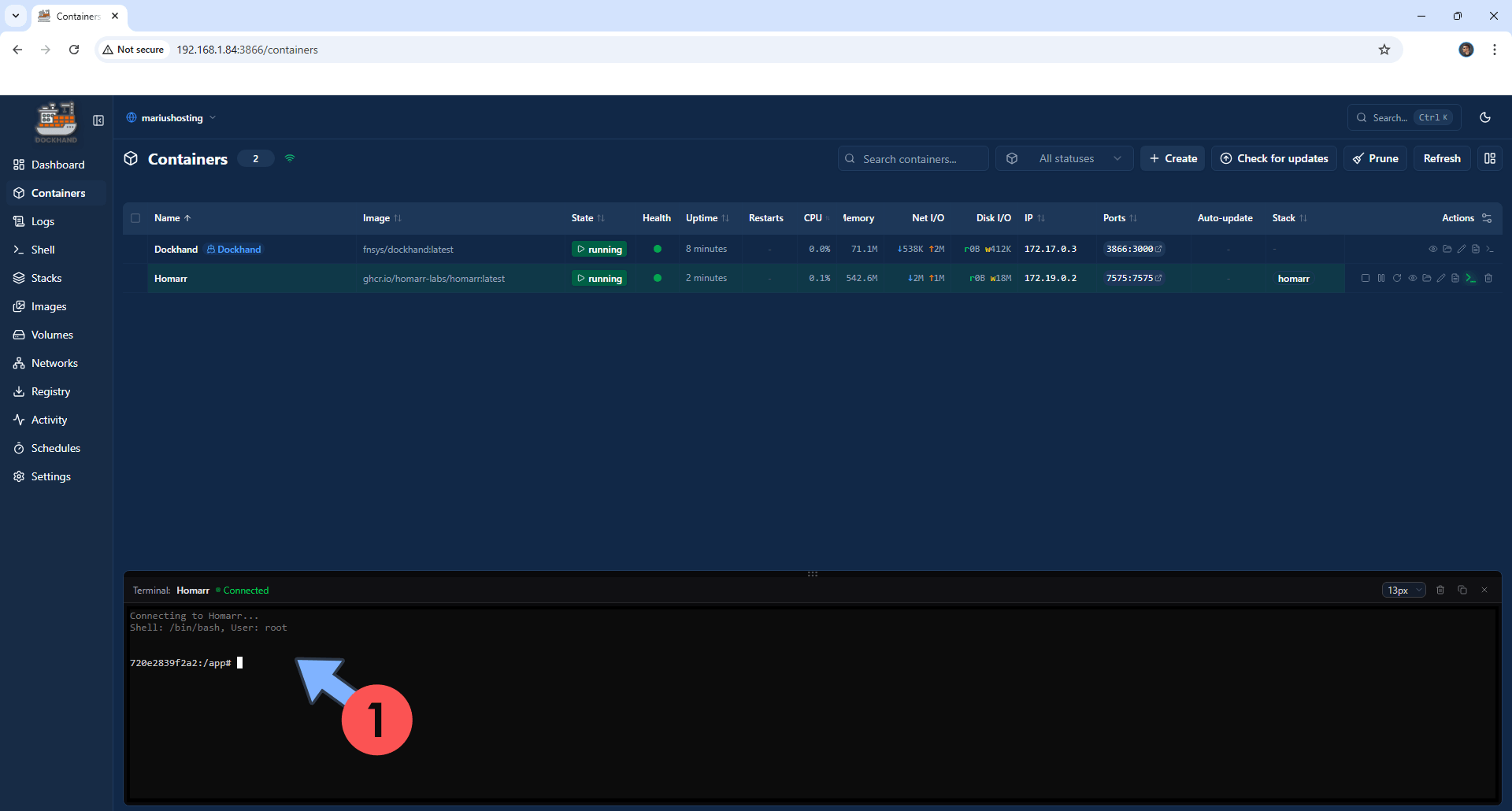
Your terminal at a glance!
STEP 23
On the left sidebar, click Dashboard to check out your real-time server stats. Follow the instructions in the image below.
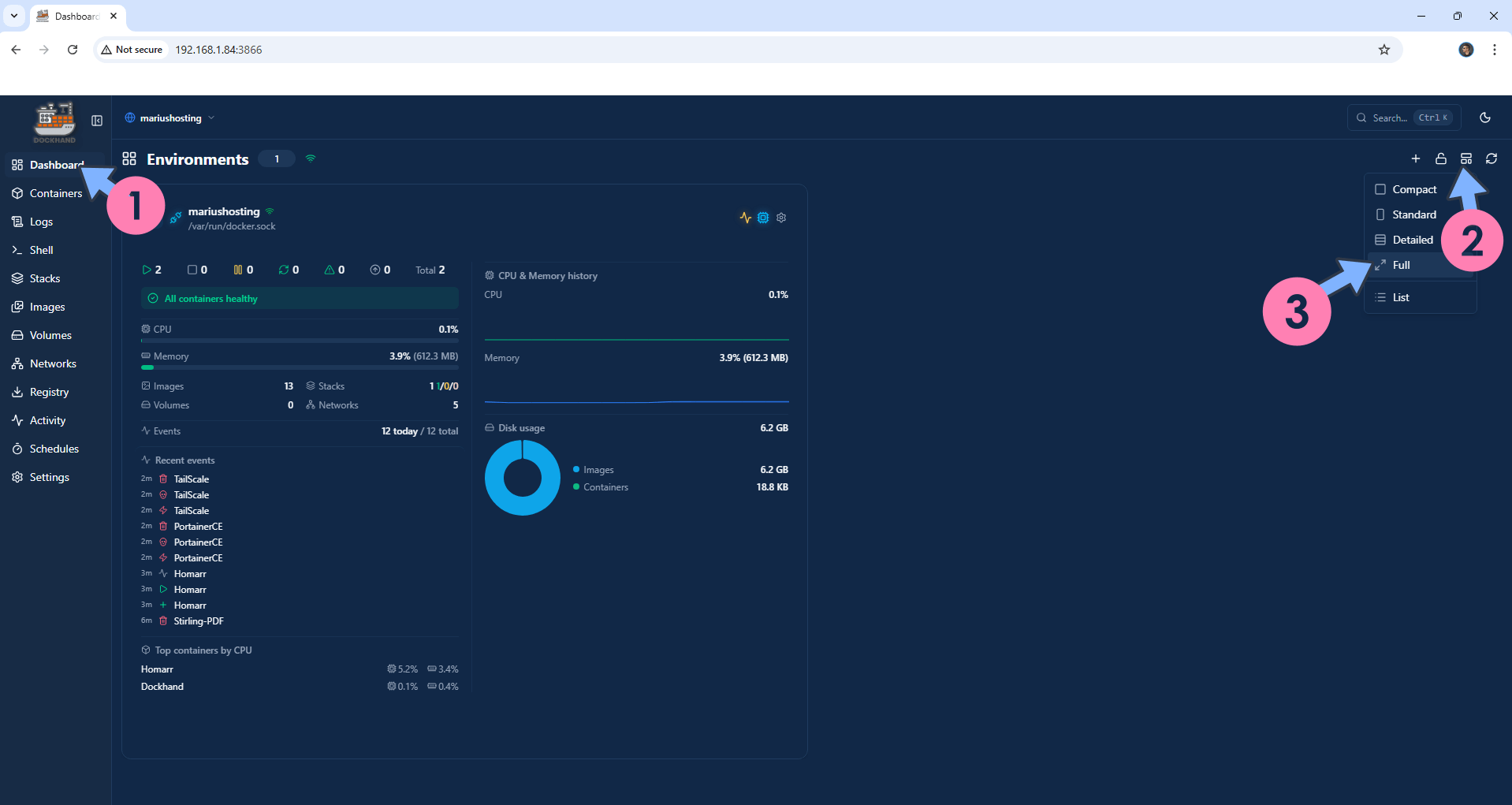
STEP 24
On the left sidebar, click Settings then the Registries tab. Click + Add registry. Follow the instructions in the image below.
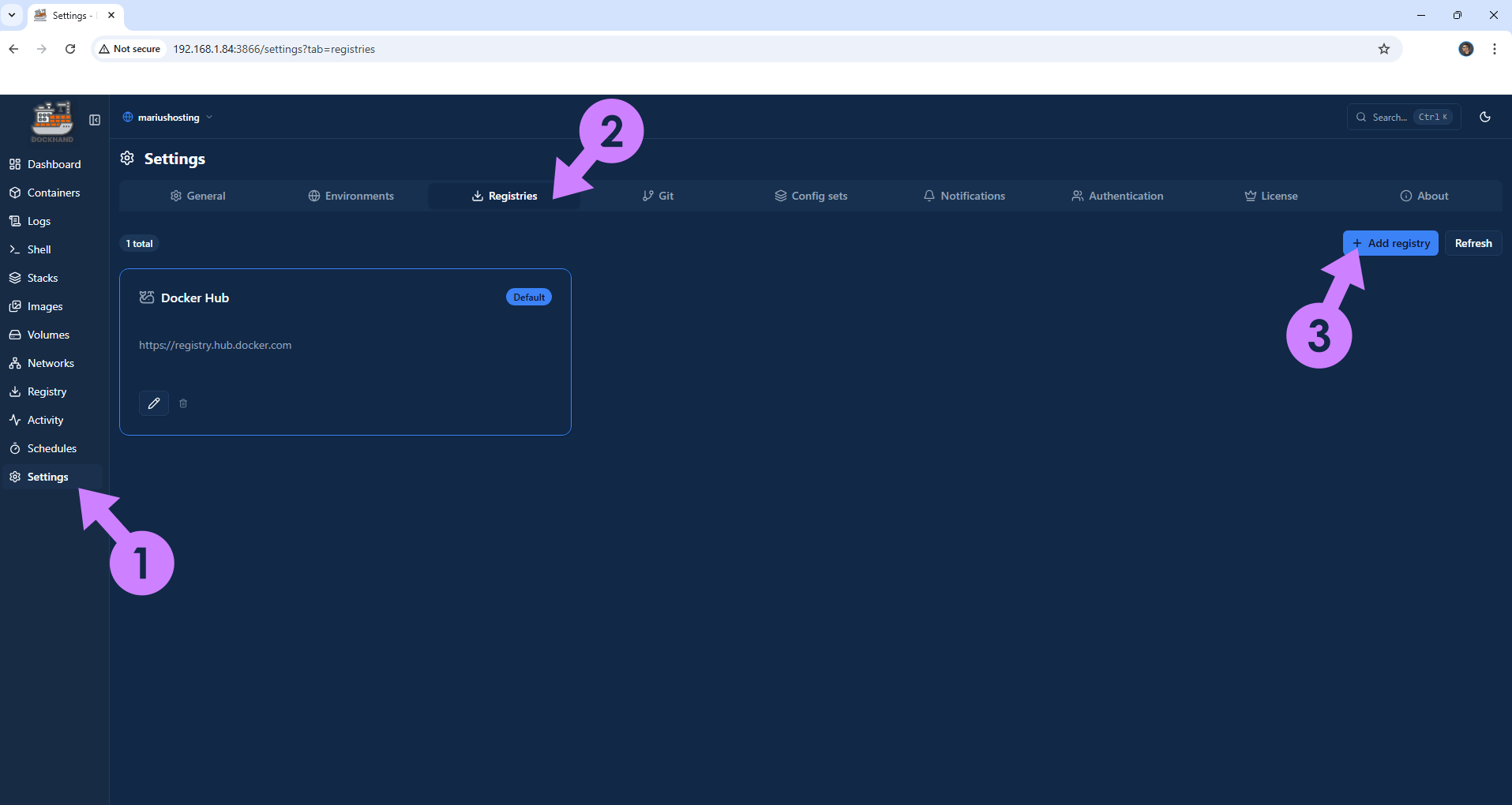
STEP 25
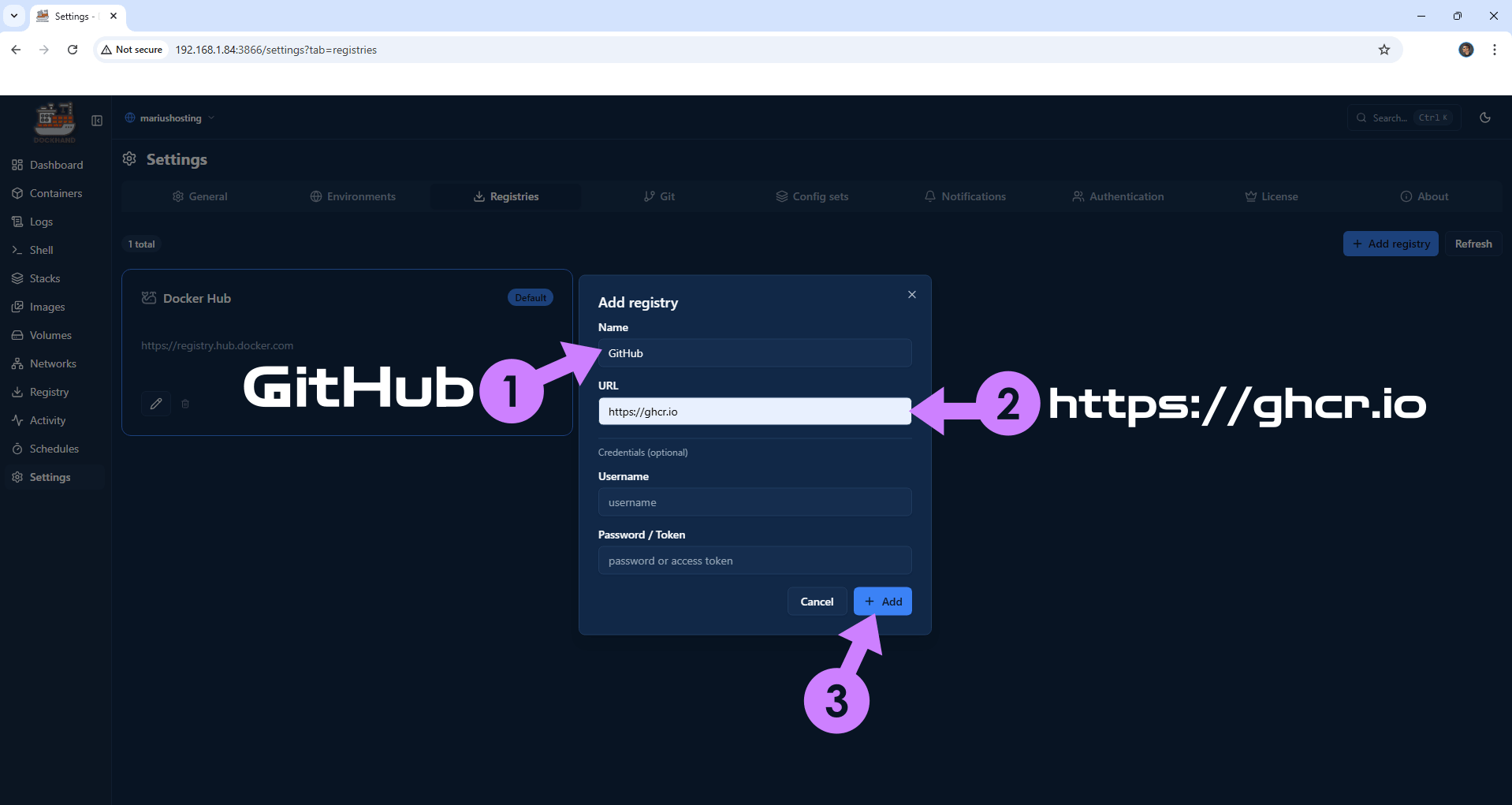
Add the GitHub registry. In the Name field area, type in GitHub and, in the URL area, type in https://ghcr.io
Click + Add to save the settings. Follow the instructions in the image below.
Note: The ghcr.io registry is mandatory if you want to update Docker containers via Dockhand that are served via the GitHub registry.
STEP 26
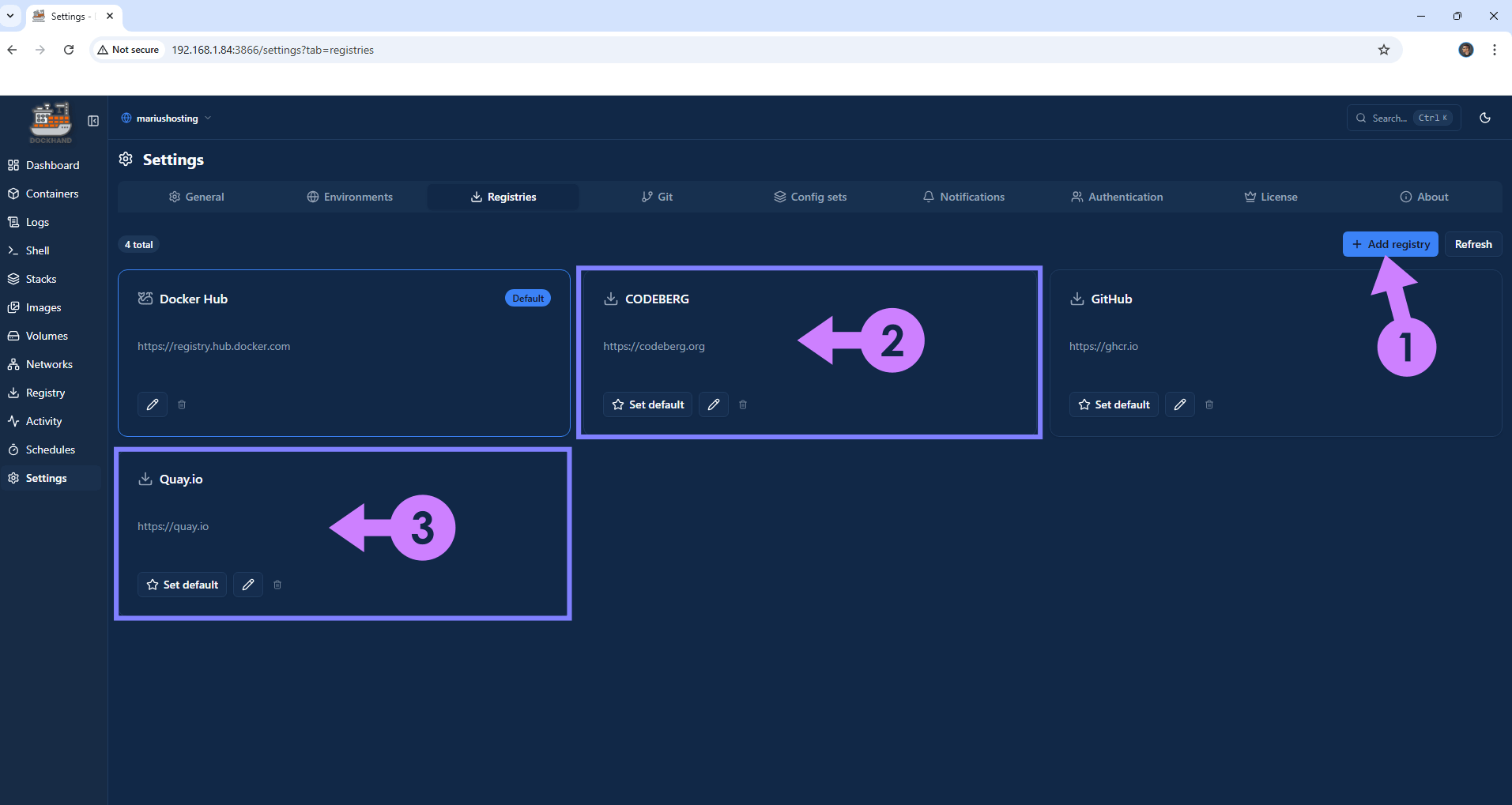
Do the same operation as per the instructions at STEP 25 for the CODEBERG and Quay.io registry.
Add the CODEBERG registry. In the Name field area, type in CODEBERG and, in the URL area, type in https://codeberg.org
Click + Add to save the settings. Follow the instructions in the image below.
Note: The codeberg.org registry is mandatory if you want to update Docker containers via Dockhand that are served via the codeberg registry.
Add the Quay.io registry. In the Name field area, type in Quay.io and, in the URL area, type in https://quay.io
Click + Add to save the settings. Follow the instructions in the image below.
Note: The Quay.io registry is mandatory if you want to update Docker containers via Dockhand that are served via the Quay.io registry.
STEP 27
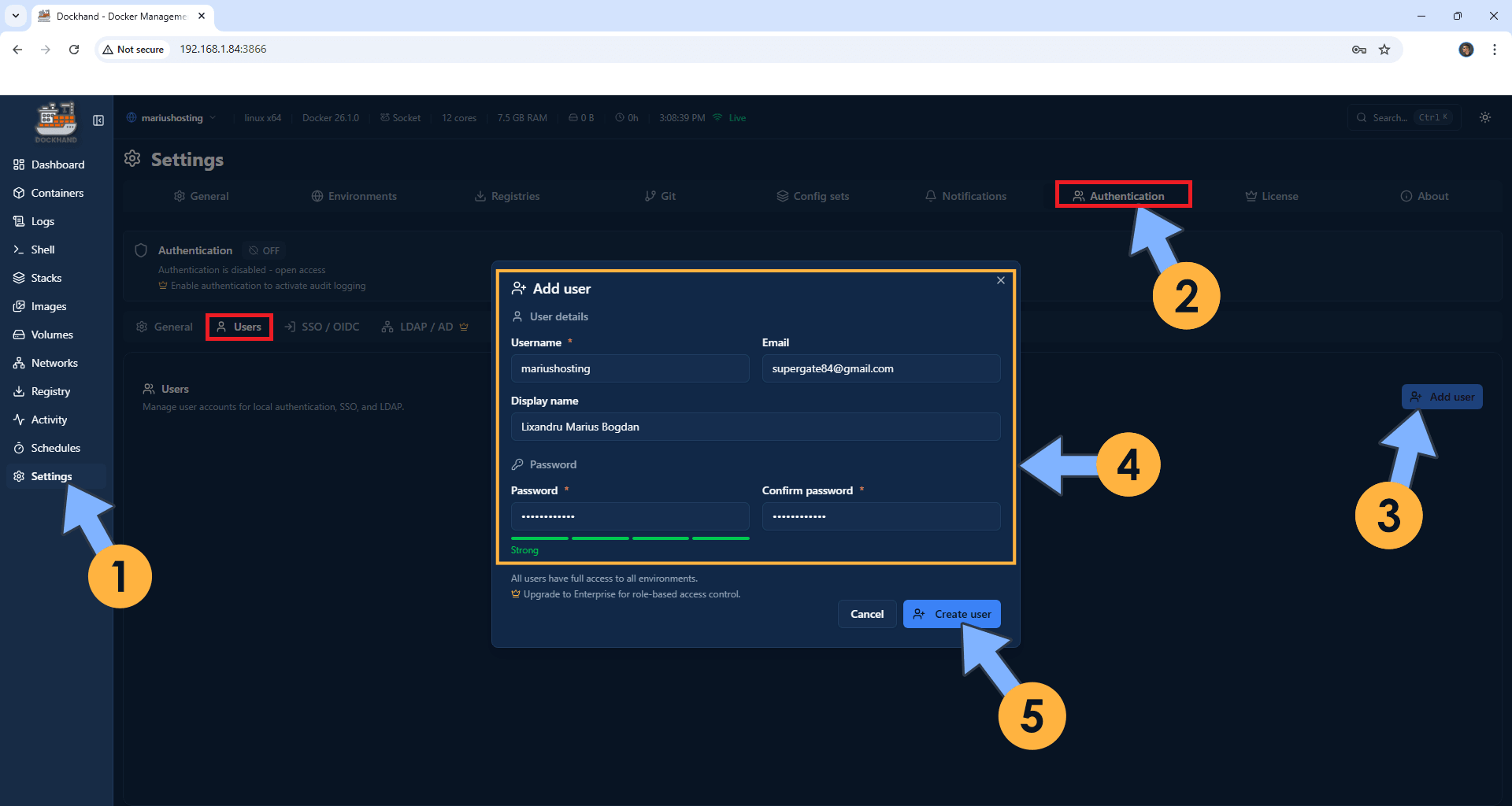
Add Authentication to your Dockhand container. On the left sidebar, click Settings. Click the Authentication tab. Click Users tab. Click the Add user button. Type in your own details which include Username and Password. Click Create user. Follow the instructions in the image below.
STEP 28
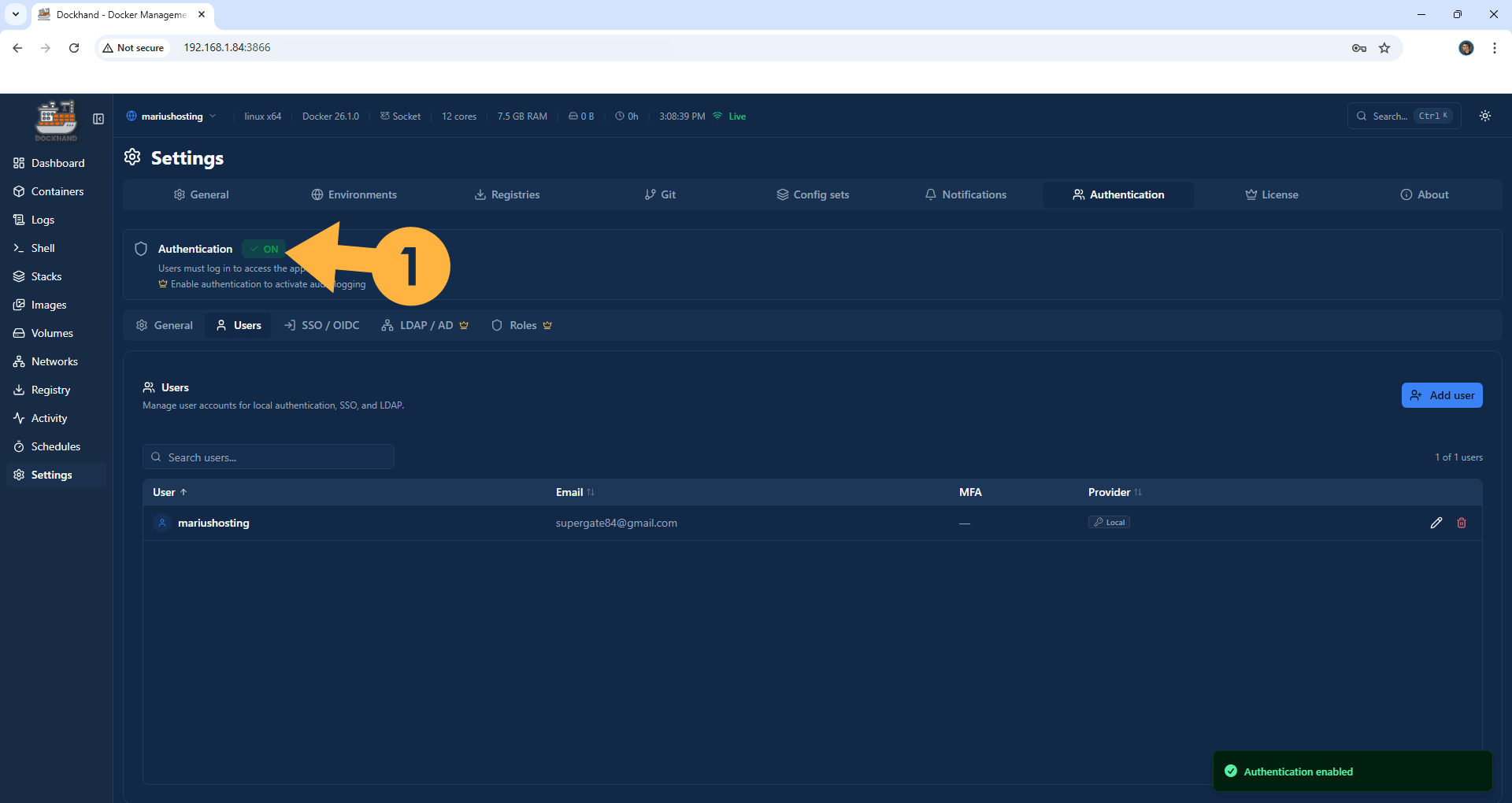
Switch the Authentication button from OFF to ON. Follow the instructions in the image below.
STEP 29
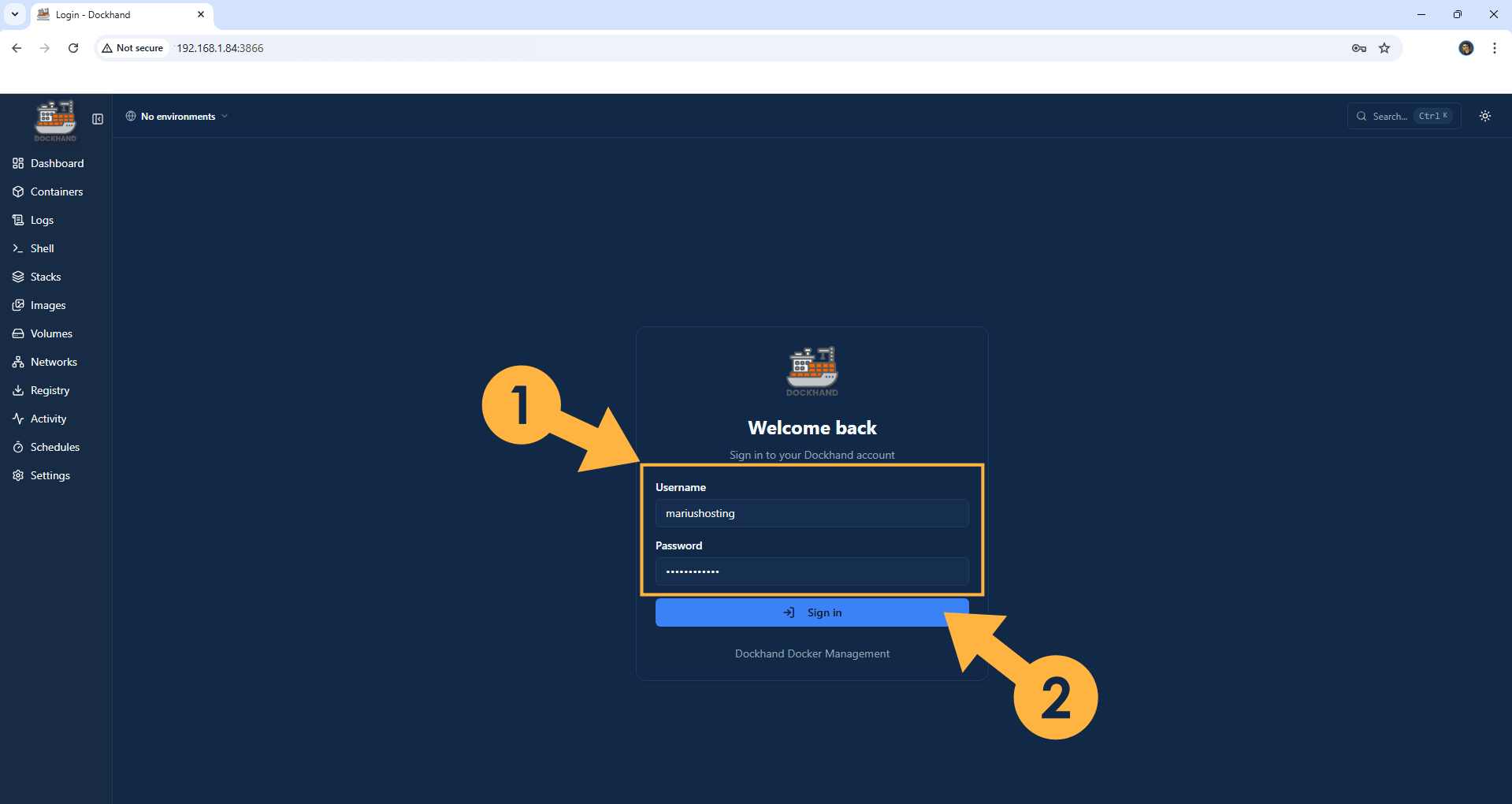
Type in your own Username and Password to access your Dockhand instance that you have previously created at STEP 27. Click Sign in. Follow the instructions in the image below.
STEP 30
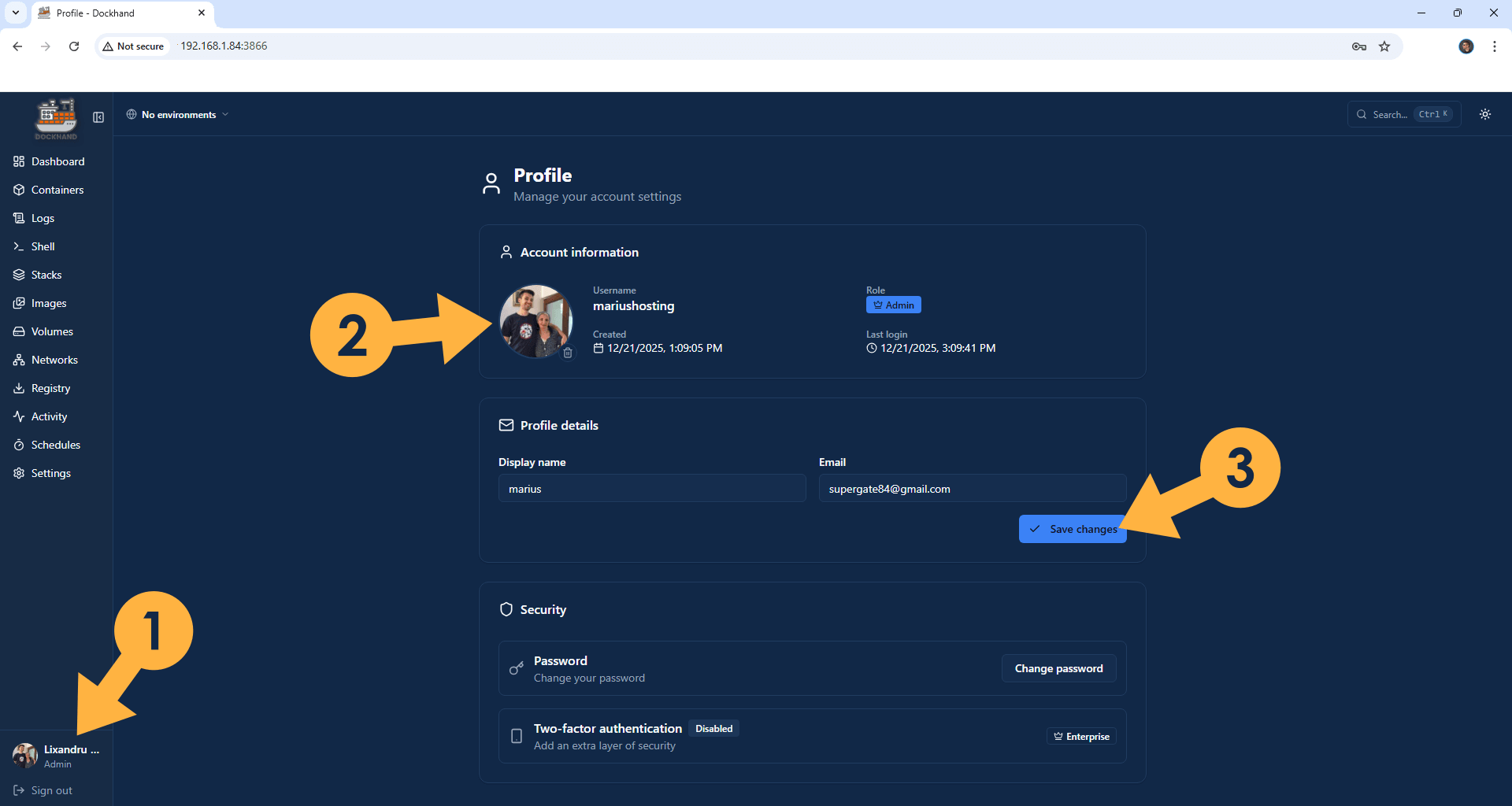
From now on, you can also upload your own Administrator avatar. Follow the instructions in the image below.
STEP 31
Step by step guide on how to Set up Email Notifications on Dockhand.
STEP 32
Follow the instructions on how to schedule automatic container updates in Dockhand.
This post was updated on Monday / April 6th, 2026 at 12:04 AM